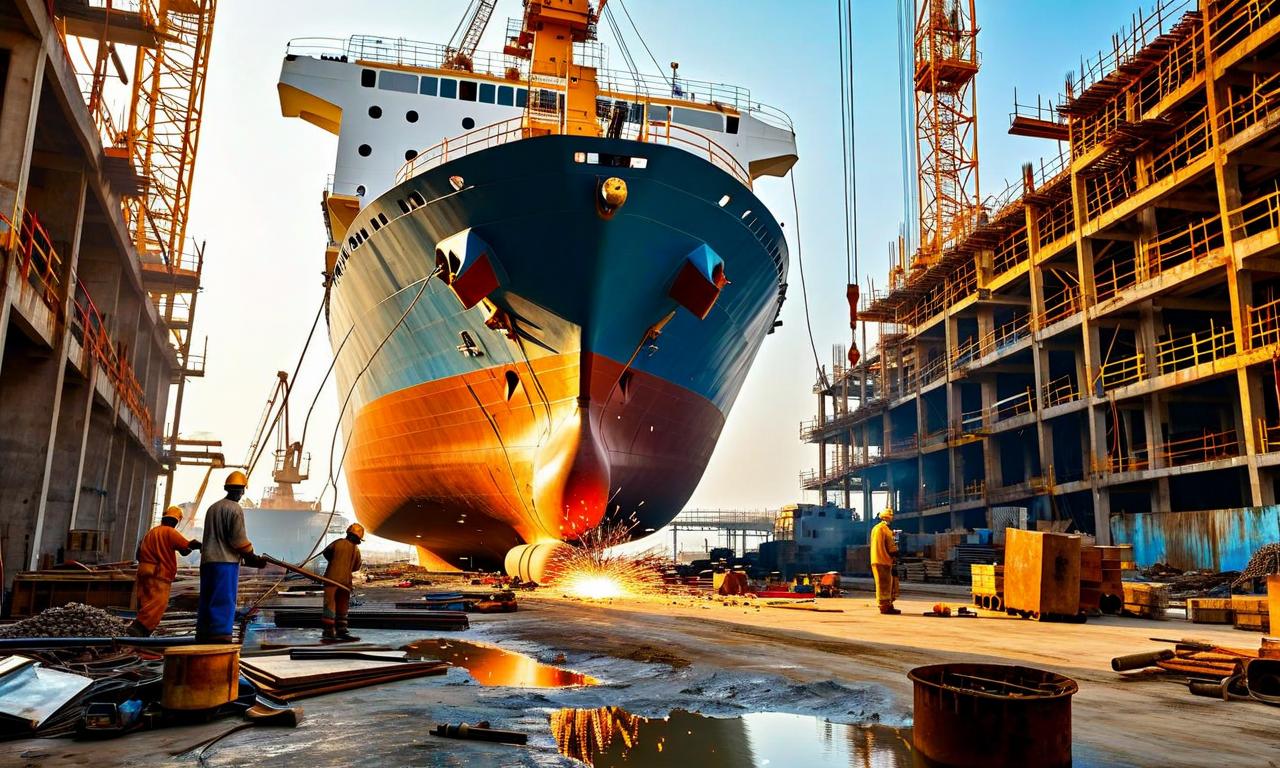
 Shipbuilding as the Backbone of Heavy Engineering
Shipbuilding is widely regarded as the “mother industry” within the heavy engineering sector. A substantial portion of a ship’s value is derived from inputs such as steel, mechanical systems, electrical and electronic equipment, and advanced composites.
The growth of shipbuilding has a cascading impact on ancillary industries, including fabrication units, component manufacturers, logistics providers, and specialised service firms. As these interconnected sectors expand, they strengthen the overall industrial base of the country.
Massive Employment Potential
One of the most significant outcomes of the package is its employment potential. According to government estimates, the shipbuilding and recycling push could generate approximately 22 lakh direct and indirect jobs across various skill levels.
Employment opportunities are expected to span from high-end naval architecture and marine engineering roles to semi-skilled and skilled jobs in fabrication, welding, electrical works, logistics, and ship maintenance services. This makes the sector particularly valuable for inclusive industrial growth.
Four-Pillar Strategy Explained
The approved package is structured around four core pillars. The first focuses on strengthening domestic shipbuilding capacity by encouraging investment in modern shipyards and upgrading existing infrastructure.
The second pillar addresses maritime financing, an area that has traditionally constrained Indian shipyards. Improved access to long-term and affordable financing is expected to enhance competitiveness and enable Indian firms to bid for large global orders.
The third pillar centres on skilling and workforce development, ensuring the availability of trained manpower aligned with modern shipbuilding technologies. The fourth pillar emphasises regulatory and policy reforms to simplify processes and improve ease of doing business.
Demand and Supply Side Interventions
The government has taken steps to address both supply-side and demand-side challenges faced by the shipbuilding sector. Extensive stakeholder consultations have been conducted across ministries, including cargo-generating departments, to provide greater visibility and certainty of vessel orders.
Such coordination is expected to help Indian shipyards plan production efficiently and invest with confidence. A stable order pipeline is critical for achieving economies of scale and sustaining long-term growth.
Greenfield Shipbuilding Clusters
The proposal also envisages the development of greenfield shipbuilding clusters, subject to feasibility assessments. Factors such as availability of adequate land, proximity to ports, rail and road connectivity, supportive State industrial policies, and investor interest will determine approvals.
These clusters are expected to create integrated ecosystems where shipyards, suppliers, training centres, and logistics hubs operate in close proximity, reducing costs and improving efficiency.
Strategic and Economic Significance
Beyond economic benefits, the shipbuilding package carries strategic importance for India’s maritime security and self-reliance. Enhanced domestic capacity reduces reliance on foreign shipyards for commercial and strategic vessels.
Officials believe the initiative aligns with broader national objectives such as Atmanirbhar Bharat and Make in India, positioning India as a serious player in the global shipbuilding and recycling market.