
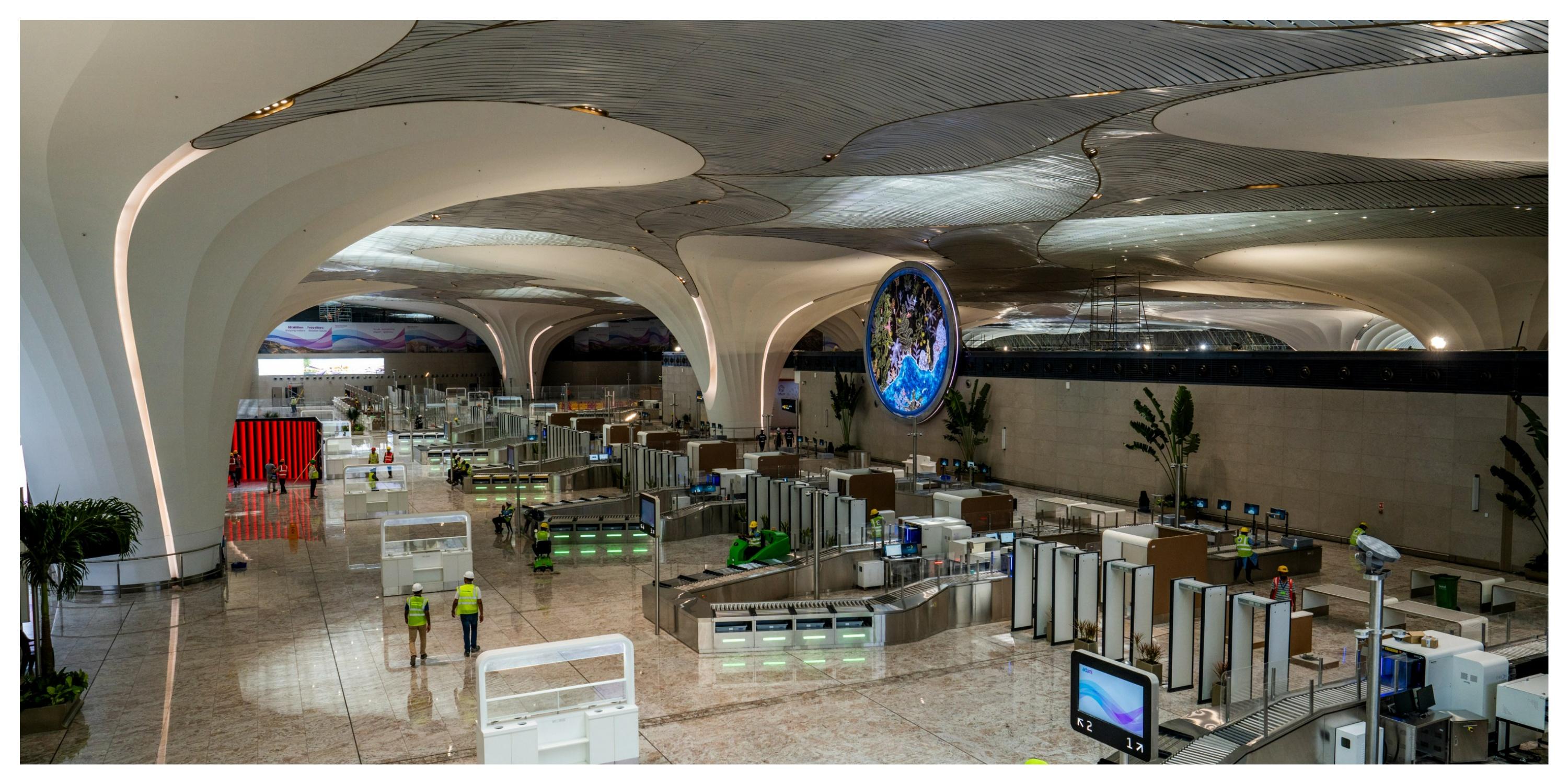
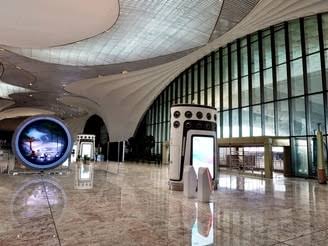

NMIA is being billed as India’s first truly digital airport. Passengers will enjoy online baggage drop, pre-booked parking, AI-enabled systems, biometric e-gates, and touchless check-in operations.
2. Lotus-Inspired Architecture
The terminal’s design draws inspiration from the lotus — India’s national flower — giving it a symbolic as well as aesthetic appeal.
3. Smart & Automated Passenger Flow
From self-drop luggage systems and AI tracking to seamless movement through gates, NMIA is designed to minimize wait times and optimize passenger flow.
4. Huge Initial & Future Capacity
The first phase will serve about 20 million passengers annually, with plans to scale up to 90 million passengers in future phases.
5. Modular Terminals & Runway Expansion
While Phase-1 includes a single terminal and runway, master plans show expansion into multiple interconnected terminals and parallel runways.
6. Automated People Mover (APM) Link
Intra-terminal connectivity will be enhanced by an Automated People Mover system, ensuring smooth transfers across parts of the airport.
7. Multimodal & Water Taxi Connectivity
Beyond road and rail, NMIA will integrate water taxi services — a first for Indian airports — boosting connectivity from coastal localities.
8. Green, Sustainable Design
Solar power generation, green building techniques, and sustainable fuel infrastructure are integral to its eco-friendly focus.
9. Paperless & Cashless Operations
All major processes — from ticketing to boarding — will be paperless and integrated with digital systems, reinforcing NMIA’s “anxiety-free” promise to travelers.
10. Strategic Dual-Airport Role
By adding NMIA, Mumbai becomes one of the few metros globally with multiple international airports. NMIA is intended to relieve load on CSMIA and support the region’s future growth.