
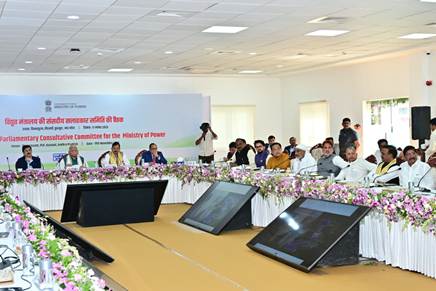
Nationwide potential and project pipeline
Officials briefed committee members that India has identified roughly 224 gigawatts (GW) of technical PSP potential across the country. Of this, ten PSPs totalling about 7 GW have already been commissioned. Another ten PSPs (approximately 12 GW) are under construction, while 56 PSPs, representing some 78 GW, remain at various planning and development stages.
The figures underline the government’s ambition to build large-scale energy storage that can stabilise the grid as renewable capacity grows. Members lauded the progress and urged faster mobilisation of state-level resources and clearances to translate potential into commissioned capacity.
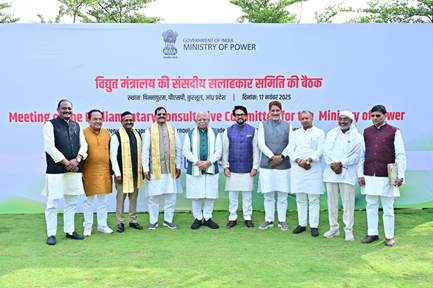

The Ministry of Power outlined key policy steps designed to incentivise PSP deployment. Measures include updated Guidelines for PSP development covering site allotment modalities, exemptions from free power and Local Area Development Fund obligations, and a full waiver of Inter-State Transmission System (ISTS) charges for 25 years for projects awarded on or before 30 June 2028.
Other actions highlighted include budgetary support for enabling infrastructure, notification of Renewable Consumption Obligations for energy storage systems, and Tariff-Based Competitive Bidding (TBCB) guidelines to procure storage capacity or stored energy from PSPs. Off-stream closed-loop PSPs have also been exempted from mandatory Central Electricity Authority (CEA) concurrence, and the capital expenditure threshold for CEA concurrence has been raised to ₹3,000 crore for competitively bid projects.
State governments and practical solutions
Minister Manohar Lal stressed the pivotal role of state governments in site allotment, water allocation and speedy environmental and land clearances. He urged MPs to engage with state authorities to consider withdrawal or rationalisation of levies such as Green Energy cess, water tax and reservoir lease fees to ease project economics.
On evaporation losses from PSP reservoirs, the Minister recommended deploying floating solar on water surfaces as a practical mitigation measure that simultaneously generates additional green power — an approach that can enhance overall project viability.
Recent commissioning marks major milestone
Minister of State for Power Sh. Shripad Yesso Naik noted successful commissioning during 2025–26 of all eight units of the 1,680 MW Pinnapuram PSP, alongside the 500 MW Tehri PSP — achievements that reflect coordinated efforts among the Centre, states, Central PSUs and private developers.
These additions demonstrate the feasibility of large PSPs and provide operational data to refine planning and financing for future projects.
Environmental and technical considerations
Committee members discussed the environmental implications of PSPs and compared their impact favourably with other storage and generation options. Technical panels at the meeting underlined that well-designed PSPs, particularly off-stream closed-loop systems, can minimise ecological disruption while offering durable storage capacity at scale.
Members recommended stronger environmental management plans, community engagement during site selection and investment in R&D for low-impact designs.
Way forward: coordination and financing
The Consultative Committee welcomed the government’s comprehensive policy push and suggested further steps to accelerate implementation: faster state-level clearances, dedicated financing windows for storage infrastructure, and aggregation of smaller PSP sites to attract institutional investment.
Officials said the Ministry will continue to engage with states, utilities and developers to fast-track PSPs, while monitoring outcomes from flagship projects such as Pinnapuram and Tehri to refine guidelines and procurement routes.