
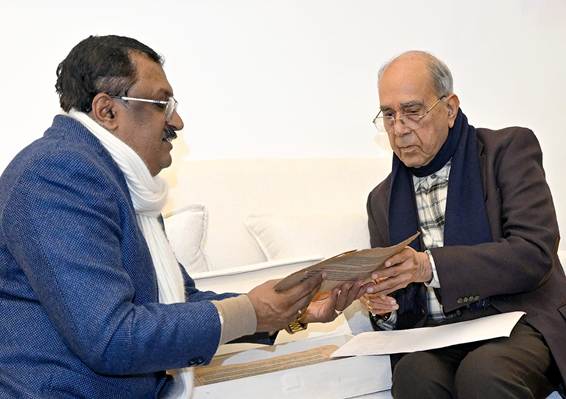
Dating back to Vikrama Samvat 1849, corresponding to 1792 CE, the manuscript represents an exceptionally preserved textual tradition of the Ramayana and is regarded as a priceless cultural and scholarly treasure.

The manuscript contains the Vālmīkirāmāyaṇam, attributed to Ādi Kavi Valmiki, along with the classical commentary Tattvadīpikāṭīkā authored by Maheshvara Tīrtha. Written in Sanskrit using the Devanāgarī script, it reflects the depth of India’s ancient literary and philosophical traditions.
The collection includes five principal kāṇḍas of the epic Bālakāṇḍa, Araṇyakāṇḍa, Kiṣkindhākāṇḍa, Sundarakāṇḍa and Yuddhakāṇḍa covering the narrative arc from Lord Rama’s early life to the climactic battle in Lanka.
From Rashtrapati Bhavan to Ayodhya
The manuscript was earlier loaned for display at Rashtrapati Bhavan, New Delhi, where it drew the attention of scholars and visitors interested in India’s ancient texts. Its permanent transfer to Ayodhya marks a new chapter in its journey.
It has now been gifted to the Antarrashtriya Ram Katha Sangrahalaya, also known as the International Ram Katha Museum, located in Ayodhya, Uttar Pradesh. The decision ensures long-term preservation and wider public access in a city intrinsically linked with the Ramayana tradition.
Strengthening Ramayana Heritage
The Ram Katha Museum is being developed as a global centre dedicated to the Ramayana and its diverse cultural expressions across India and the world. The addition of this rare manuscript significantly enhances the museum’s academic and cultural value.
Scholars believe that such original manuscripts are vital for textual studies, comparative research and understanding the transmission of sacred texts across centuries.
Voices from the Ceremony
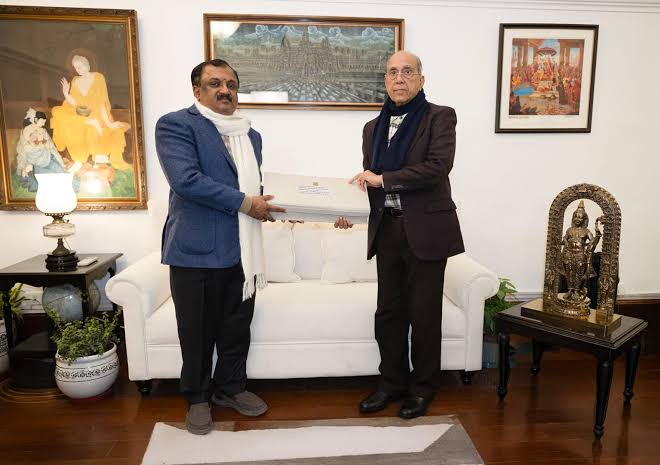
Speaking on the occasion, Prof. Varakhedi described the donation as an effort to immortalise the wisdom of the Valmiki Ramayana. He said the manuscript would now be accessible to scholars, devotees and visitors from across the world in the sacred city of Ayodhya.
Shri Nripendra Misra termed the donation a landmark moment for devotees of Lord Ram and for the temple-museum complex in Ayodhya, noting that such gestures strengthen the spiritual and cultural significance of the region.
Cultural Preservation and Public Access
The gifting of the manuscript reflects a broader national effort to preserve India’s manuscript heritage and place it in institutions where it can be conserved using modern techniques while remaining accessible to the public.
Initiatives led by academic institutions and museums play a crucial role in ensuring that ancient knowledge systems are not confined to archives but continue to inspire contemporary society.
A Living Link to India’s Civilisation
As Ayodhya emerges as a major spiritual and cultural destination, the presence of original manuscripts like this Valmiki Ramayana strengthens its identity as a centre of living heritage rather than symbolic remembrance alone.