
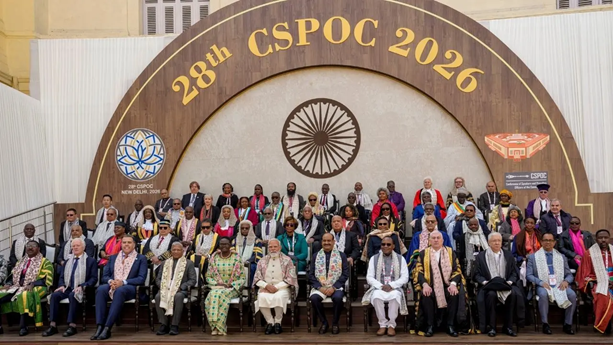
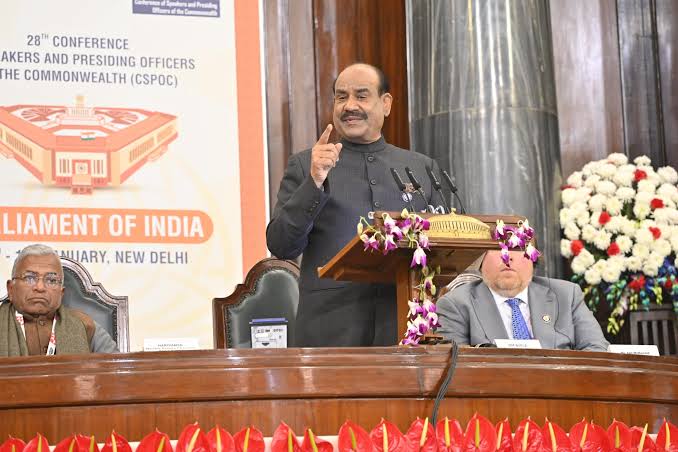

Under the chairmanship of Lok Sabha Speaker Om Birla, India welcomed delegates with traditional hospitality. Prime Minister Narendra Modi inaugurated the conference at Samvidhan Sadan, emphasizing India’s democratic strength, institutional capacity, and commitment to inclusive governance.
India highlighted its democratic achievements, including the participation of 1.5 million women in rural leadership, progress in public welfare, and its global contributions in vaccine production, steel, rice, and infrastructure. The Prime Minister stressed the importance of “last-mile delivery” in democracy and showcased India as a model for the Global South.
Conference Agenda and Key Themes
The 28th CSPOC focused on contemporary challenges facing parliaments. Key themes included:
- The role of artificial intelligence (AI) and digital tools in parliamentary functioning.
- The impact of social media on parliamentary discourse and institutional authority.
- Enhancing public engagement and safeguarding democratic institutions.
- Security, health, and wellbeing of Members of Parliament and staff.
India emphasized ethical AI and transparent social media frameworks, promoting efficiency, inclusivity, and public trust in parliamentary processes. It also highlighted the importance of Parliamentary Standing Committees in scrutinizing budgets and legislation.
Institutional Structure and Governance
CSPOC operates with a Standing Committee, composed of 15 members, ensuring continuity between conferences. The committee oversees agenda-setting, rules review, and administrative arrangements. Secretariat support, provided by Canada since CSPOC’s inception, guarantees institutional stability.
Global Significance and Outcomes
While CSPOC outcomes are non-binding, they influence parliamentary norms across the Commonwealth. The forum strengthens impartiality, procedural fairness, and legislative resilience, particularly in addressing emerging challenges like AI, misinformation, and cyber threats.
The 28th CSPOC reinforced India’s leadership in democratic governance and technology-driven parliamentary innovation. The conference concluded with the handover of chairmanship to Rt. Hon. Sir Lindsay Hoyle, Speaker of the UK House of Commons, ahead of the 29th CSPOC scheduled in London, 2028.