
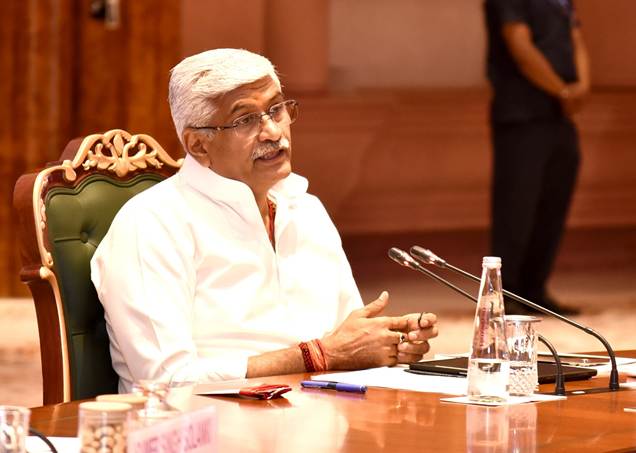
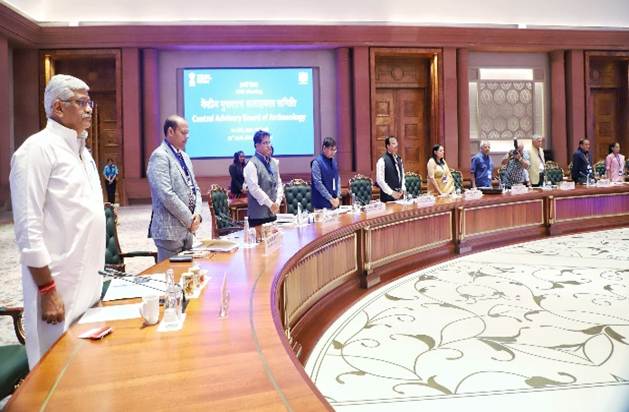
The 38th meeting of the Central Advisory Board of Archaeology (CABA) was successfully held at Bharat Mandapam in New Delhi, bringing together experts, officials, and stakeholders to reaffirm India’s unwavering commitment to the preservation of its archaeological treasures. Under the leadership of Union Minister of Culture and Tourism Shri Gajendra Singh Shekhawat, the gathering served as a platform for thoughtful discussions and strategic planning to enhance the nation’s cultural and archaeological landscape.

Shri Shekhawat, in his keynote address, underscored the crucial role of the Archaeological Survey of India (ASI) in conserving the country’s rich heritage. He called for more inclusive, widespread, and innovative excavation and exploration efforts, reflecting the spirit of “Vikas bhi Virasat bhi”—development along with heritage—championed by Prime Minister Narendra Modi. A notable highlight was the revamping of the Underwater Archaeology Wing of the ASI, which is currently conducting explorations in the sacred waters of Dwarka, a site of immense historical and spiritual importance.
The Minister also drew attention to the significant strides made in the repatriation of antiquities, a proud achievement in reclaiming India’s cultural identity. He stressed the importance of making heritage sites more engaging and enriching for both visitors and scholars, and praised ASI’s increasing presence not only within the country but also in international conservation projects, thus contributing to global cultural stewardship.
The meeting began on a poignant note with tributes to the departed members of CABA and the victims of the recent Pahalgam terror attack, a gesture that underscored the human values at the heart of India’s cultural missions.
Secretary of the Ministry of Culture, Shri Vivek Aggarwal, echoed the need for modernization in heritage management. He emphasized leveraging cutting-edge technologies, including the use of artificial intelligence for tour guidance and digitization of epigraphic data. His suggestion to empower traditional artisans through start-up support highlighted the human and economic potential of heritage-linked livelihoods, making culture a vehicle for both preservation and prosperity.
The meeting also saw active participation from directors and representatives of cultural and archaeological departments from various states, leading to rich discussions on new discoveries, current initiatives, and proposals aimed at protecting and revitalizing historical sites. The role of private partnerships in the Adopt a Heritage scheme was also acknowledged as a meaningful contribution to the care and promotion of important cultural landmarks.
CABA, formed in 1945, continues to serve as a vital bridge between the ASI, universities, and state bodies, nurturing the next generation of archaeologists and expanding the scope of heritage conservation in India. The success of its 38th meeting stands as a testament to a shared national vision—one where progress and tradition walk hand in hand, and where every stone, script, and sculpture is a cherished part of the living story of India.