 Record Growth in a Decade
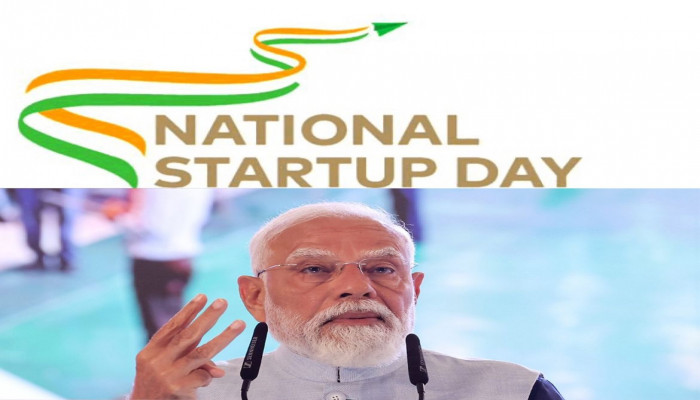
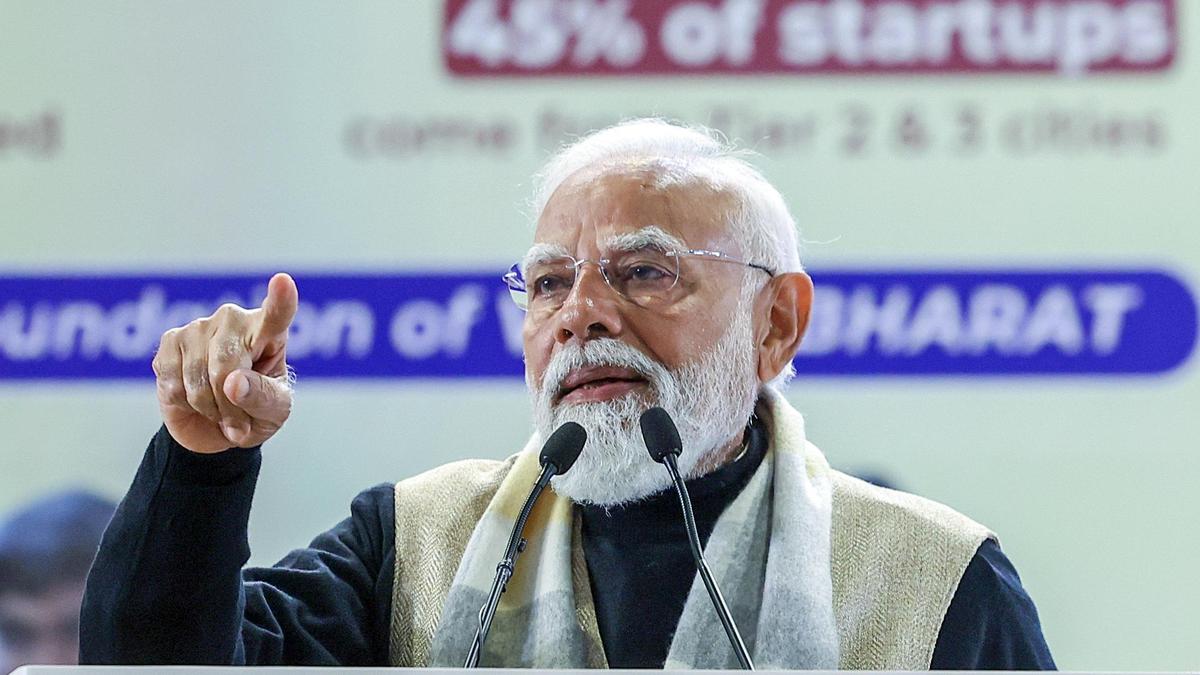
Highlighting the scale of expansion, Modi said that India now has more than two lakh startups operating across sectors, compared to fewer than 500 when the initiative began. He also noted that India had just four unicorns in 2014, a number that has grown to nearly 125 active unicorns today.
“Today’s startups are becoming unicorns, unicorns are launching their IPOs, and more and more jobs are being created,” the Prime Minister said. According to him, the registration of nearly 44,000 startups in 2025 represents the biggest single-year jump since Startup India was launched.
India Among World’s Top Startup Ecosystems
The Prime Minister said the rapid growth has placed India firmly as the world’s third-largest startup ecosystem. He attributed this rise to a combination of policy support, improved ease of doing business, access to capital, and a growing culture of innovation among the youth.
He added that India’s startup success is not limited to technology hubs alone, but extends to smaller cities and emerging regions, reflecting a broad-based entrepreneurial movement.
Changing Attitudes Towards Risk
Modi underlined a significant cultural shift in how risk-taking is perceived in the country. “Earlier, risk-taking was discouraged. Today, it has become mainstream and respected,” he said, adding that people who think beyond a fixed monthly salary are now admired for their ambition.
Ideas that were once seen as unconventional or fringe have now become fashionable, he said, noting that this shift is critical for long-term innovation and economic growth.
Government Funding and Support
The Prime Minister highlighted the role of government-backed financial support in nurturing startups. He said more than ₹25,000 crore has already been invested through the Fund of Funds for Startups, enabling young companies to scale operations and access long-term capital.
Policy reforms, simplified compliance norms, and startup-friendly regulations have also contributed to improving investor confidence and entrepreneurial activity.
Deep Tech Takes Centre Stage
Speaking to the media after the event, Commerce and Industry Minister Piyush Goyal said that the recently approved Fund of Funds 2.0, with a corpus of ₹10,000 crore, will focus strongly on deep technology sectors.
He said priority areas include artificial intelligence, machine learning, quantum technologies, defence, and aerospace sectors where India aims to become a global leader. Goyal noted that startups in these domains often take longer to reach proof-of-concept stages, making the availability of risk capital crucial.
Looking Ahead
As Startup India enters its second decade, the government has signalled a sharper focus on deep tech, manufacturing, and strategic sectors. The Prime Minister said startups will play a vital role in driving innovation, job creation, and economic resilience.