 Relief Work During the Machchhu Dam Tragedy
In 1979, when the Machchhu Dam in Gujarat’s Morbi collapsed, nearly 25,000 people lost their lives. Narendra Modi, then a young RSS worker, led volunteers in providing immediate relief. From organizing cremations to rebuilding villages, his efforts stood out for their inclusivity. He even set up a relief committee to ensure that Muslim families could celebrate Eid despite the tragedy, showing compassion beyond divisions.
Visiting His Mother After 2014 Victory
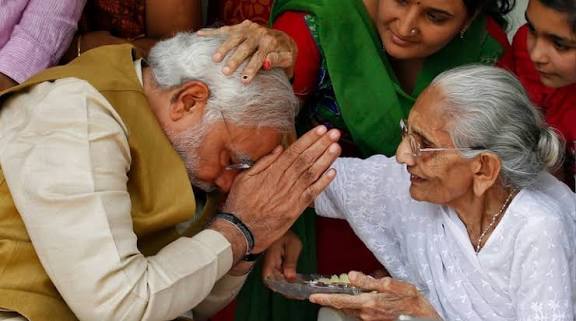
After his historic win in the 2014 Lok Sabha elections, Modi did not head to a grand celebration. Instead, he quietly went to Gandhinagar to seek blessings from his mother, Heeraben. The modest setting — a small government quarter — surprised the international media. The moment reflected his humility and rootedness despite political triumph.
Litchis for a Retired Teacher
In 2018, Modi visited a retired schoolteacher battling dementia. He carried a box of fresh litchis from Dehradun as a personal gift. During the meeting, he affectionately spoke about her teaching days, sought her blessings, and even filled children’s pockets with chocolates. The gesture highlighted his warmth and personal touch beyond politics.
First Day as Gujarat Chief Minister
When Modi took oath as Gujarat’s Chief Minister on October 7, 2001, his first statement was telling. He said, “I have not come here to play a test match. I have come here to play one day.” This was not mere rhetoric. He introduced Karmyogi training camps and collaborated with IIM Ahmedabad to train ministers — an unprecedented move that reflected his focus on governance and efficiency.
Patriotism in His Youth
As a teenager during the 1965 and 1971 wars with Pakistan, Modi would quietly serve tea and food to soldiers at Mehsana railway station. These small but heartfelt gestures of service shaped his lifelong bond with the armed forces. Today, his tradition of celebrating Diwali with soldiers at the borders is an extension of those early experiences of patriotism.