75% THR Beneficiaries Verified via Face Recognition
India has taken another big step in its fight against malnutrition. Under Mission Poshan 2.0, the government has introduced a Face Recognition System (FRS) to ensure that the Take Home Ration (THR) reaches the right people. As of 5th August 2025, 75.12% of eligible beneficiaries have completed face capturing and e-KYC.
Mission Poshan 2.0 – Fighting Malnutrition Holistically
Mission Poshan 2.0 is a centrally sponsored umbrella scheme that combines Anganwadi Services, Poshan Abhiyaan, and the Scheme for Adolescent Girls. It aims to address malnutrition by providing Supplementary Nutrition to children aged 6 months to 6 years, pregnant women, lactating mothers, and adolescent girls.
The mission follows a life-cycle approach, ensuring nutrition at every stage. The updated National Food Security Act norms from January 2023 now focus on diet diversity—not just calories. Beneficiaries receive balanced nutrition with quality protein, healthy fats, and essential micronutrients.
 How Face Recognition Ensures Transparency
The Face Recognition System was first tested in August 2024 and rolled out nationwide on an optional basis in December 2024. From 1st July 2025, it became a standard practice to verify THR beneficiaries through the Poshan Tracker application.
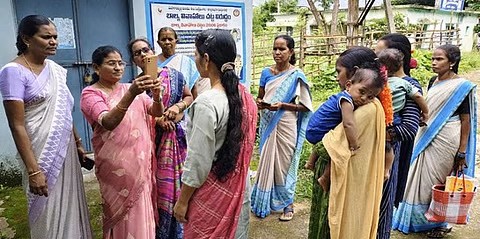
The verification process includes Aadhaar-based e-KYC and a one-time liveliness image capture. This process is done only once during the beneficiary’s lifetime. For monthly ration collection, face matching can be done online or offline—helping areas with low internet connectivity.
Special provisions are in place for children under six. Since Bal Aadhaar does not contain biometric data, the FRS is done for their mother, father, or guardian instead.
Progress So Far – The Numbers Speak
Out of 4.91 crore eligible THR beneficiaries, 3.69 crore have already completed face capturing and e-KYC. That’s a success rate of over 75% in just a short time.
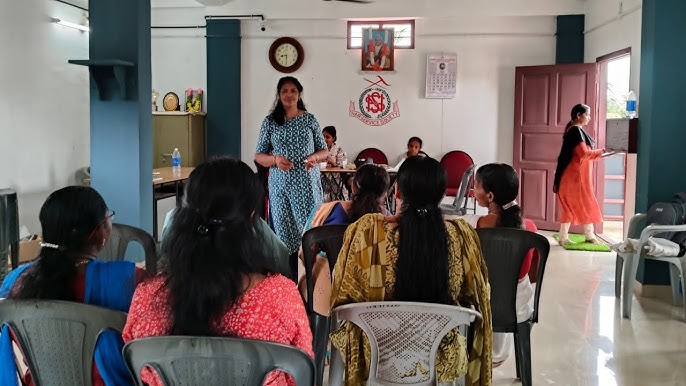
This achievement is a result of continuous training sessions for Anganwadi workers, on-ground visits by ministry officials, and regular problem-solving meetings with state teams.
Data Privacy and Security Safeguards
Given the sensitivity of personal data, the government has implemented strict data protection measures in the Poshan Tracker system:
- All data is collected with informed consent and purpose limitation.
- Face verification requests are encrypted during transmission.
- No permanent storage of images on devices—temporary data is deleted after logout.
- Access is role-based, logged, and monitored to prevent misuse.
- The app’s internal database is fully encrypted.
- Face images are processed in encoded format for extra safety.
Impact on Beneficiaries
The introduction of FRS is ensuring that ration reaches genuine beneficiaries without delays or leakages. For pregnant women and young children, this timely nutrition support can be life-changing.
By reducing fraudulent claims and improving efficiency, the system builds trust in welfare delivery. It also saves time for both Anganwadi workers and beneficiaries.
Challenges and the Road Ahead
While the system has been largely successful, challenges like low digital literacy, poor connectivity in remote areas, and resistance to new technology remain. The offline verification feature is helping bridge this gap.
The next target is to cover the remaining 25% of beneficiaries quickly, ensuring universal coverage under THR verification. The government also aims to integrate more advanced AI tools in the future for better tracking.
Conclusion
With over three-fourths of beneficiaries verified, India is moving closer to achieving last-mile nutrition delivery goals. The combination of technology, training, and transparency is making Mission Poshan 2.0 a model for other welfare schemes.