Global Conference on Industrial Policy Held at NALSAR
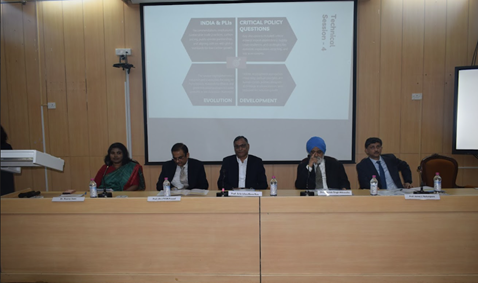
A major international conference on industrial policy and global competitiveness took place from January 17 to 19, 2025, at NALSAR University of Law, Hyderabad. The Centre for Trade and Investment Law (CTIL) organized the event. It was held in collaboration with NALSAR and the World Trade Institute.
Experts from across the globe came together to discuss today’s industrial challenges. They focused on topics like India’s industrial policy, PLI schemes, green transition, and supply chain resilience.
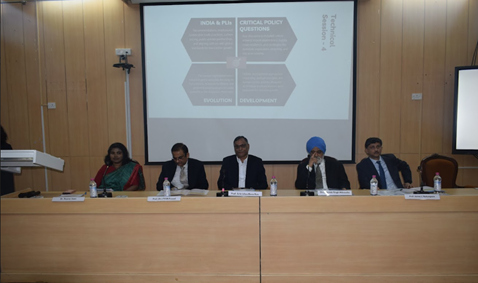 Aligning Policy with Global Norms
The theme of the conference was “Navigating the Future: Industrial Policy and Global Competitiveness.”
Speakers stressed the need to align national policies with World Trade Organization (WTO) rules. They also discussed the importance of balancing global integration with domestic priorities.
Supply chain disruptions and shifting geopolitical tensions made the event timely. Many countries are revisiting trade strategies. India is doing the same.
Therefore, the discussions focused on strengthening India’s global standing while promoting sustainable and inclusive growth.
Eminent Speakers Share Perspectives
Several notable experts attended the event. They included policymakers, academicians, and trade specialists.
Prof. James J. Nedumpara, Head of CTIL, welcomed everyone. He spoke about the growing role of green industrial policy.
Prof. Srikrishna Deva Rao, Vice Chancellor of NALSAR, highlighted how law shapes industrial development.
Shri Ujal Singh Bhatia and Prof. Peter Van den Bossche, both former WTO Appellate Body members, emphasized the tight link between trade rules and national policies.
India’s Role in a Changing World
Shri Dammu Ravi, Secretary (Economic Relations) at the Ministry of External Affairs, discussed India’s future.
He noted India’s strong position in critical raw materials supply chains. He also called for value chain integration that focuses on job creation and long-term benefits.
This point echoed throughout the sessions. Emerging economies, especially India, must lead the way in energy transition and economic transformation.
Montek Singh Ahluwalia on Trade Shifts
A key session featured Shri Montek Singh Ahluwalia, former Deputy Chairman of the Planning Commission.
He addressed the global drift toward protectionism. He explained how China’s economic rise and changing U.S. policies are reshaping trade.
He urged India to keep its PLI schemes transparent and cost-effective. He also stressed that all policies must remain WTO-compliant.
Experts Dive Deeper
Many well-known scholars contributed rich insights. They included:
-
Dr. Werner Zdouc, ex-Director, WTO Appellate Body
-
Mr. Sumanta Chaudhuri, Trade Policy Head, CII
-
Dr. Pritam Banerjee, Centre for WTO Studies
-
Prof. Henry Gao, Singapore Management University
-
Dr. Alicia Garcia, Senior Fellow, Bruegel
Their talks covered complex global trade systems. They also emphasized sustainability and inclusive policies for future growth.
CTIL Launches Investment Law Newsletter
A big announcement came during the event. CTIL launched a new monthly newsletter—
Investment Law Compass: Navigating through the Global Investment Framework.
This newsletter will break down the latest in global investment law. It’s designed for professionals and enthusiasts alike.
You can find it online at www.ctil.org.in.
Closing Remarks and Takeaways
In his valedictory address, Prof. Nedumpara thanked the co-hosts, NALSAR and WTI.
He reflected on the engaging sessions and meaningful exchanges. The conference ended with a clear vision.
India must build an industrial policy that is globally competitive, socially inclusive, and environmentally responsible.