Skip to content
Ramrajya News Website RamRajya News

Heralding RamRajya in Bharat

  • My Account
  • Dharm
  • Editorial
  • Register
  • Mandir
  • From Social Media
  • Contact Us
Ramrajya News Website
RamRajya News

Heralding RamRajya in Bharat

India’s Suspension of Indus Waters Treaty: A Turning Point in Ties with Pakistan

RR Team, April 26, 2025April 26, 2025

In a move charged with deep emotion and strategic calculation, India has suspended the Indus Waters Treaty with Pakistan following the brutal massacre of 26 people in Pahalgam by Pakistan-sponsored terrorists. This marks the first time in over six decades that India has put the treaty in abeyance, a pact once hailed as a rare example of cooperation despite hostile relations.
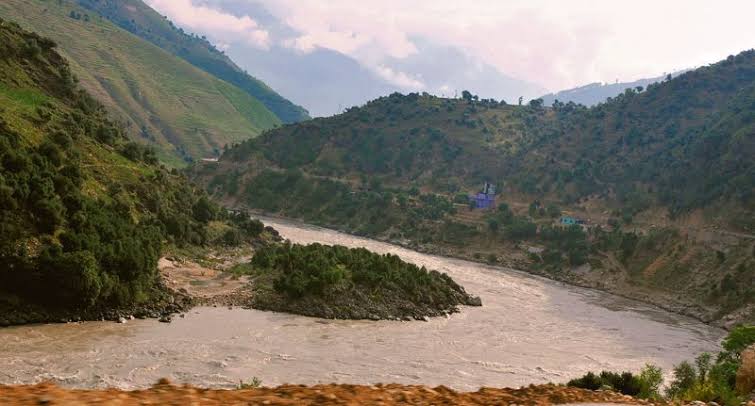
The Indus Basin holds immense significance for Pakistan, supplying around 76% of its water and irrigating 80% of its farmland. This system forms the backbone of Pakistan’s agriculture and food production. India’s decision, therefore, carries not only diplomatic weight but also the potential to reshape the region’s future in profound ways. Yet, despite the suspension, India’s immediate ability to stop the flow of water is constrained by its current infrastructure, built over the decades with limited scope due to the treaty’s restrictions.

The origins of the Indus Waters Treaty trace back to 1960, when, under World Bank mediation, Prime Minister Jawaharlal Nehru and Pakistan’s General Ayub Khan agreed to share the waters of the Indus River system. India was granted rights over the eastern rivers — Ravi, Beas, and Sutlej — while Pakistan received the larger share, with control over the western rivers — Indus, Jhelum, and Chenab. While the treaty was designed to promote cooperation, many in India have long felt it was disproportionately generous to Pakistan, a sentiment that has deepened over the years, especially as acts of cross-border terrorism continued unabated.

Despite possessing significant hydroelectric potential, especially in the Himalayan regions, India’s usage of the western rivers has remained minimal, largely confined to small-scale hydropower projects. The suspension of the treaty now opens the possibility for India to explore new projects without the burden of prior notification or inspection by Pakistani officials. However, experts caution that building large dams and storage facilities is a time-consuming process, often taking between five to ten years due to the complex terrain and regulatory hurdles.

At present, India’s storage capacity on the western rivers is less than one million acre-feet — a fraction compared to what would be needed to dramatically alter the water flow to Pakistan. Ongoing and planned projects such as the Kishanganga, Ratle, Pakal Dul, and Kiru dams, while critical, are mostly run-of-the-river designs, limiting their ability to withhold large volumes of water.

In the wake of the Pahalgam attack, India’s resolve seems firmer than ever. The government has initiated a three-pronged strategy aimed at short-, mid-, and long-term solutions to enhance water retention and utilization. This includes expediting the construction of existing projects and planning new reservoirs along the Indus system. Furthermore, India has officially conveyed its demand to amend the treaty, citing changing energy needs and demographic pressures — a request Pakistan has previously ignored.

There is also growing conversation around India’s legal right to exit the treaty altogether, a move permitted under international law in cases of a material breach. If pursued, this could dramatically shift the balance of water rights in South Asia. Nevertheless, New Delhi appears mindful of the humanitarian implications and the complexities involved, choosing a cautious yet determined path forward.

The decision to suspend the treaty is both a message of defiance against continued terrorism and a statement of India’s sovereign right to safeguard its resources and its people. It reflects a nation’s deep anguish and resilience in the face of provocation, and a quiet determination to rewrite the terms of engagement with its neighbour — not through aggression, but through strategic assertion of its rights over its own rivers.

As India charts this new course, the coming years will test its engineering capabilities, diplomatic finesse, and commitment to balancing national interest with regional stability. What is certain, however, is that the waters of the Indus now carry with them not just life for millions, but also the hopes of a nation seeking justice and self-respect in a turbulent neighbourhood.

News

Post navigation

Previous post
Next post

Related Posts

News

MNRE Launches Green Hydrogen Logo Contest with ₹1 Lakh Prize

October 24, 2025October 24, 2025

The Ministry of New and Renewable Energy (MNRE) has launched a nationwide logo design contest for the National Green Hydrogen Mission (NGHM), offering a cash prize of ₹1 Lakh to the winner. The initiative invites citizens of all ages to showcase India’s ambition to become a global hub for green…

Read More
News

ECI Set to Launch ECINET: A Unified Digital Platform for Seamless Electoral Services

May 4, 2025May 12, 2025

On 4th May 2025, the Election Commission of India (ECI) announced a transformative step toward streamlining and enhancing its digital infrastructure with the upcoming launch of a unified digital platform named ECINET. Designed as a single-point interface, ECINET is set to integrate more than 40 existing mobile and web applications…

Read More
News

PM Modi’s Gujarat and UT Visit: Major Boost for Healthcare, Food Security, and Women’s Empowerment

March 7, 2025March 8, 2025

Prime Minister Narendra Modi is set to embark on a significant visit to the Union Territory of Dadra and Nagar Haveli and Daman and Diu, as well as Gujarat, on March 7th and 8th. His itinerary is packed with key inaugurations and launches aimed at enhancing healthcare, infrastructure, food security,…

Read More

Leave a Reply Cancel reply

You must be logged in to post a comment.

Recent Posts

  • Putin’s Il-80 ‘Flying Kremlin’ Becomes World’s Most-Tracked Jet
  • Labour Codes Reshape BOCW Protections Nationwide
  • Govt Defines EMRS Expansion Rules in Bihar
  • PMJUGA Launched to Transform 63,843 Tribal Villages Nationwide
  • PSU MoU Enhances EMRS Infra, Digital Learning

Recent Comments

No comments to show.

Archives

  • December 2025
  • November 2025
  • October 2025
  • September 2025
  • August 2025
  • July 2025
  • June 2025
  • May 2025
  • April 2025
  • March 2025
  • February 2025
  • January 2025
  • December 2024
  • November 2024
  • October 2024
  • September 2024
  • June 2024
  • May 2024
  • January 2024
  • November 2023
  • October 2023
  • September 2023
  • August 2023

Categories

  • Ancient Bharat
  • Article 1
  • Article 2
  • Article 3
  • Article 4
  • Articles
  • Artist
  • BB – Article 1
  • BB – Article 2
  • BB – Article 3
  • BB – Article 4
  • BB – Article 5
  • Beauty
  • Bharat
  • Bihar
  • Business and Economy
  • By – Devendra Sikarwar
  • By – Kumar Satish
  • By – Menuka Shahi
  • By – Nitin Tripathi
  • By – Raj Shekhar Tiwari
  • By – Sarvesh Kumar Tiwari
  • By – Shanees Arya
  • By – Shouvik Roy
  • By – विनय सिंह बैस
  • By – कमलाकांत त्रिपाठी
  • Career
  • Covid
  • Defence
  • Dharm
  • Editorial
  • Educational
  • Elections
  • Events
  • Expose-Series
  • Festivals
  • From Social Media
  • GeoPolitics
  • Glorious Bharat
  • Health
  • Inspired by SM Posts About Current Events
  • International
  • Life style
  • Lok Sabha
  • Mandir
  • Model
  • Nation First
  • News
  • Operation Sindoor
  • Photography
  • Politics
  • Press Release
  • Rajya Sabha
  • Ramayan Series
  • Ramp
  • Rituals
  • Sports
  • Tips & Tricks
  • Trends
  • Uncategorized
  • Warfare
  • बदलता भारत

Tags

##India #AatmanirbharBharat #AmitShah #AtmanirbharBharat #BiharElections2025 #BiharPolitics #BJP #BreakingNews #CulturalHeritage #CyberSecurity #DigitalIndia #Diplomacy #ECI #EconomicGrowth #ElectionCommission #GlobalTrade #GoodGovernance #GovernmentOfIndia #IndiaEconomy #IndianEconomy #IndiaNews #IndianNavy #IndianPolitics #IndianRailways #MakeInIndia #MaritimeSecurity #NarendraModi #NationalSecurity #NortheastIndia #OmBirla #PiyushGoyal #PMModi #PresidentMurmu #RamRajyaNews #RuralDevelopment #ShivrajSinghChouhan #SkillDevelopment #SpecialCampaign5 #SupremeCourt #SwachhBharat #TeamIndia #ViksitBharat #ViksitBharat2047 #WomenEmpowerment innovation

Categories

  • Ancient Bharat (10)
  • Article 1 (1)
  • Article 2 (1)
  • Article 3 (1)
  • Article 4 (1)
  • Articles (34)
  • Artist (1)
  • BB – Article 1 (2)
  • BB – Article 2 (2)
  • BB – Article 3 (2)
  • BB – Article 4 (2)
  • BB – Article 5 (2)
  • Beauty (2)
  • Bharat (46)
  • Bihar (121)
  • Business and Economy (7)
  • By – Devendra Sikarwar (10)
  • By – Kumar Satish (2)
  • By – Menuka Shahi (1)
  • By – Nitin Tripathi (1)
  • By – Raj Shekhar Tiwari (2)
  • By – Sarvesh Kumar Tiwari (1)
  • By – Shanees Arya (1)
  • By – Shouvik Roy (1)
  • By – विनय सिंह बैस (4)
  • By – कमलाकांत त्रिपाठी (1)
  • Career (18)
  • Covid (6)
  • Defence (9)
  • Dharm (170)
  • Editorial (18)
  • Educational (4)
  • Elections (106)
  • Events (3)
  • Expose-Series (2)
  • Festivals (133)
  • From Social Media (33)
  • GeoPolitics (7)
  • Glorious Bharat (9)
  • Health (28)
  • Inspired by SM Posts About Current Events (1)
  • International (32)
  • Life style (1)
  • Lok Sabha (6)
  • Mandir (22)
  • Model (3)
  • Nation First (8)
  • News (4,805)
  • Operation Sindoor (8)
  • Photography (2)
  • Politics (65)
  • Press Release (8)
  • Rajya Sabha (1)
  • Ramayan Series (4)
  • Ramp (3)
  • Rituals (22)
  • Sports (72)
  • Tips & Tricks (1)
  • Trends (4)
  • Uncategorized (13)
  • Warfare (1)
  • बदलता भारत (8)
©2025 RamRajya News | WordPress Theme by SuperbThemes
Go to mobile version