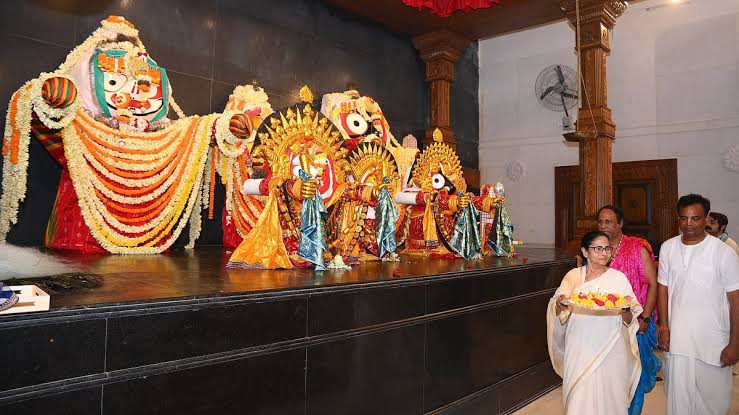
A newly inaugurated Jagannath temple in Digha, West Bengal, has sparked concern among servitors and cultural custodians of the original 12th-century Jagannath Temple in Puri, Odisha. Built at a cost of ₹250 crore on a 24-acre plot in Purba Medinipur district, the Digha temple was opened to the public on the auspicious occasion of Akshaya Tritiya by Chief Minister Mamata Banerjee. While many welcomed the temple’s completion as a cultural landmark, others view it with a mix of apprehension and sorrow, particularly in Puri, where the original shrine has stood for centuries as a sacred and deeply spiritual seat of Hindu faith.
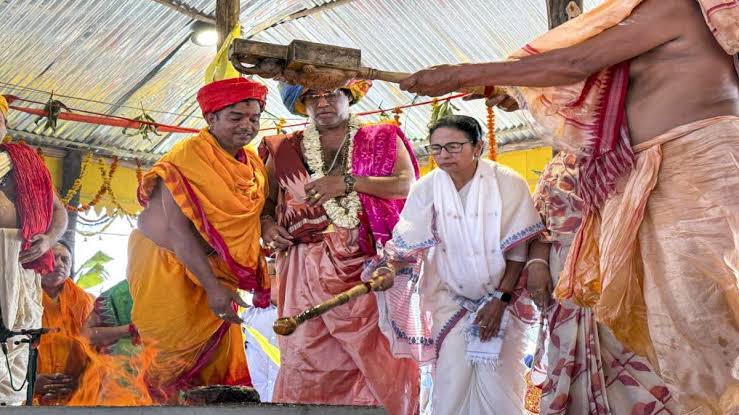
The temple in Digha, modeled closely on the revered Kalingan architecture of the Puri Jagannath Temple, features idols of Lord Jagannath, Lord Balabhadra, Goddess Subhadra, and Goddess Mahalaxmi. However, it is not just the structure that is drawing attention—it is the potential symbolic and spiritual overlap that is causing discomfort. Several senior servitors and religious groups from Puri have voiced their unease about replicating traditional rituals of the Puri temple in the new location. Notices have been issued by key servitor groups, urging community members not to participate in religious activities at the Digha temple that mimic those of the original shrine.
There is also a heartfelt concern over the sanctity and uniqueness of rituals that have been carefully preserved in Puri for generations. In particular, servitors emphasized that while the creation of new temples is not inherently problematic, the usage of specific sacred practices, terminology like “Dham,” and symbols like the Nilachakra—closely associated with Puri—should be treated with reverence and caution. The issue is not about rivalry, they say, but about preserving the spiritual identity of one of Hinduism’s four cardinal dhams.
Adding another layer of complexity, the Digha temple allows entry to non-Hindus and foreigners—a progressive step for many, but one that contrasts sharply with the traditional norms at the Puri temple. Servitors worry that such shifts could slowly erode long-standing practices rooted in centuries of tradition and devotion.
Beyond the spiritual dimension, there are economic fears as well. The Puri temple draws millions of devotees annually, a significant number of whom are from West Bengal. The tourism sector in Puri—including hotels, guides, transport services, and small businesses—heavily relies on this footfall. With a grand new temple now standing in Digha, some fear a potential shift in pilgrimage patterns that could adversely affect livelihoods in Odisha. Although Digha currently lacks the extensive infrastructure that Puri offers, stakeholders acknowledge that such a development could have long-term effects unless steps are taken to enhance visitor experience at the original temple.
Amid these concerns, voices from both sides call for mutual respect. The Digha temple is seen as a symbol of devotion and cultural pride for West Bengal, while the Puri temple remains a timeless spiritual beacon for millions. As India balances tradition with modern expression, it’s essential that such developments foster harmony rather than competition, ensuring that cultural heritage continues to unite rather than divide.