
In a deeply alarming turn of events between two nuclear-armed neighbors, Pakistan has announced that it has launched retaliatory strikes against India following what it described as unprovoked missile attacks on its military bases. The escalating hostilities have raised grave concerns across the region and among global observers.
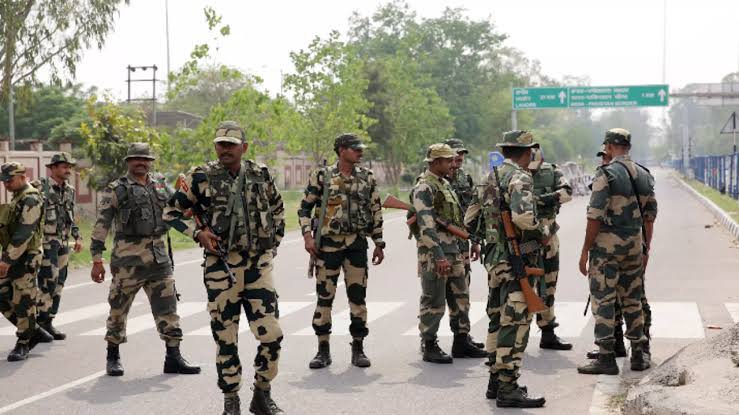
The conflict surged into a dangerous new phase early Saturday when Pakistan’s military spokesperson, Major General Ahmed Sharif Chaudhry, accused India of launching missile attacks on three major Pakistani military installations—Nur Khan, Murid, and Shorkot airbases. He claimed that these strikes were carried out using fighter jets and targeted highly sensitive defense infrastructure. Nur Khan base, located in Rawalpindi near Islamabad, is especially critical, as it lies close to Pakistan’s military headquarters. The proximity of the attacks to the capital sent shockwaves through the local population, prompting widespread panic.
In response, Pakistan launched a counteroffensive titled Operation Bunyan Ul Marsoos, which translates to “Wall of Lead.” Pakistani officials stated that this operation targeted India’s Pathankot airfield in Punjab and the Udhampur airbase in Indian-administered Kashmir. Explosions were reported in both locations, with additional blasts heard in Srinagar, further intensifying civilian fears in the already volatile region.
India’s Ministry of Defence confirmed that its armed forces remain on high alert, utilizing advanced tracking and drone interception systems to neutralize threats. While India has not formally acknowledged the extent of damage from the Pakistani strikes, it has confirmed a state of readiness and engagement.
The origins of this latest spiral can be traced to a series of cascading retaliations. Earlier in the week, India had launched strikes across nine locations in Pakistan, reportedly killing 31 people. These attacks were in response to a terrorist incident late last month in Indian-administered Kashmir, where 25 Hindu pilgrims and their guide were killed—a tragedy India attributed to Pakistan-based militants.
Further adding to the tension, India accused Pakistan of orchestrating extensive drone attacks on Thursday and Friday, allegedly targeting up to 400 sites, including cities, military facilities, and religious places across northern India. The Indian government said it successfully intercepted many drones but confirmed injuries in Punjab’s Ferozepur district. The Indian military also accused Pakistan of targeting religious institutions—gurdwaras and churches—prompting strong condemnation.
Pakistan’s Information Minister, Attaullah Tarar, denied these allegations, asserting that Pakistan had not carried out any offensive action. However, conflicting statements from Pakistani officials hinted that drone activity may have been intended as a prelude to a broader military campaign.
Pakistan also claimed to have repelled India’s previous attacks using over 100 aircraft and Chinese-supplied defense systems, resulting in an aerial dogfight that reportedly brought down five Indian fighter jets, including a French Rafale. While India has not confirmed these losses, visuals of wreckage in Kashmir and Punjab have circulated widely.
The situation now teeters dangerously close to the brink. As civilians on both sides grapple with fear and uncertainty, calls for de-escalation have become more urgent than ever. Yet, Pakistan’s military spokesperson made it clear that further retaliation is not off the table. “We will not de-escalate,” he stated. “With the damages India did on our side, they should take a hit.”
With tensions at their highest in decades, the international community watches anxiously, hoping that diplomacy will prevail over destruction. The human cost of continued conflict—on both sides—is too heavy to ignore.