On the sacred occasion of Buddha Purnima, the National Museum in New Delhi became a center of reflection and reverence as it hosted the veneration of the Sacred Relics of Lord Buddha. The ceremony brought together dignitaries, monks, scholars, and visitors in a solemn celebration that honored the timeless teachings of compassion, peace, and harmony espoused by the Buddha.
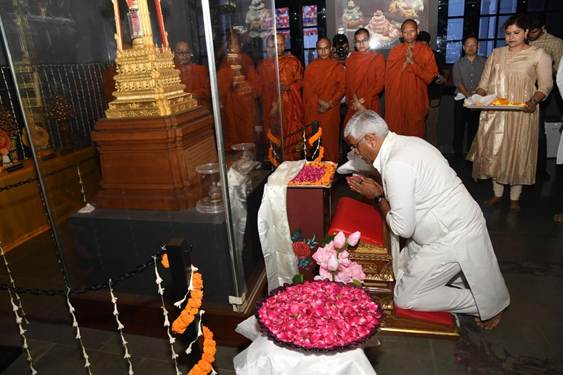
Union Ministers Gajendra Singh Shekhawat and Kiren Rijiju led the floral tributes, paying homage to the Sacred Relics with deep respect and sincerity. On behalf of Prime Minister Narendra Modi, Shri Rijiju conveyed heartfelt greetings to the global Buddhist community and emphasized how Buddha’s message continues to guide humanity in facing contemporary challenges with wisdom and compassion. The gathering was a testament to the unifying power of these teachings across generations and borders.
Shri Shekhawat, while observing a stele depicting the eight great miracles of the Buddha, reflected on the spiritual richness captured in ancient art. Visitors, guided through the Buddha Gallery, witnessed the journey of Buddhism from early symbolic forms to rich iconography found in Mathura, Gandhara, and later Indian traditions. Of particular reverence were the Kapilavastu Relics—sacred remains excavated from Piprahwa in Uttar Pradesh—which formed the spiritual centerpiece of the day’s observance.
The Ministers and attendees explored intricate representations of Bodhisattvas, Panchatathagatas, and Ishtadevatas, showcasing the diverse and profound expressions of Mahayana and Vajrayana Buddhism. In the Thangka Gallery, vivid scroll paintings like the Bhavachakra mesmerized viewers, illustrating the cyclical nature of life and the path to liberation. The artworks not only reflected spiritual depth but also demonstrated the meditative artistry passed down through centuries.
Children and families added a joyful spirit to the day, participating in creative workshops including Prayer Flag Making, Thangka Colouring, and Miniature Buddha Crafting. The DIY counters and film screenings drew people of all ages, weaving learning with reverence in a celebration that felt both personal and collective.
Throughout the day, the Buddha Gallery remained open to the public, drawing hundreds who came to pay their respects, seek inspiration, and immerse themselves in the serenity of Lord Buddha’s life and teachings. In a world too often marked by conflict and uncertainty, the National Museum offered a space of quiet reflection—where art, culture, and spirituality met in harmony, echoing the eternal message of the Enlightened One.