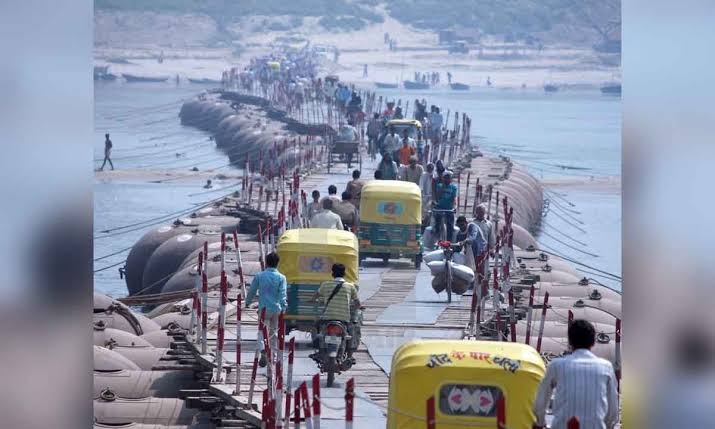
Patna: The pontoon bridge connecting Kacchi Dargah in Patna to Raghopur in Vaishali is on the brink of collapse, and the people who rely on it daily are living in constant fear. Known locally as the Pipa Pul, this 2-kilometre-long bridge is the only direct connection for nearly 20 panchayats across the Raghopur block and surrounding diara areas. Its deterioration has sparked urgent pleas from residents who depend on it for everything from daily commutes to accessing essential services.
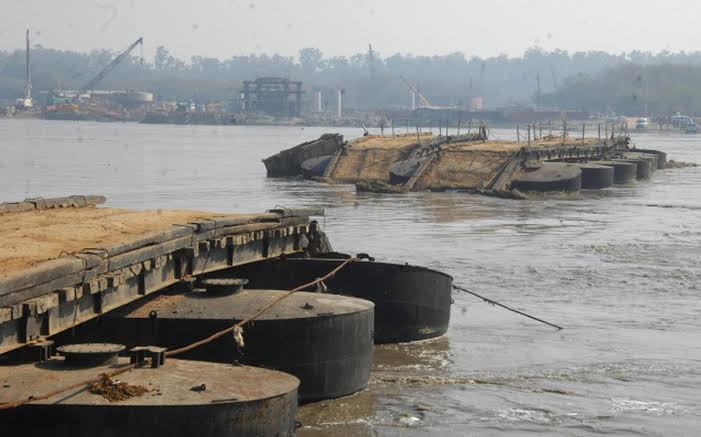
The bridge’s iron platforms have cracked, warped, and in some places become dangerously sharp. Several metal sheets have come loose, leaving commuters to navigate a perilous crossing each day. For the thousands who use this route—an estimated 50,000 people and countless vehicles—it has become a test of nerves and faith.
“This bridge is a ticking time bomb,” said Sonu Kumar, an auto-rickshaw driver who uses it multiple times a day. “We don’t have a choice. If it goes, it will take lives with it.”
Jayram Kumar from Kacchi Dargah echoed this concern, saying the authorities have turned a blind eye for too long. “It’s not just a bridge; it’s our lifeline. Ignoring this is putting thousands of lives at risk,” he said.
Many locals, including villagers like Santosh Yadav and Rajesh Sah, are now voicing their fear openly. “We feel like we’re gambling with our lives every time we cross. How long can luck protect us?” they asked.
Despite the gravity of the situation, officials have offered only vague assurances. Patna City Sub-Divisional Officer Satyam Sahay said that the Bihar Rajya Pul Nirman Nigam Limited (BRPNNL) would be directed to investigate the matter and take appropriate action. However, no specific timeline for repairs has been provided.
There is some hope on the horizon. A new six-lane greenfield bridge is currently under construction between Kacchi Dargah and Chaksikandar in Vaishali. With a budget of ₹4,988.40 crore, it promises to offer a robust and modern alternative once completed—possibly by the end of this year. But for the people who must rely on the existing pontoon bridge for the foreseeable future, that promise feels painfully distant.
Until then, the bridge stands as a symbol of neglect, and the voices of a worried community grow louder, pleading for safety, dignity, and swift action before tragedy strikes.