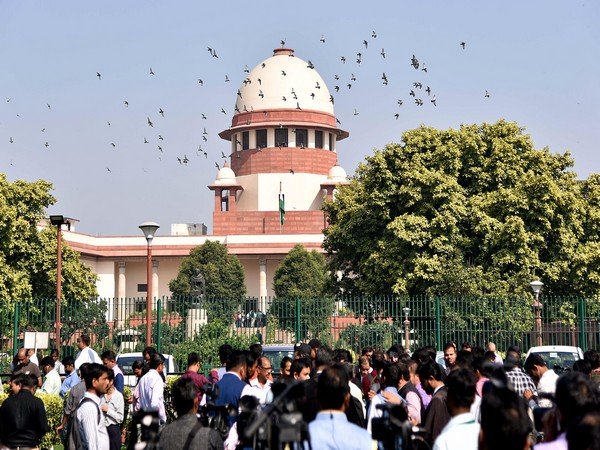
In a significant development, the Supreme Court of India has granted interim bail to Professor Ali Khan Mahmudabad of Ashoka University, who was arrested on May 18 by the Haryana Police in connection with his social media posts related to ‘Operation Sindoor’. The decision offers a moment of respite amid growing concerns about freedom of expression, especially for individuals in academic and intellectual circles.

The Court, while granting bail, maintained that the investigation should continue. Emphasizing the need for an impartial inquiry, the bench directed the Haryana Director General of Police to set up a Special Investigation Team (SIT) within 24 hours. This SIT must include senior IPS officers who are not from Haryana or Delhi, and one of them must be a woman. The team is to be led by an officer of Inspector General rank, with two other members of Superintendent rank.
Justice Surya Kant, who headed the bench alongside Justice NK Singh, noted during the hearing that although free speech is a constitutional right, public expression during sensitive national moments must be exercised with caution and responsibility. The Court took a stern view of the timing and tone of Mahmudabad’s posts, observing that the language used could have been more neutral and respectful, especially given the charged atmosphere following recent terrorist attacks on Indian soil.
The Court imposed certain conditions on Professor Mahmudabad as part of the interim bail. He has been restrained from posting or writing anything related to the ongoing issue, including opinions about India’s response to the recent attacks. He is also required to surrender his passport and fully cooperate with the investigation.
Senior Advocate Kapil Sibal, representing Mahmudabad, argued that the professor’s posts were not criminal in nature and emphasized that his final remarks included the phrase “Jai Hind,” underscoring patriotic intent. He also shared that the professor’s wife is currently nine months pregnant and expecting delivery soon, making the circumstances particularly distressing for the family.
Despite these arguments, the Court reiterated the importance of understanding the implications of public statements. Justice Kant remarked that while expressing anti-war sentiments is not inherently problematic, care must be taken in choosing words that do not inflame communal or national sentiments. He referred to Mahmudabad’s posts as an example of “dog-whistling”—a legal term used to describe coded language that may appear innocuous but carries provocative undertones.
The Additional Solicitor General, SV Raju, representing the State of Haryana, contended that the posts were not as harmless as claimed and that they warranted a detailed investigation into their intent and possible consequences. The Court agreed, stating that the true meaning and impact of the statements must be thoroughly examined by the SIT.
Earlier, a lower court in Sonepat had remanded Professor Mahmudabad to police custody for two days, after which he was sent to judicial custody. The request for a seven-day police custody was denied by the magistrate.
The charges against Mahmudabad, under the newly framed Bharatiya Nyaya Sanhita, include allegations related to promoting communal disharmony, endangering national sovereignty, and making remarks that could be seen as disrespectful to women, particularly in light of their service in the armed forces.
As the legal process unfolds, many are watching the case closely, balancing concerns of national security with the fundamental rights of expression and dissent. For now, the Supreme Court’s decision marks a cautious middle path—allowing temporary relief to the professor while ensuring that the integrity of the investigation remains intact.