As India celebrates the success of Operation Sindoor—a strategic and symbolic military initiative that has ignited a renewed sense of patriotism across the nation—the situation in the eastern front, particularly in West Bengal and neighboring Bangladesh, is far from celebratory. While citizens wave the tricolour in pride in one part of the country, alarming developments in the east demand urgent national attention.
Troubling Signals from West Bengal
-
Mysterious Drone Activity over Kolkata:
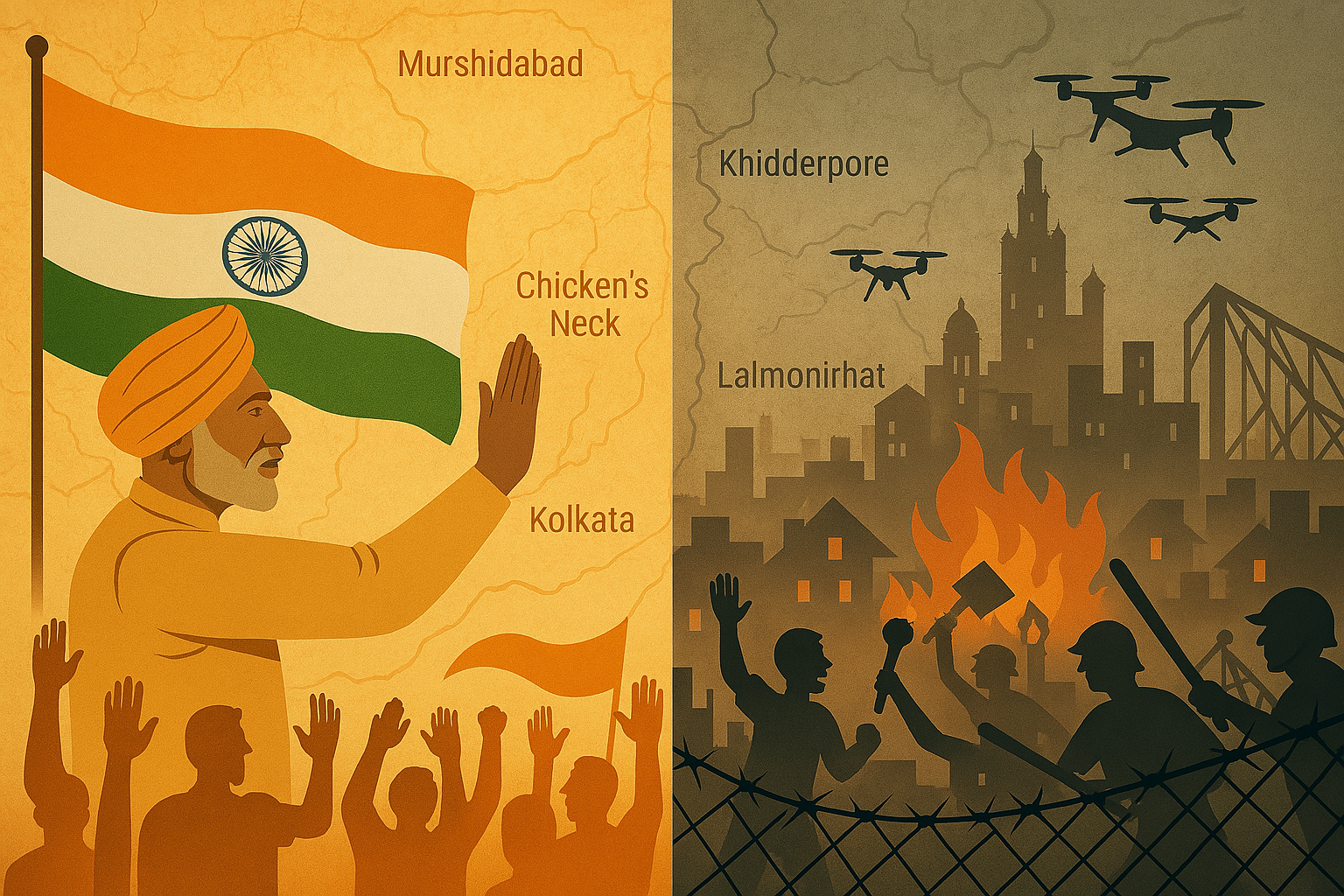
Just two days ago, 8–10 unidentified drones were spotted flying over Kolkata. Disturbingly, these drones are suspected to have originated from Khidderpore, an area known for its dense population of illegal migrants. The police have launched an investigation, but answers remain elusive. -
Murshidabad Riots: ‘Outsider Theory’ Falls Flat:
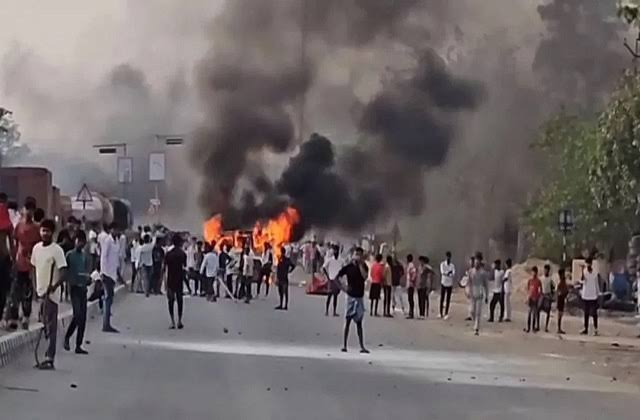
The Kolkata High Court has directly contradicted the ruling Trinamool Congress’ narrative that blamed “outsiders” for the recent Hindu atrocities in Murshidabad. The court has named local TMC MLA Mehboob Alam as one of the leaders of the violent mob that destroyed at least 113 Hindu homes. -
Police Brutality Against Protestors:
Peaceful demonstrators protesting the teacher recruitment scam were recently met with shocking police violence. Several people were injured, including a woman who suffered a broken leg. The silence of so-called ‘intellectuals’ and ‘civil society’ figures on this crackdown is deafening. -
Tiranga Yatra Without the ‘Bhadralok’:
As the rest of the nation celebrated Operation Sindoor with patriotic marches, West Bengal’s ruling TMC, along with CPI(M), Congress, and prominent cultural figures, conspicuously abstained. Only BJP workers were seen actively participating in Tiranga Yatras across the state. -
Water for Pakistan?:
In a bizarre move, CPI(M) recently organized a rally in Kolkata demanding water for Pakistan after India revoked the Indus Waters Treaty. The justification? “Humanity.” One wonders if anti-nationalism needs a separate badge when it’s this brazen.
Volatile Developments in Bangladesh
Across the border, Bangladesh is witnessing dramatic shifts:
-
US Marines on St. Martin’s Island:
As India’s forces concentrated on the west, American marines quietly landed aid and personnel on St. Martin’s Island—a move believed to be linked to former Prime Minister Sheikh Hasina’s ousting after she declined US demands over the island. -
Rise of Mullah Yunus:
Mullah Yunus, a Nobel Peace laureate and so-called economist, now leads a fragile interim government. Ties to the partition-era ‘two-nation theory’ and his alignment with both Western powers and China suggest a troubling dual allegiance. Talks are underway to allow China to build an airbase in Lalmonirhat—just 20 km from the Indian border and 70 km from the vulnerable Siliguri Corridor (Chicken’s Neck). -
Rifts in Bangladesh’s Army:
The Bangladesh army chief has threatened a coup over these developments. However, the military is reportedly divided, with some factions allegedly aligned with radical Islamic groups. -
Myanmar on the Brink:
Armed conflict appears imminent in Myanmar, where the Rohingya, Arakan Army, and other factions are taking on the China-backed junta. American arms, Islamist factions, and even the Bangladesh army appear to be involved—raising concerns of spillover into India’s northeast.
A Gateway Under Threat
West Bengal shares a 2,217 km border with Bangladesh—of which more than 500 km remains unfenced and largely unmonitored. This porous border has become a gateway for illegal migration, radical elements, and unchecked violence. Several districts already appear to be slipping out of administrative control, echoing early Kashmir-like patterns of unrest.
The Call for National Vigilance
While the situation may seem dire, it is reassuring to believe that India’s intelligence agencies and security apparatus are aware and actively monitoring the scenario. Under Prime Minister Modi’s leadership, coordinated actions—both internal and external—are likely underway.
However, time is of the essence. Action must come sooner rather than later.
As citizens, especially in West Bengal, the time for cultural slumber is over. The secular, bhadralok disconnection from ground realities is a luxury India can no longer afford. Non-violence born of fear and disunity only serves our adversaries. Nationalistic unity, awareness, and readiness are the need of the hour.