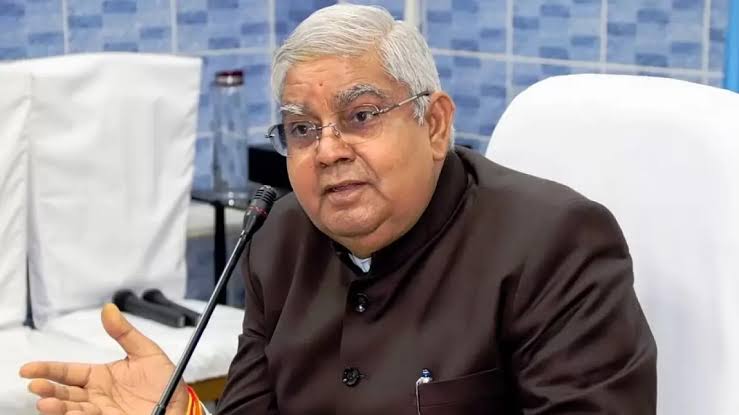
At the convocation ceremony of the International Institute for Population Sciences (IIPS) in Mumbai, Vice-President of India Shri Jagdeep Dhankhar delivered a heartfelt and impassioned address, reflecting on the complex social and demographic changes shaping contemporary India. In his speech, the Vice-President urged the nation to remain vigilant against deliberate attempts to alter the country’s demographic landscape, cautioning that such efforts, driven by political or strategic motives, risk disturbing the delicate social and cultural equilibrium of Bharat.
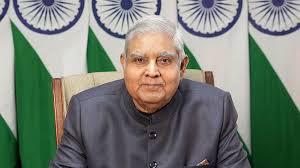
He emphasized that while natural demographic changes unfold slowly over time, what the country is currently witnessing in some regions are choreographed and strategic alterations. These, he warned, are not just alarming but pose serious threats to the unity and integrity of the nation. The Vice-President stressed that India must act with clarity and determination to safeguard its civilisational heritage.
Speaking on peace and national security, he stated that true peace cannot be achieved through passivity or complacency but must be secured from a position of strength. Democracy, he explained, can only flourish when the foundations of peace, security, and internal harmony are strong. Citing historical lessons, he reaffirmed India’s resolve to combat terrorism and defend its sovereignty with unwavering strength.
Addressing the sensitive issue of coerced religious conversions, Shri Dhankhar expressed concern over what he termed the “weaponisation of faith.” He described such conversions as a deep threat to social harmony and cultural coherence. For democracy to function effectively, he argued, it must remain compassionate but never complacent in the face of such challenges.
Lauding a recent governance initiative, the Vice-President hailed the decision to include caste-based enumeration in the upcoming decadal census as a transformative move towards equitable development. He explained that understanding inequalities through data is key to crafting policies that promote social justice and inclusive growth, ensuring that resources reach those who need them most.
The Vice-President’s remarks also highlighted the need for rational and fact-based public discourse. He called upon the youth of the country to steer national dialogue away from dogma and division and towards authenticity and constructive engagement. India’s strength, he reminded, lies in its civilisational values — dialogue, inclusivity, and the pursuit of coexistence.
In a moment of poignant reflection, he asserted that the essence of Bharat lies in its unique combination of demography, democracy, and diversity. These, he said, form the soul of a new and emerging India — one that is resilient, inclusive, and deeply rooted in its civilisational ethos. The Vice-President concluded by urging institutions like IIPS to continue playing a vital role in interpreting population data to shape policies for a stronger, more united Bharat.
The event was attended by Smt. Anupriya Patel, Union Minister of State for Health and Family Welfare; Shri Jaykumar Rawal, Maharashtra’s Minister for Protocol and Marketing; Prof. D.A. Nagdeve, Director of IIPS; and other dignitaries. Their presence underscored the importance of the moment, as India charts its path forward with wisdom, courage, and compassion.