New Delhi, June 4, 2025:
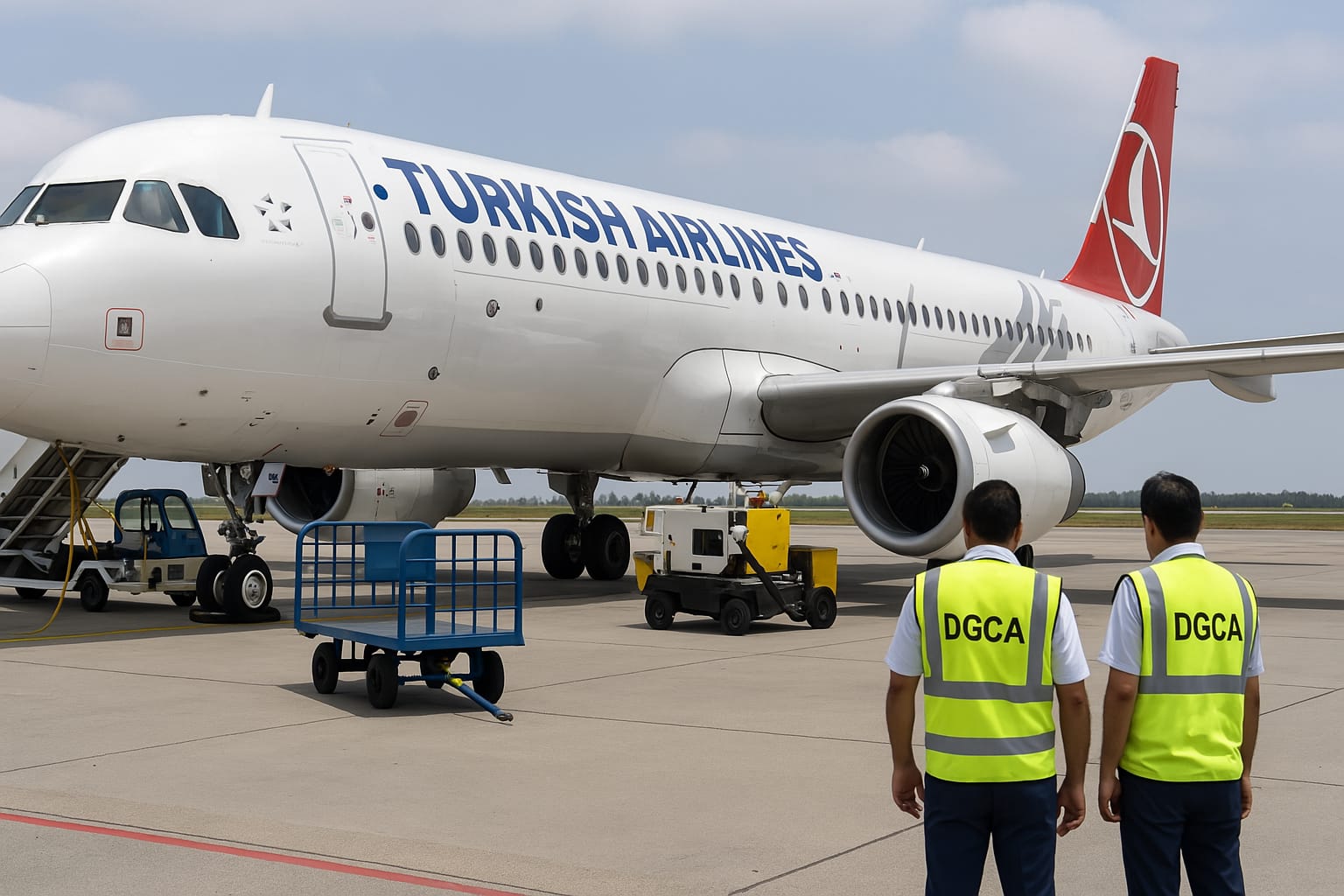
The Directorate General of Civil Aviation (DGCA) has raised serious safety concerns after conducting SOFA/RAMP (Surveillance of Foreign Aircraft / Ramp Inspections) of Turkish Airlines’ passenger and cargo flights between May 29 and June 2, 2025. The inspections were carried out at Delhi, Hyderabad, Chennai, and Bengaluru airports in accordance with Article 16 of the International Civil Aviation Organization (ICAO) Convention to ensure compliance with both international and Indian aviation standards.
The DGCA’s inspections focused on ground operations, aircraft maintenance, handling of dangerous goods, and ground handling agreements. The findings revealed multiple safety lapses requiring urgent corrective measures from Turkish Airlines.
Key Findings:
1. Marshaller Competency:
At Bengaluru Airport, the marshaller responsible for guiding aircraft on the ground was found to be unqualified, lacking both authorization and a valid competency card to perform marshalling functions. This is a critical safety oversight as marshallers are responsible for safe aircraft parking and maneuvering.
2. Aircraft Maintenance:
During the inspection, it was discovered that an Aircraft Maintenance Engineer (AME) was not present at the time of the aircraft’s arrival. Instead, a technician carried out the procedure, which is against standard practice. Turkish Airlines’ engineering services in India are managed by Airworks, which was expected to provide proper maintenance support through certified personnel.
3. Dangerous Goods Handling:
The airline was found to be violating safety protocols related to dangerous goods. A cargo consignment contained explosive materials, but did not carry the required DGCA approval. Additionally, the Dangerous Goods Declaration lacked any mention of explosives, which is mandatory under Indian regulations and ICAO guidelines.
4. Ground Handling Agreement Issues:
At Hyderabad and Bengaluru airports, ground services were being managed by Globe Ground India, but no formal Service Level Agreement (SLA) was in place with Turkish Airlines. Moreover, there was no proper handover of equipment from the previous handler, Celebi. Items like ladders, trolleys, step ladders, and Ground Power Units (GPUs) lacked clear accountability, raising concerns about safety and operational transparency.
DGCA’s Stand and Actions:
The DGCA has instructed Turkish Airlines to take immediate corrective actions and ensure strict compliance with ICAO Standards and Recommended Practices (SARPs) as well as Indian DGCA regulations. The aviation regulator reiterated its commitment to maintaining high safety standards for all foreign airlines operating in Indian airspace.
The DGCA also announced that follow-up inspections will be conducted to verify compliance and ensure that the issues flagged have been addressed.
Conclusion:
These findings underline the DGCA’s proactive approach to safeguarding India’s skies by keeping foreign operators under strict scrutiny. Turkish Airlines, a major international carrier, has been placed under the radar until it ensures full corrective action.