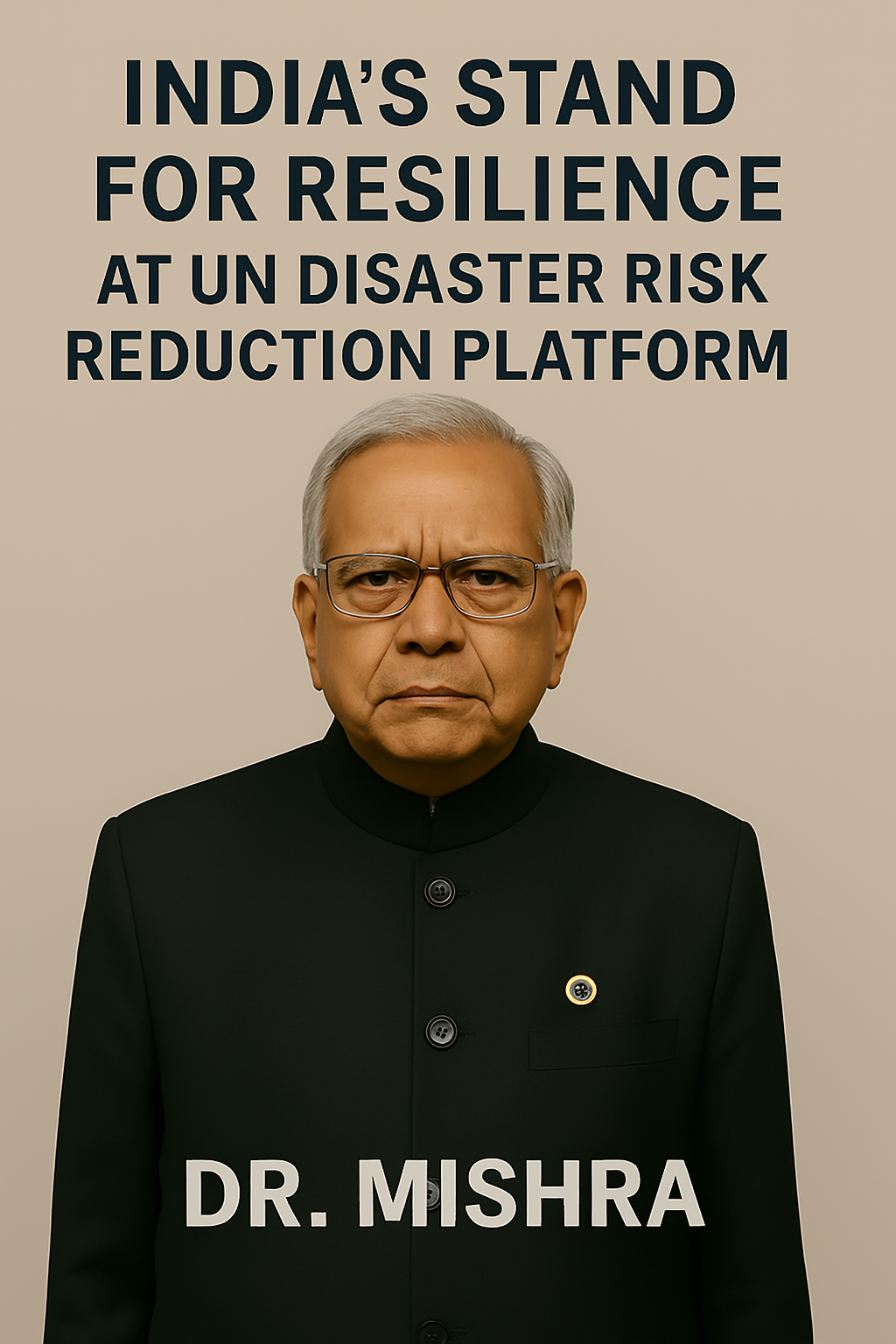
India has once again reaffirmed its strong commitment to global disaster resilience and preparedness. Speaking at the 8th Global Platform for Disaster Risk Reduction (GPDRR) held in Geneva, Dr. P.K. Mishra, the Principal Secretary to the Prime Minister of India, highlighted the country’s proactive and inclusive approach to disaster risk reduction (DRR) and climate resilience.
The high-level global event, hosted by the United Nations Office for Disaster Risk Reduction (UNDRR), gathered leaders, experts, and policymakers from across the world to collaborate on creating a safer and more resilient future. Representing India, Dr. Mishra underscored the nation’s evolving role as a global leader in disaster preparedness, sharing valuable insights from India’s experiences in managing diverse natural disasters.
 Key Highlights:
-
India’s Strong Commitment:
Dr. Mishra emphasized that India remains firmly committed to the Sendai Framework for Disaster Risk Reduction (2015–2030). He stressed the importance of adopting holistic, inclusive, and people-centric strategies to manage and mitigate risks, especially in disaster-prone regions. -
Bilateral Discussions with Norway:
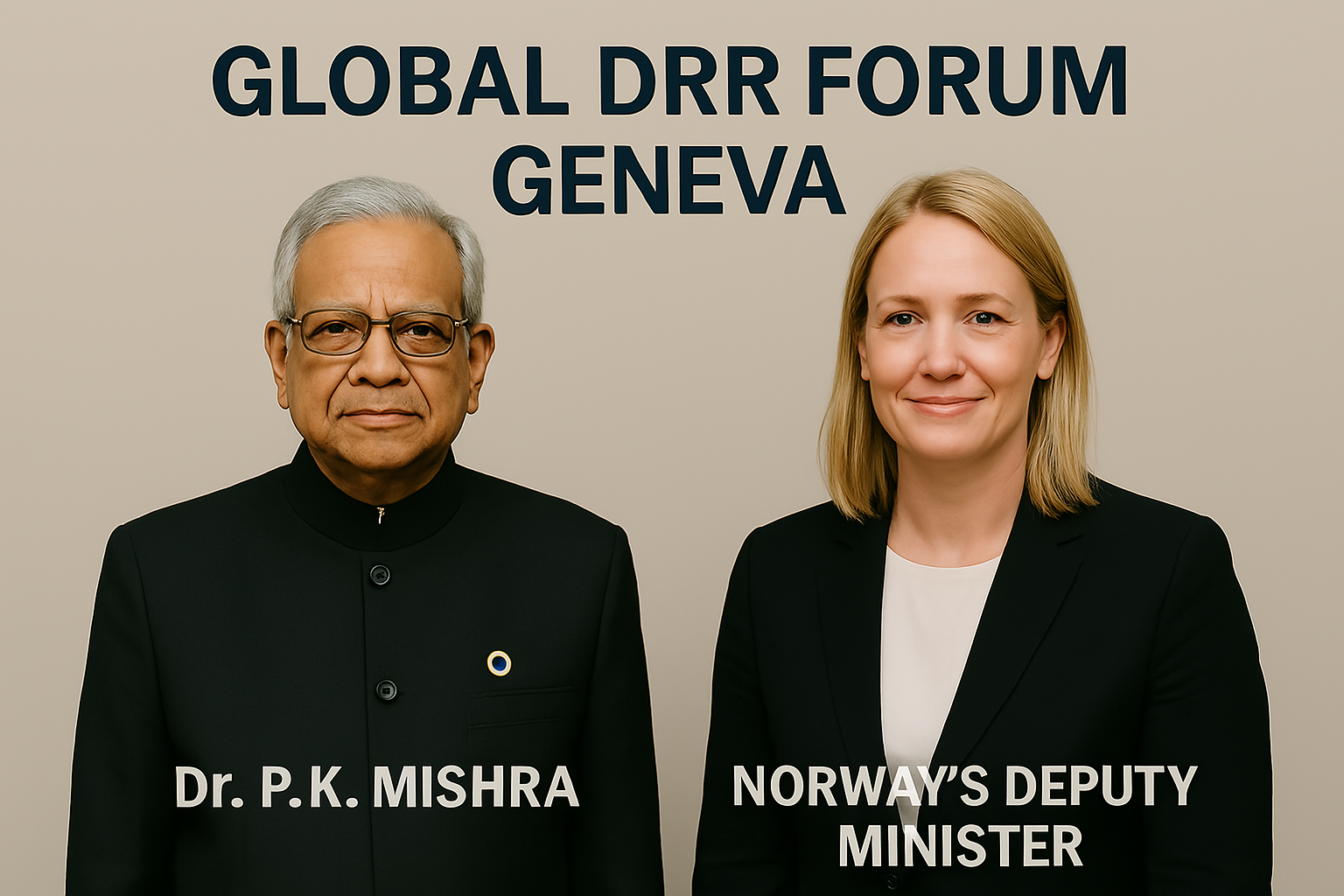
On the sidelines of the forum, Dr. Mishra held productive discussions with Ms. Stine Renate Håheim, Deputy Minister for International Development, Norway. The two leaders explored ways to enhance international cooperation and knowledge sharing in the field of disaster resilience. -
India’s Global Role:
At the platform’s opening ceremony, Dr. Mishra highlighted India’s initiatives such as the Coalition for Disaster Resilient Infrastructure (CDRI) and the G20 Working Group on Disaster Risk Reduction. These reflect India’s increasing leadership role in global disaster governance. -
Climate Adaptation and Risk Awareness:
Dr. Mishra pointed out the growing need to integrate climate adaptation and risk-informed development planning. He cited India’s efforts in using early warning systems, community-based disaster management, and capacity building at the grassroots level. -
Resilience Through Partnerships:
Calling for greater international solidarity, Dr. Mishra encouraged countries to invest in resilient infrastructure, data sharing, and inclusive policymaking. “No country is immune to disasters, but through shared learning and cooperation, we can reduce vulnerabilities and save lives,” he said. -
India’s Domestic Initiatives:
He spoke about India’s progress in strengthening the National Disaster Management Authority (NDMA), state-level disaster response systems, and public awareness campaigns like Aapda Mitra (Friends of Disaster).
Background:
The Global Platform for Disaster Risk Reduction, organized every two years, is the world’s foremost gathering focused on reducing disaster risk and building resilience. It brings together over 4,000 participants from governments, UN bodies, NGOs, and the private sector.
India has actively participated in the platform since its inception, reflecting the country’s resolve to not only safeguard its own citizens but also to contribute meaningfully to global resilience efforts.
Why This Matters:
India is one of the most disaster-prone countries in the world, facing threats ranging from floods and cyclones to earthquakes and droughts. Through participation in international platforms like the GPDRR, India showcases its determination to collaborate globally while strengthening domestic resilience.
Conclusion:
Dr. P.K. Mishra’s presence at the Geneva platform highlights India’s growing voice in shaping global disaster risk reduction policies. As natural disasters become more frequent and intense due to climate change, India’s focus on proactive planning, community engagement, and global partnerships sets a strong example for developing nations.