Part 2 – (Read Part-1 here)
🔎 From Recommendations to Realpolitik: Unmasking the Agenda
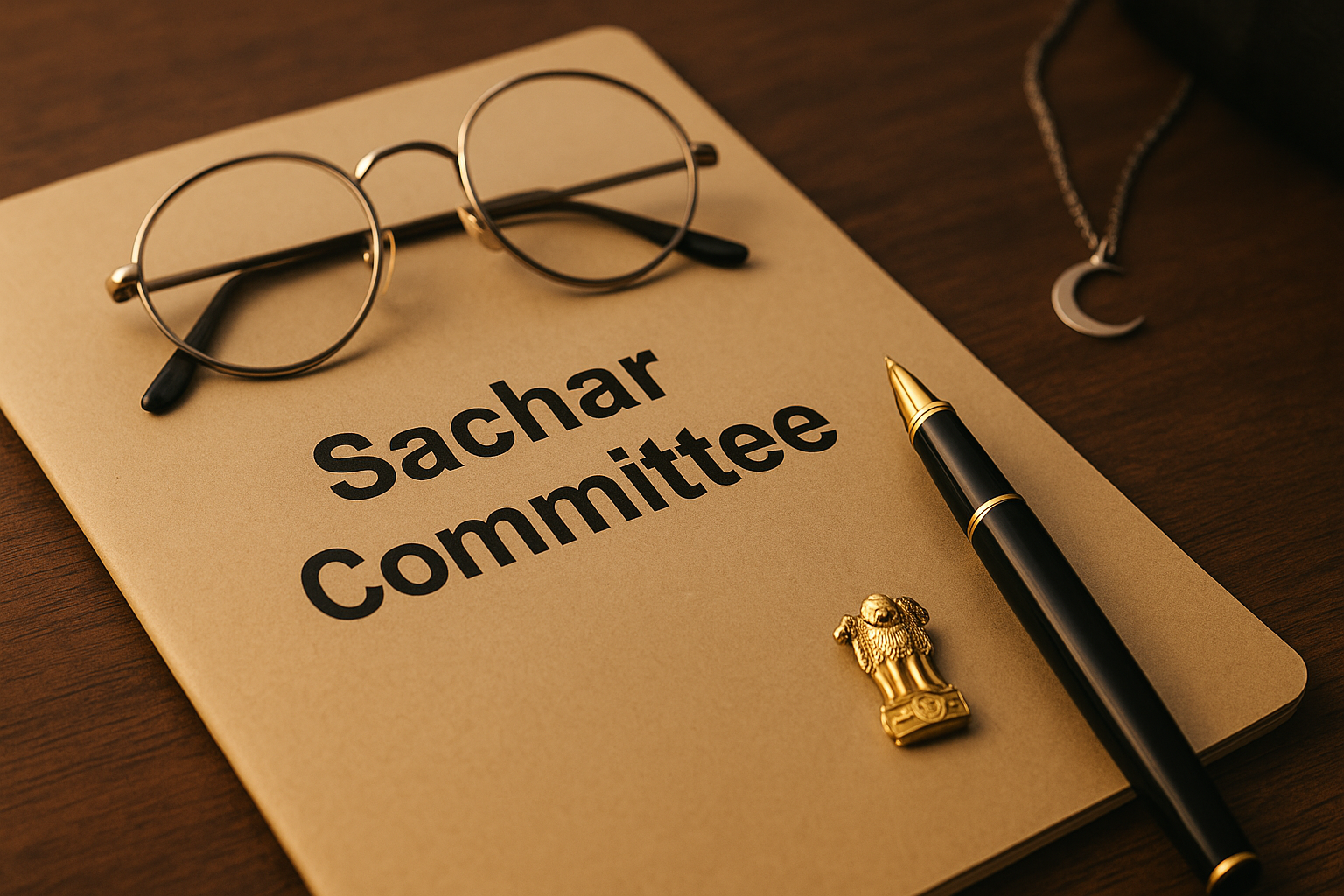
While Part 1 traced the formation and findings of the Sachar Committee,
Part 2 focuses on implementation, impact, and potential long-term objectives, including claims that it subtly steers the Indian governance model toward religious appeasement and demographic reshaping—alarming to some as precursors to Shariah-aligned governance ideals.
📌 1. Institutional Engineering: The Rise of Parallel Minority Bureaucracy
The Sachar Report gave rise to:
Ministry of Minority Affairs (2006)
Nabard-like institutions for muslims (e.g., the National Minority Development and Finance Corporation)
Minority-focused scholarships, banks, and legal cells
🔔 Nationalist Critics argue: Instead of unifying institutions, these parallel structures balkanize governance, creating state-funded silos with ethno-religious criteria.
📌 2. Targeted Financial Flows: The Rise of Minority-Only Welfare
Between 2006 and 2014 alone:
Over ₹2 lakh crore spent on schemes exclusive to minorities, particularly muslims.
Sachar-endorsed programs such as the Multi-Sectoral Development Program (MSDP) pumped funds into districts identified by religious composition.
🧠 Impact: Taxpayer money began flowing not on socioeconomic criteria, but religious identity, a dangerous precedent in a secular democracy.
📌 3. muslim Appeasement Masquerading as Inclusion?
While the report framed recommendations as measures for inclusion, actions post-report sparked:
Minority-only coaching centres for UPSC and other exams
Exclusive skill development and bank financing schemes for muslims
Political quotas and electoral appeasement campaigns using Sachar as “evidence”
🎯 The Subtext: Empowering one community politically, educationally, and economically—not on economic backwardness but on faith alone.
📌 4. Academic Infiltration and Thought Capture
The report encouraged:
islamic studies chairs in central universities
Urdu promotion across states
Advisory roles in school boards for Muslim leaders
🎓 Implication: A move seen by some as an attempt to shape future thought leaders through (muslim) religious-cultural exclusivity in public education.
📌 5. Silent Demographic Reshaping
One of the most controversial points: the Sachar report’s suggestion that Muslim populations should reflect in all institutions—including police, judiciary, and armed forces.
⛔ Nationalist Critics argue:
This demand aligns not with democratic representation, but with sectarian quotas
It may open the door for parallel identity-based governance, undermining national unity
📌 6. What Nationalist Critics Call the “Shariah Shift” Hypothesis
Several ideological thinkers believe:
Sachar recommendations normalised religious identity in policy discourse
This institutionalised faith-first decision making
Slowly paving way for muslim community-based legal, cultural, and political assertions
🧨 The ultimate fear: Subverting constitutional law in favor of (sharia?) community law, with future demands such as:
Personal law protections
Religious tribunals
State-recognized Shariah practices in family law
📌 7. Political Leverage: How the Report Became a Campaign Tool
Every major political party post-2006 has:
Referenced Sachar in minority manifestos
Proposed further “corrective actions” (reservation in private sector, Waqf empowerment, etc.)
Used the report as a moral shield against anti-appeasement critiques
🧠 It’s not just a report. It became a weaponized narrative.
🧩 Conclusion: From Welfare to Weapon?
The Sachar Committee Report began as a statistical exercise.
But critics argue it evolved into a strategic document for:
Institutional infiltration
Votebank creation
Legal pluralism
Long-term religious/ muslim statecraft
If left unchallenged, some warn, this could mark a foundational shift away from India’s secular, inclusive ethos to a divided society, inching closer to communal governance under a democratic facade.
You can check the Sachar Committee report on the Govt website here