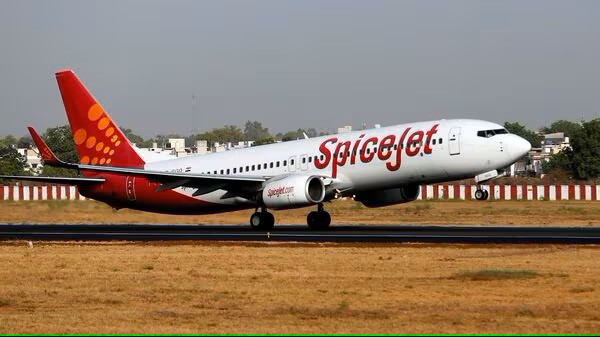
SpiceJet Returns to Profit After 7 Years
In a major financial turnaround, budget airline SpiceJet has reported a standalone net profit of ₹324.87 crore in Q4 FY25, marking a 174% year-on-year (YoY) increase. This milestone also brings the company its first full-year profit in seven years, signaling positive momentum for the airline.
While the quarterly profit surged, revenue from operations declined by 16% to ₹1,446.37 crore compared to ₹1,719.37 crore in the same quarter last year.
 Full-Year Performance: FY25 vs FY24
For the entire FY25, SpiceJet recorded a standalone net profit of ₹58 crore, bouncing back from a loss of ₹409 crore in FY24. However, total operational revenue dropped sharply by 25% to ₹5,284 crore from ₹7,050 crore in FY24.
Despite reduced revenue, key performance indicators remained stable:
- Passenger Load Factor (PLF) stood at 88.1% in Q4 and 87.7% for FY25.
- Revenue per Available Seat Kilometre (RASK) grew to ₹6.60, up from ₹6.04 in FY24.
Equity Infusion and Route Expansion
The SpiceJet Promoter Group infused ₹500 crore in equity, with the final tranche of ₹294.09 crore completed in Q4FY25. This capital boost helped the airline support operations and strengthen its balance sheet.
As part of its Summer 2025 schedule, SpiceJet launched 24 new domestic flights and added three new destinations: Tuticorin, Porbandar, and Dehradun. These expansions aim to improve regional connectivity and market presence.
Operational Challenges: Engine Overhaul and Fleet Revival
Despite the profit, challenges remain. Ajay Singh, Chairman and Managing Director of SpiceJet, acknowledged that the revival of grounded aircraft took longer than expected. The delays were mainly due to global supply chain issues and engine overhaul bottlenecks.
However, Singh remains optimistic:
“Our partnerships with OEMs like StandardAero and Carlyle Aviation are now yielding results. Overhauled engines are returning, and we expect steady fleet ramp-up soon.”
Market Reaction and Industry Outlook
Following the earnings report, SpiceJet’s share price rose by 4%, helped further by a court ruling that dismissed a damages claim against the airline.
Aviation experts believe that sustainable profitability will depend on capacity growth, cost control, and improved yields. As travel demand rebounds, low-cost carriers like SpiceJet are well-positioned to capitalize.
Conclusion: Turning the Corner
SpiceJet’s Q4 and FY25 results reflect a solid financial recovery. While revenue remains under pressure, cost efficiencies, increased RASK, and a high PLF provide strong support. With fleet revival underway and network expansion progressing, SpiceJet seems ready to fly high again.