CSIR, NECTAR Launch Vegan Leather Units in Northeast India
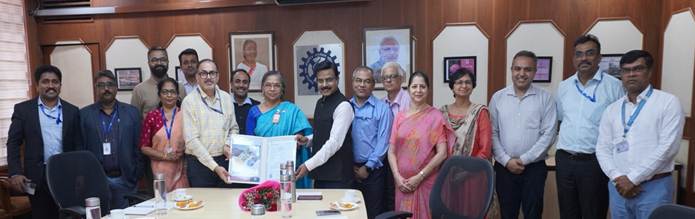
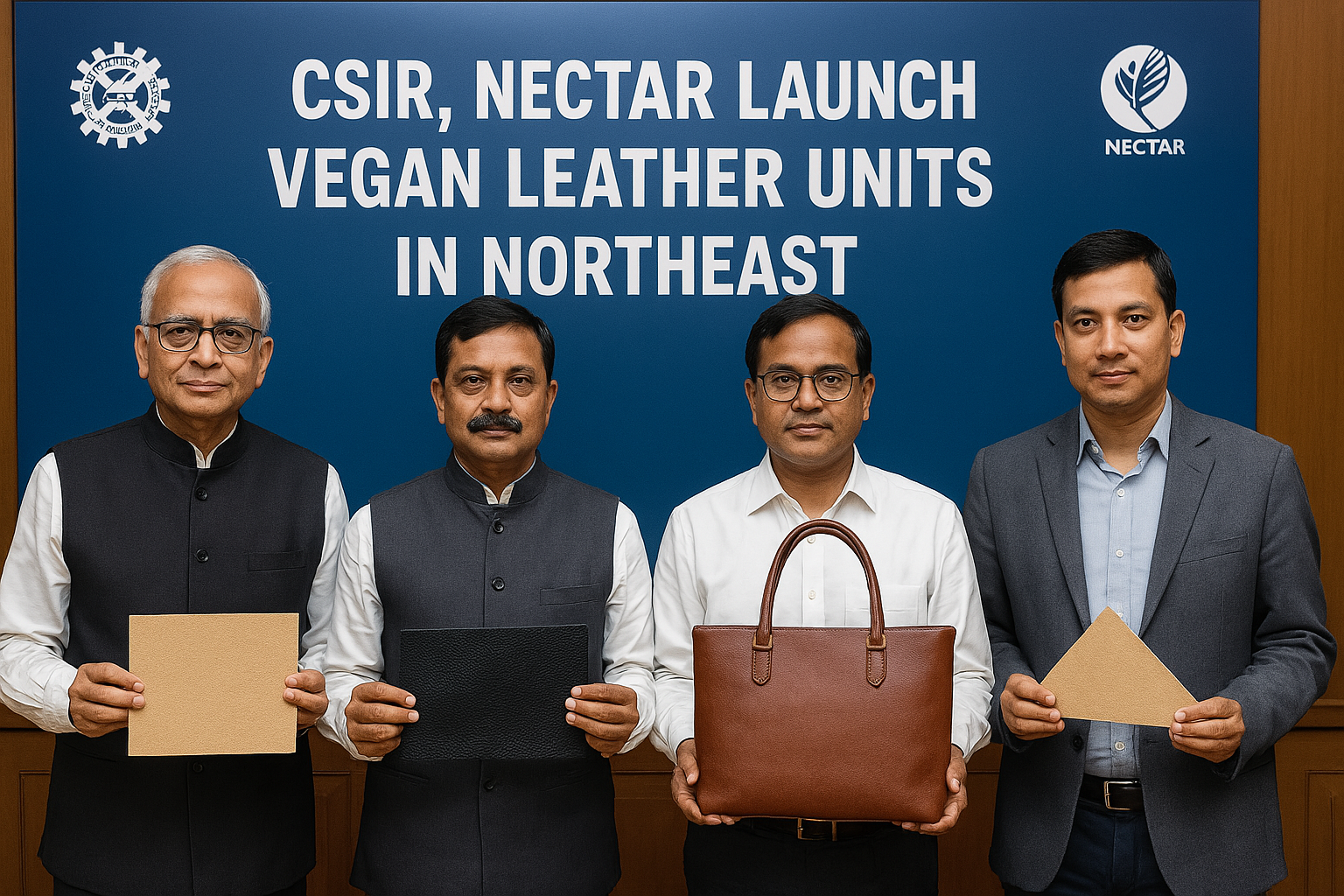
New Delhi, June 23, 2025 — In a breakthrough for green manufacturing and circular economy, the CSIR-National Institute for Interdisciplinary Science and Technology (CSIR-NIIST) and the North East Centre for Technology Application and Reach (NECTAR) signed a Memorandum of Understanding (MoU) to establish vegan leather manufacturing units in Meghalaya and other northeastern states.
 Turning Agro-Waste into Sustainable Value
The initiative will use CSIR-NIIST’s plant-based leather technology to convert agro-residues like rice straw, banana, and pineapple waste into eco-friendly leather alternatives. This approach reduces chemical use in leather processing by up to 70% and helps tackle pollution caused by burning crop waste.
Dr. N. Kalaiselvi, Director General of CSIR, said this step will minimize the environmental impact of the traditional leather industry and promote local innovation. She highlighted that this initiative aligns with India’s goals under Atmanirbhar Bharat and Swachh Bharat.
Empowering Women and MSMEs in the Northeast
The manufacturing units will support women-led self-help groups (SHGs), farmers, and micro, small, and medium enterprises (MSMEs). NECTAR will lead the creation of common facility centers, ensuring that local communities benefit directly.
According to Dr. Arun Kumar Sarma, Director of NECTAR, these centers will boost entrepreneurship and generate jobs in eco-conscious sectors. He emphasized the importance of inclusive growth and local empowerment.
Green Innovation Goes Global with Indo-German Collaboration
Alongside the vegan leather initiative, CSIR-NIIST signed a Joint Declaration of Intent (JDI) with Germany’s GIZ under the Indo-German Energy Programme. This partnership will establish a Centre of Excellence for Building Integrated Photovoltaics (BIPV).
This solar technology allows photovoltaic systems to be seamlessly integrated into roofs, walls, and windows. The collaboration focuses on R&D, testing, training, and standard-setting, aiming to tap into India’s 309 GW potential for BIPV. It supports India’s ambition to lead in solar-integrated buildings and green construction.
Driving Self-Reliance and Green Growth
Both initiatives reflect India’s push toward self-reliant and sustainable innovation. By leveraging local resources and global cooperation, CSIR and NECTAR aim to create long-term solutions for climate, employment, and rural development challenges.
These efforts also strengthen India’s standing in eco-friendly manufacturing and clean energy innovation on the world stage.