India’s Kharif Sowing Up by 12.97 Lakh Hectares
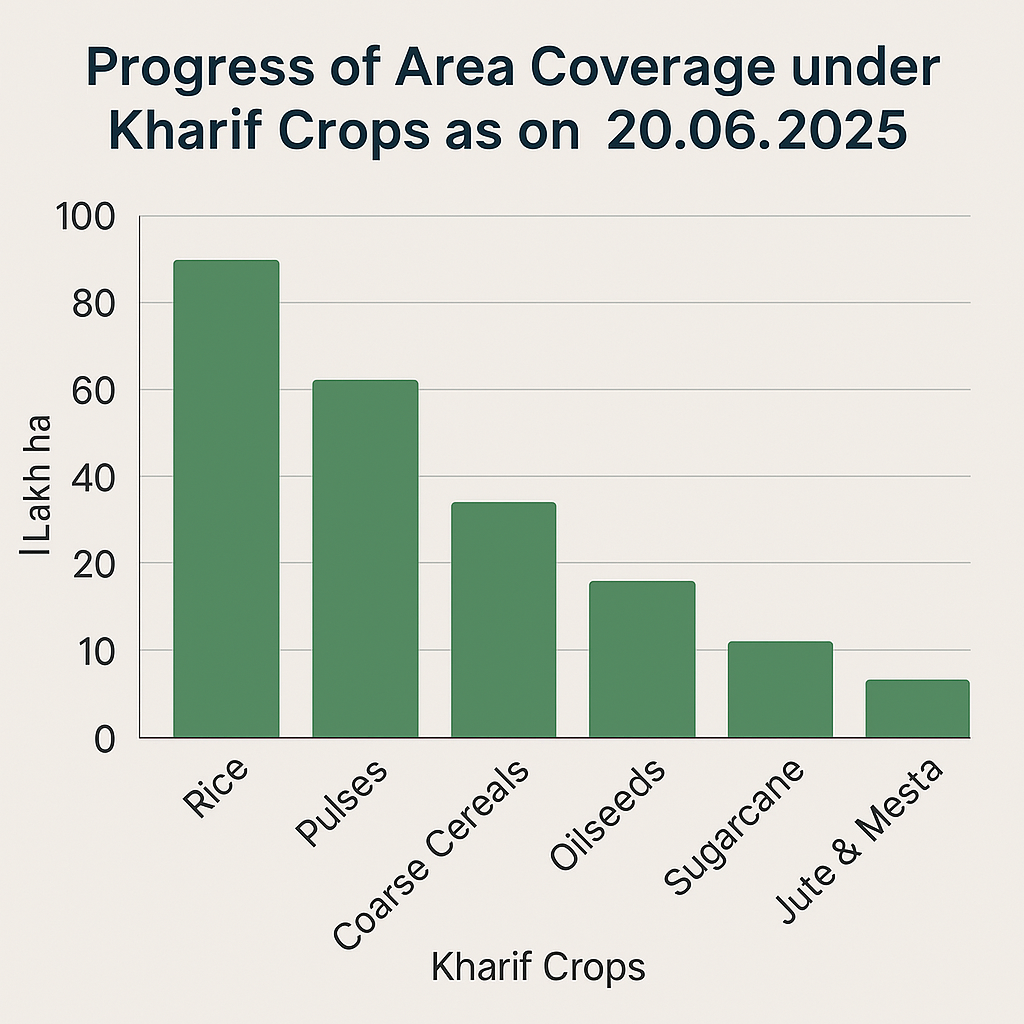
As the southwest monsoon progresses across India, the latest update from the Department of Agriculture & Farmers’ Welfare shows a positive trend in Kharif crop sowing. As of June 20, 2025, the total area covered under Kharif crops has reached 137.84 lakh hectares, compared to 124.88 lakh hectares during the same period in 2024. This marks an encouraging increase of 12.97 lakh hectares.
 Pulses and Cotton Drive Early Growth
Among the top gainers are pulses, which saw a significant rise of 2.80 lakh hectares in area coverage. Leading this growth:
-
Moong bean rose by 1.77 lakh ha
-
Urd bean increased by 0.77 lakh ha
-
Other pulses collectively added 0.27 lakh ha
However, a few crops like Arhar (-0.13 lakh ha) and Ragi (-0.29 lakh ha) showed a slight decline.
Cotton area also jumped by 2.14 lakh hectares, indicating robust early planting by farmers in key states like Maharashtra, Gujarat, and Telangana.
Maize, Bajra, and Coarse Cereals Perform Well
The category of Shri Anna cum Coarse Cereals (including traditional millets and maize) recorded an overall increase of 3.25 lakh hectares.
Key highlights include:
-
Maize sowing rose by 2.01 lakh ha
-
Bajra gained 1.00 lakh ha
-
Jowar went up by 0.61 lakh ha
These gains align with the government’s push to promote nutri-cereals, especially under the International Year of Millets campaign.
Rice and Sugarcane Show Positive Trends
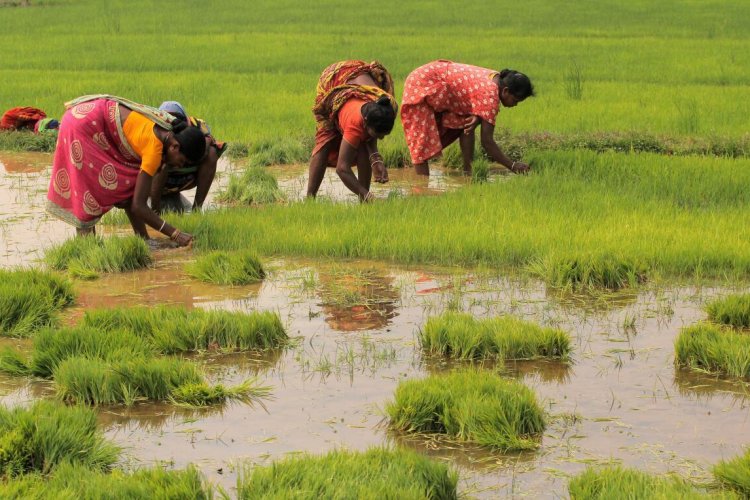
Rice, India’s most important Kharif crop, covered 13.22 lakh hectares, a jump of 4.86 lakh hectares compared to last year. This strong start hints at good rainfall distribution and favorable planting conditions in rice-growing states.
Interestingly, sugarcane, which is often planted in advance, already covers 55.07 lakh hectares, showing a modest gain of 0.20 lakh hectares over 2024.
Oilseeds Show Mixed Performance
Oilseeds have seen a slight overall decline of 0.11 lakh hectares.
-
Sesamum (+0.06 lakh ha) and Sunflower (+0.02 lakh ha) increased.
-
Groundnut (-0.13 lakh ha) and Soybean (-0.05 lakh ha) dipped slightly.
The decline may reflect delayed rainfall or changing crop choices in some states.
What This Means for Farmers and Food Security
These figures suggest that Kharif 2025 has started on a strong note. Higher sowing area, especially in pulses and maize, is good news for both domestic food supply and market prices.
According to experts, if the monsoon continues steadily, India could see a strong harvest, helping rural income and food inflation control.
Key Numbers at a Glance
| Crop | 2025 Area (lakh ha) | 2024 Area (lakh ha) | Change |
|---|---|---|---|
| Total Kharif | 137.84 | 124.88 | +12.97 |
| Rice | 13.22 | 8.37 | +4.86 |
| Pulses (overall) | 9.44 | 6.63 | +2.80 |
| Cotton | 31.25 | 29.12 | +2.14 |
| Maize | 12.32 | 10.31 | +2.01 |
| Coarse cereals | 18.03 | 14.77 | +3.25 |
| Oilseeds (overall) | 5.38 | 5.49 | -0.11 |