National Spotlight on Seafood Traceability
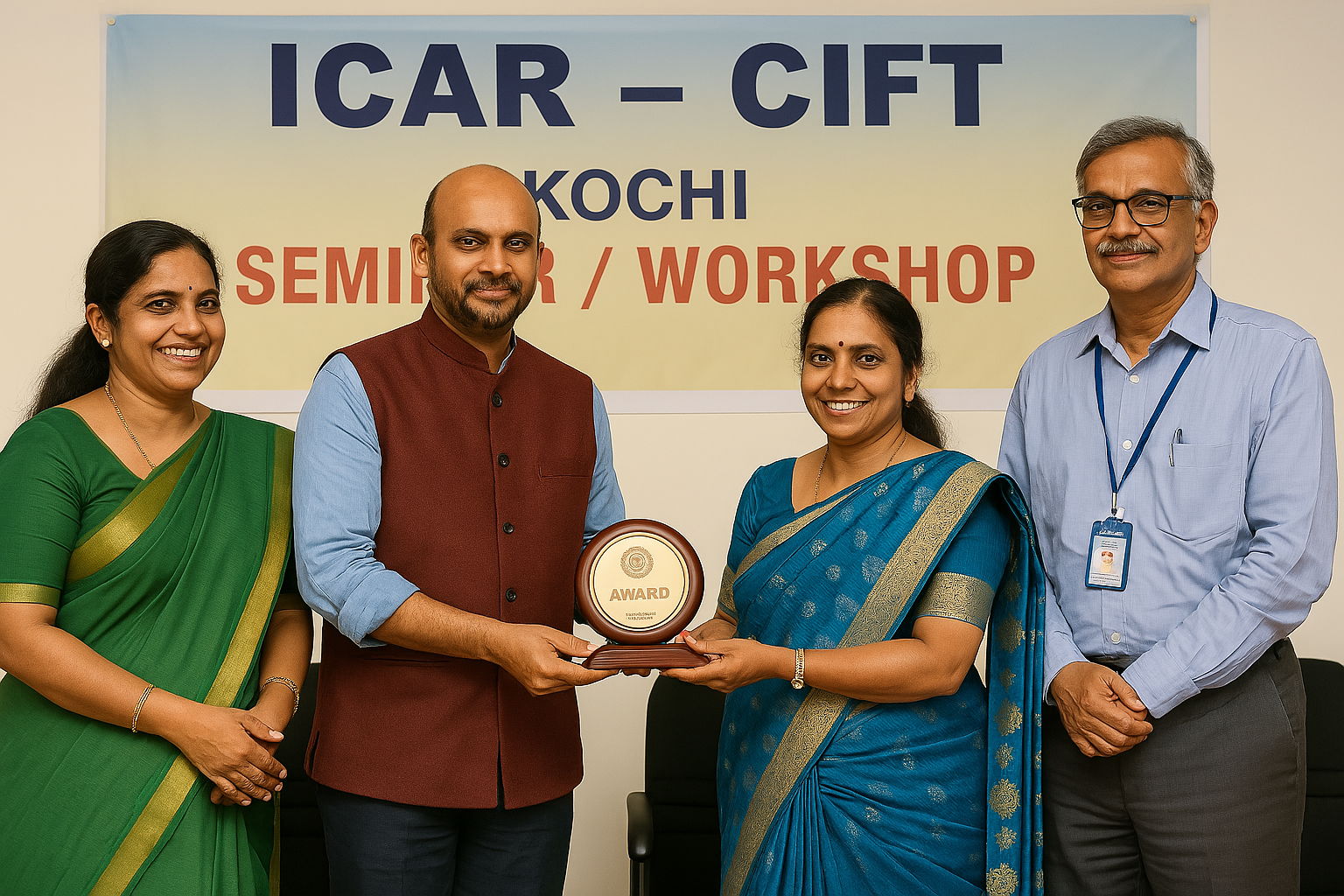
Kochi, Kerala is set to become the focal point for fisheries governance and innovation. On 26th June 2025, the ICAR-Central Institute of Fisheries Technology (ICAR-CIFT) will host the National Workshop on Traceability in Fisheries at its headquarters. Organized in collaboration with the Asian Fisheries Society (Indian Branch), the event reflects India’s growing commitment to transparent and safe seafood supply chains.
 Why Traceability in Fisheries Matters
Traceability is more than a buzzword. It ensures that every fish on a plate can be traced back to its origin. This not only supports food safety and quality but also guarantees legal compliance and global market access. With stricter international import regulations and conscious consumer demands, traceability has become essential for the sustainability of India’s seafood exports.
Workshop Agenda: Building a Smarter Supply Chain
The one-day national workshop focuses on building practical frameworks. Key agenda items include:
-
Creating a traceability flowchart for fisheries value chains
-
Identifying suitable technologies, like blockchain or QR coding, to track seafood
-
Listing critical data points, including harvest method, location, storage, and safety metrics
The workshop will begin with an inaugural address by Shri Sagar Mehra, Joint Secretary, Department of Fisheries, Government of India. His presence highlights the Centre’s priority on digital fisheries governance.
Diverse Stakeholder Participation
What makes this workshop impactful is its wide participation. Attendees will include:
-
Officers from central and state fisheries departments
-
Experts from ICAR institutes
-
Officials from FSSAI, MPEDA, and EIC
-
Representatives of NGOs, academic institutions, and seafood industry leaders
This collective approach is crucial to building an interconnected traceability system that benefits every stakeholder—from fishermen to exporters.
Technical Sessions and Knowledge Sharing
Participants will engage in technical sessions and expert-led panels throughout the day. Discussions will focus on:
-
Digital traceability solutions for India’s fisheries
-
Global traceability compliance models
-
Integrating food safety standards with Indian traceability systems
This platform will also showcase success stories and pilot projects, offering a roadmap for future expansion across coastal states.
ICAR-CIFT’s Vision for Safer Seafood
Located in Kochi, ICAR-CIFT has long led the charge in fisheries research and safety protocols. With increasing emphasis on sustainability and export readiness, the institute now plays a central role in traceability research and technology transfer.
Their partnership with national and international bodies ensures that India’s seafood industry remains globally competitive and domestically secure.
Looking Ahead
As India continues to push for improved food traceability across agri and marine sectors, workshops like these create real change. They not only train stakeholders but also set the path for policy upgrades and digital transformation.
By investing in traceability, India secures its place as a trusted global seafood supplier. More importantly, it protects domestic consumers, empowers fishermen, and meets sustainability goals.