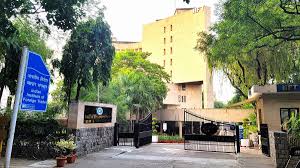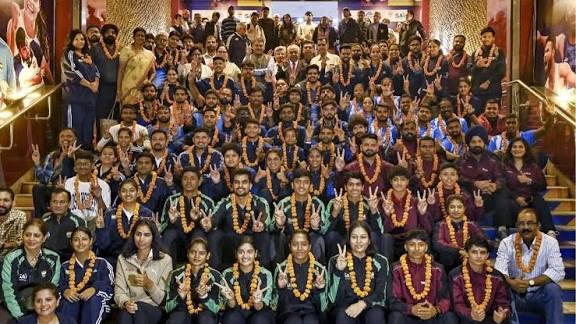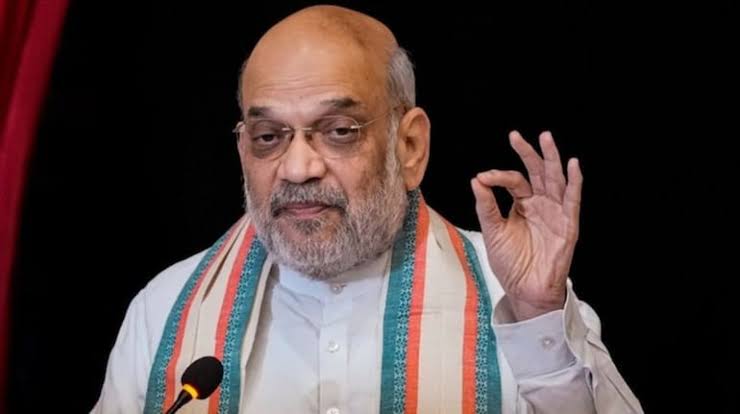
Union Home Minister Amit Shah made a passionate appeal on Thursday, saying that language is not merely a tool of communication but the very soul of a nation. He was speaking at the Golden Jubilee celebration of the Official Language Department in New Delhi.
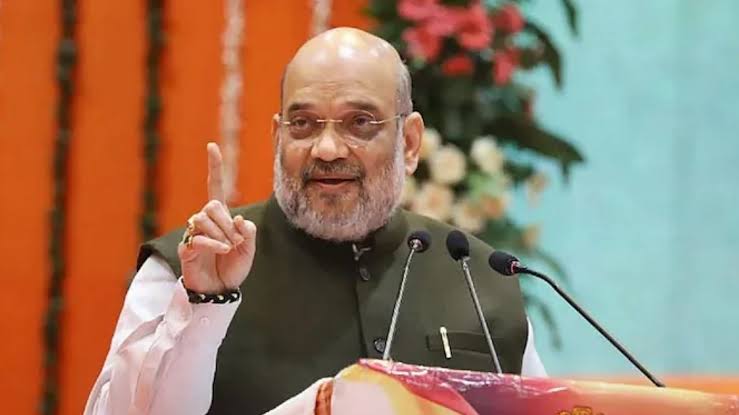 Promoting Indian Languages in Governance and Education
Commending the efforts of the Bharatiya Bhasha Anubhag, Shah stated that both central and state-level administrative work is increasingly being done in Indian languages. He urged state governments to make arrangements for teaching medical and engineering courses in regional languages.
“We aim to make Indian languages the voice of the youth. This is not about opposing English, but about giving pride and space to our mother tongues,” he said.
This aligns with earlier efforts to make competitive exams like JEE, NEET, and CUET available in 13 languages. Shah proudly noted that 95% of candidates for the CAPF constable exams now choose their mother tongue as the medium.
Hindi is a Friend, Not a Foe
Shah clarified that Hindi is not in competition with other Indian languages. Instead, he called Hindi a “friend of all Indian languages,” working together to elevate national pride.
He urged Indians to think, express, and feel in their mother tongue to break the remnants of colonial mindset. “Until one expresses themselves proudly in their language, we cannot be free from the mindset of slavery,” he said.
Political Support and Broader Implications
Leaders like Edappadi K. Palaniswami echoed Shah’s concerns about the decline in the use of mother tongues. Delhi Chief Minister Rekha Gupta was also present at the event, reflecting bipartisan support for the cause.
This policy shift towards linguistic inclusivity may significantly reshape India’s education and administration landscape. making it more accessible to millions.
The Road Ahead
The Bharatiya Bhasha Anubhag will continue working with states to expand the scope of Indian languages in official work and education. Shah’s vision aligns with the National Education Policy 2020 that encourages multilingual learning and regional language empowerment.
As India prepares for its future, the reaffirmation of linguistic identity is becoming a core policy direction. This cultural revival may well become one of the strongest pillars of the country’s social and educational transformation.