Black-headed Caterpillar Threatens Karnataka’s Coconut Crop
 Pest Infestation Hurting Coconut Economy
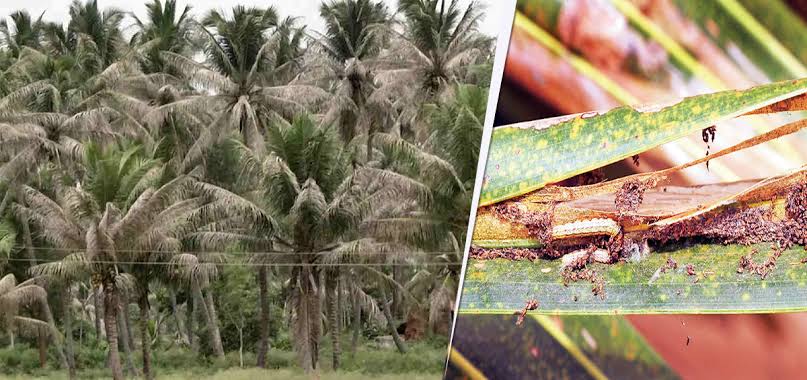
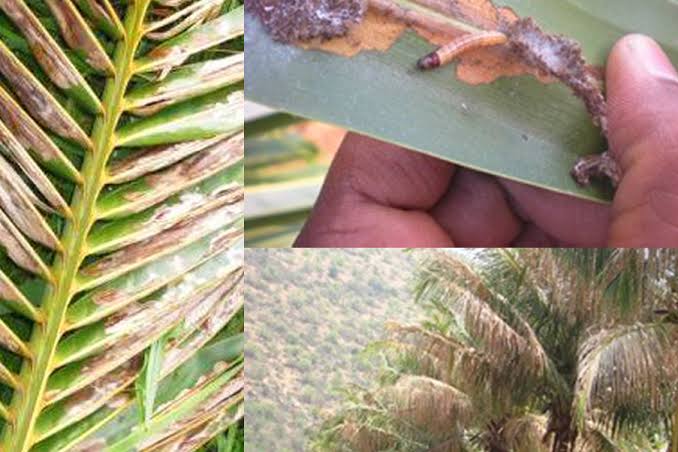
The black-headed caterpillars build silken galleries under coconut leaves and consume green tissue, significantly reducing the tree’s photosynthesis. In severe cases, trees appear scorched and yield losses can reach up to 80%, said Mr. Gooligowda. This pest has become widespread in Mandya, Tumakuru, Bengaluru Rural, Kolar, Mysuru, and other key coconut-growing regions.
Mr. Gooligowda emphasized that unless swift action is taken, the infestation could spread further and cause an economic blow to Karnataka’s coconut farmers.
Need for Coordinated Action
As the pest spreads through wind dispersal, isolated treatments prove ineffective. Mr. Gooligowda suggested cluster-level coordination among farmers and emphasized the need for a statewide pest control campaign led by the Horticulture Department and Coconut Development Board.
Current pest control includes:
- Neem-based pesticide application
- Root nourishment techniques
- Release of Goniozus parasitoids
- Integrated nutrient management
Suggestions for Immediate Response
The MLC has also proposed:
- Deployment of rapid response teams via local agri science centers
- Extensive surveys in both affected and unaffected areas
- Appointment of farmer assistants at Gram Panchayat level
- Subsidized supply of neem cake, NPK nutrients, and bio-fertilizers
- Scaling up Goniozus parasitoid production in regional labs
CM’s Assurance and Next Steps
Chief Minister Siddaramaiah has directed the Horticulture Department to gather inputs from an expert panel and devise a practical action plan. His directive aims to contain the infestation before it spreads further.
With Karnataka being a major contributor to India’s coconut production, timely intervention could save farmers from crop and income loss. This issue is also being closely watched by national agriculture boards and research institutes.