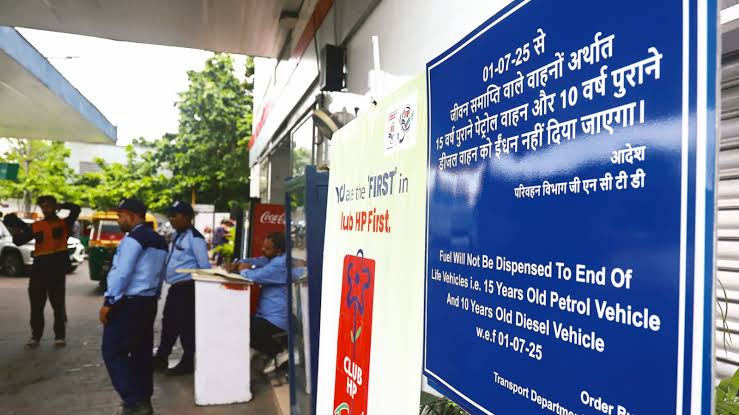
The Delhi government’s abrupt request to suspend the recently enforced fuel ban for older vehicles has sparked heated debate. Was it political pressure or a real response to public hardship?
What is the Fuel Ban?
Starting July 1, 2025, petrol pumps across Delhi stopped fueling diesel vehicles over 10 years old and petrol vehicles over 15 years old. The move was directed by the Commission for Air Quality Management (CAQM) to curb toxic emissions in India’s smog-prone capital.
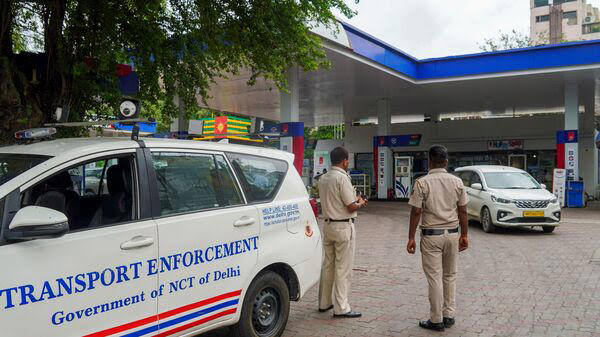
However, just three days later, the Delhi government — led by Chief Minister Rekha Gupta and Environment Minister Manjinder Singh Sirsa — wrote to CAQM seeking to pause the ban, citing public inconvenience and technical challenges.
 Why the Sudden U-turn?
There are two primary reasons behind the rethink:
- Massive Middle-Class Backlash: A LocalCircles survey showed 79% of Delhi’s vehicle owners oppose the fuel ban. Social media has been flooded with complaints about disrupted livelihoods and confusion.
- Political Risk: After 27 years, the BJP returned to power in Delhi in February 2025. The middle class — a key vote bank — feels betrayed, and opposition parties have used this to label the ban a “Tughlaqi farmaan.”
Technological & Practical Challenges
In his letter, Sirsa admitted that the system used to identify “end-of-life vehicles” was not fully operational. Fuel pump operators were also unclear about implementation protocols, leading to inconsistencies and chaos.
Livelihood at Stake
CM Gupta emphasized the social impact: “This decision is adversely affecting the daily lives and livelihoods of lakhs of families.” Small traders, delivery agents, and even retired individuals with older vehicles are being hit hardest.
While the intention to reduce pollution is commendable, enforcement without preparation has drawn criticism from all sides.
Historical Background
The fuel ban is not an entirely new concept. It builds on a 2018 Supreme Court order and a 2014 National Green Tribunal (NGT) directive which restricted old diesel and petrol vehicles in public spaces. However, this is the first time it is being enforced through denial of fuel.
Balancing Environment and Equity
The Delhi government claims it remains committed to sustainable solutions, but stresses the need for “phased, practical implementation” involving all stakeholders. They now propose consultations with the public, fuel station operators, and enforcement agencies.
The Road Ahead
As the CAQM reviews the request for suspension, all eyes are on how Delhi balances its climate goals with public sentiment. The episode highlights the growing tension between aggressive environmental policy and electoral accountability.
For now, the ban remains, but implementation is uncertain — signaling that even well-intentioned green measures must account for the people they impact.