Skip to content
Ramrajya News Website RamRajya News

Heralding RamRajya in Bharat

  • My Account
  • Dharm
  • Editorial
  • Register
  • Mandir
  • From Social Media
  • Contact Us
Ramrajya News Website
RamRajya News

Heralding RamRajya in Bharat

Greenhouse Gases Rise in Central Himalayas

RR Team, July 18, 2025July 17, 2025

Breakthrough Observations in the Heart of the Himalayas

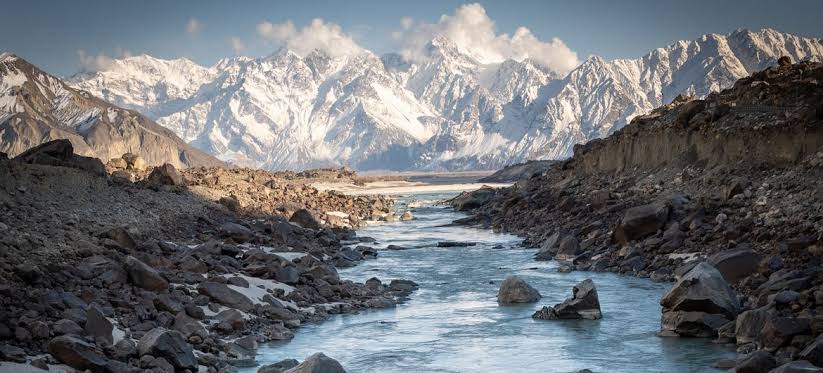
Indian scientists have achieved a landmark breakthrough in climate research. For the first time, they have recorded continuous, high-resolution greenhouse gas data in the Central Himalayas. This data offers critical insights into how human activity and natural forces shape atmospheric conditions in this fragile ecosystem.

This major study was led by the Aryabhatta Research Institute of Observational Sciences (ARIES) under the Department of Science and Technology (DST), Government of India. The observations took place at a high-altitude site in Nainital over a five-year period.

Why the Central Himalayas Matter

The Central Himalayan region plays a key role in regional climate and water cycles. Yet, it has long lacked ground-based atmospheric data. This study helps fill that gap.

With dense forests, unique weather patterns, and increasing population pressures, understanding greenhouse gas dynamics in the Himalayas is critical to address climate change in South Asia.

Tracking CO₂, CH₄, and CO with Precision

Researchers Dr. Priyanka Srivastava and Dr. Manish Naja collected data on carbon dioxide (CO₂), methane (CH₄), and carbon monoxide (CO). They found that these gases show daily and seasonal variations due to both natural and human causes.

During the day, CO₂ levels drop as plants absorb the gas during photosynthesis. In contrast, methane and carbon monoxide levels peak due to pollution rising from the valleys below.

Seasonal Trends and Agricultural Influence

In spring, CO₂ levels spike due to biomass burning and reduced vegetation. In autumn, methane rises, likely because of agricultural practices like rice farming. Carbon monoxide hits its highest levels in late spring, suggesting long-range transport of pollutants from regional sources.

Comparison with Global Sites: A Warning Sign

The study compared data with Mauna Loa, a renowned background observatory. Shockingly, the rise in CO₂ (2.66 ppm/year) and methane (9.53 ppb/year) in the Himalayas exceeds Mauna Loa’s rates. This points to the growing impact of anthropogenic emissions in the region.

Interestingly, carbon monoxide is decreasing by 3.15 ppb/year. This could mean better combustion efficiency or changing emission sources in nearby areas.

More Than Just Emissions: The Role of Climate Factors

The researchers didn’t stop at human activity. They also found that solar radiation, temperature, and boundary layer height significantly influence gas behavior. These factors affect how high gases can rise and disperse during the day.

This makes it clear that climate patterns and geography are just as important as emissions when assessing air quality in mountainous regions.

Why This Study Matters Globally

This kind of localized, real-time climate data is rare. The findings from ARIES provide a crucial baseline for:

  • Validating satellite climate data
  • Refining emissions inventories for South Asia
  • Improving climate forecasting models

Global climate strategies often lack input from mountainous ecosystems. This study helps close that gap, ensuring Himalayan climate data contributes to international action plans.

Implications for Climate Policy

With evidence of rising greenhouse gases, policymakers now have access to reliable, on-ground data to shape environmental regulations. This includes better planning for sustainable agriculture, forest protection, and clean energy initiatives in mountain states.

These findings will also help India meet its Nationally Determined Contributions (NDCs) under the Paris Agreement.

Conclusion: A Call to Protect the Himalayas

This pioneering work by Indian scientists shows that climate change is not a distant threat—it’s happening now, even in the serene peaks of the Himalayas.

With rising CO₂ and methane levels driven by human activity and environmental shifts, the time to act is now. This research empowers governments, researchers, and citizens with the science-backed knowledge needed to protect our mountains—and our future.
News #GreenhouseGasHimalayas #ARIESClimateStudy #CentralHimalayasEmissions #CO2MethaneTrends #ClimateChangeIndia #HighAltitudeClimateData #BiomassBurningIndia #SouthAsiaAirQuality #HimalayanClimateCrisis

Post navigation

Previous post
Next post

Related Posts

News

Turning Coal into a Catalyst for Sustainable Growth and India’s Global Leadership

May 26, 2025May 26, 2025

On May 26, 2014, when Shri Narendra Modi first took office as India’s Prime Minister, he ignited a mission to transform the nation’s economy and infrastructure. Among the many sectors experiencing profound change, coal stands out as a crucial example of this transformation. Over the past decade, India’s coal production…

Read More
News

CAQM Review Punjab Haryana Stubble Burning Preparedness 2025

September 27, 2025September 27, 2025

The Commission for Air Quality Management (CAQM) in NCR and Adjoining Areas held two comprehensive review meetings with Punjab and Haryana officials on 25–26 September 2025 to assess preparations for preventing paddy stubble burning during the upcoming harvest season. Senior officers from 23 districts of Punjab and 22 districts of…

Read More
News

PM Modi to Launch Rs 42,000 Cr Agriculture Schemes

October 11, 2025October 11, 2025

New Delhi: Prime Minister Shri Narendra Modi will participate in a special Krishi programme at the Indian Agricultural Research Institute (IARI) in New Delhi on 11th October 2025 at 10:30 AM. During the event, the PM will interact with farmers and address the gathering to highlight key initiatives in agriculture…

Read More

Leave a Reply Cancel reply

You must be logged in to post a comment.

Recent Posts

  • Sarbananda Sonowal Office Clarifies Forged Letter Circulation
  • PSBs Sanction ₹52,300 Cr to 3.96 Lakh MSMEs via Digital Loans
  • IIT Delhi Launches CoE for Power Sector Regulatory Excellence
  • IndiaSkills 2025–26 North-East Competition Inaugurated
  • Indian Railways Runs 244 Special Trains for Mauni Amavasya

Recent Comments

No comments to show.

Archives

  • January 2026
  • December 2025
  • November 2025
  • October 2025
  • September 2025
  • August 2025
  • July 2025
  • June 2025
  • May 2025
  • April 2025
  • March 2025
  • February 2025
  • January 2025
  • December 2024
  • November 2024
  • October 2024
  • September 2024
  • June 2024
  • May 2024
  • January 2024
  • November 2023
  • October 2023
  • September 2023
  • August 2023

Categories

  • Ancient Bharat
  • Article 1
  • Article 2
  • Article 3
  • Article 4
  • Articles
  • Artist
  • BB – Article 1
  • BB – Article 2
  • BB – Article 3
  • BB – Article 4
  • BB – Article 5
  • Beauty
  • Bharat
  • Bihar
  • Business and Economy
  • By – Devendra Sikarwar
  • By – Kumar Satish
  • By – Menuka Shahi
  • By – Nitin Tripathi
  • By – Raj Shekhar Tiwari
  • By – Sarvesh Kumar Tiwari
  • By – Shanees Arya
  • By – Shouvik Roy
  • By – विनय सिंह बैस
  • By – कमलाकांत त्रिपाठी
  • Career
  • Covid
  • Defence
  • Dharm
  • Editorial
  • Educational
  • Elections
  • Events
  • Expose-Series
  • Festivals
  • From Social Media
  • GeoPolitics
  • Glorious Bharat
  • Health
  • Inspired by SM Posts About Current Events
  • International
  • Life style
  • Lok Sabha
  • Mandir
  • Model
  • Nation First
  • News
  • Operation Sindoor
  • Photography
  • Politics
  • Press Release
  • Rajya Sabha
  • Ramayan Series
  • Ramp
  • Rituals
  • Sports
  • Tips & Tricks
  • Trends
  • Uncategorized
  • Warfare
  • Weather
  • बदलता भारत

Tags

##India #AatmanirbharBharat #AmitShah #AtmanirbharBharat #BJP #BreakingNews #BusinessNews #CulturalHeritage #DigitalIndia #DrJitendraSingh #EaseOfDoingBusiness #EconomicGrowth #GlobalTrade #GoodGovernance #GovernmentOfIndia #InclusiveGrowth #IndianCulture #IndianEconomy #IndiaNews #IndianNavy #IndianPolitics #IndianRailways #InfrastructureDevelopment #MakeInIndia #MaritimeSecurity #NarendraModi #NationalSecurity #NationBuilding #NewDelhi #NortheastIndia #PiyushGoyal #PMModi #PublicHealth #RamRajyaNews #RenewableEnergy #RuralDevelopment #SkillDevelopment #StartupIndia #SupremeCourt #SustainableDevelopment #ViksitBharat #ViksitBharat2047 #WomenEmpowerment #YouthEmpowerment innovation

Categories

  • Ancient Bharat (10)
  • Article 1 (1)
  • Article 2 (1)
  • Article 3 (1)
  • Article 4 (1)
  • Articles (34)
  • Artist (1)
  • BB – Article 1 (2)
  • BB – Article 2 (2)
  • BB – Article 3 (2)
  • BB – Article 4 (2)
  • BB – Article 5 (2)
  • Beauty (2)
  • Bharat (46)
  • Bihar (122)
  • Business and Economy (7)
  • By – Devendra Sikarwar (10)
  • By – Kumar Satish (2)
  • By – Menuka Shahi (1)
  • By – Nitin Tripathi (1)
  • By – Raj Shekhar Tiwari (2)
  • By – Sarvesh Kumar Tiwari (1)
  • By – Shanees Arya (1)
  • By – Shouvik Roy (1)
  • By – विनय सिंह बैस (4)
  • By – कमलाकांत त्रिपाठी (1)
  • Career (18)
  • Covid (6)
  • Defence (9)
  • Dharm (172)
  • Editorial (18)
  • Educational (4)
  • Elections (110)
  • Events (3)
  • Expose-Series (2)
  • Festivals (135)
  • From Social Media (33)
  • GeoPolitics (7)
  • Glorious Bharat (9)
  • Health (30)
  • Inspired by SM Posts About Current Events (1)
  • International (32)
  • Life style (1)
  • Lok Sabha (6)
  • Mandir (22)
  • Model (3)
  • Nation First (8)
  • News (5,731)
  • Operation Sindoor (8)
  • Photography (2)
  • Politics (66)
  • Press Release (8)
  • Rajya Sabha (1)
  • Ramayan Series (4)
  • Ramp (3)
  • Rituals (22)
  • Sports (77)
  • Tips & Tricks (1)
  • Trends (4)
  • Uncategorized (12)
  • Warfare (1)
  • Weather (1)
  • बदलता भारत (8)
©2026 RamRajya News | WordPress Theme by SuperbThemes
Go to mobile version