India has hit a major climate milestone — non-fossil fuel energy sources now account for 50.1% of total installed power capacity. This remarkable achievement comes five years ahead of the nation’s 2030 target, showing the country’s increasing commitment to clean energy and sustainability.
 What Made This Possible?
- Solar and wind power additions have surged in the last five years.
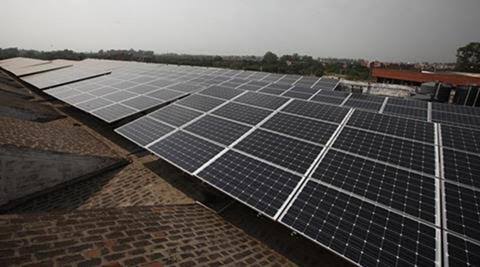
- Major government schemes such as PM-KUSUM and PM Surya Ghar: Muft Bijli Yojana boosted rooftop solar adoption.
- India’s large hydro and nuclear sectors also saw steady growth.
While thermal power still dominates in terms of actual electricity generation — due to the intermittent nature of solar and wind — the growing capacity of renewables sets the stage for a cleaner future.
Key Data Highlights
- Total Installed Capacity (June 2025): 484.82 GW
- Renewables (solar, wind, etc.): 184.62 GW
- Large Hydro: 49.38 GW
- Nuclear: 8.78 GW
- Thermal: 242.04 GW (49.9%)
India’s Global Standing in Clean Energy
India now ranks 4th in the world in total renewable capacity, following China, the US, and Brazil. The country has moved up to 63rd place on the 2024 Energy Transition Index, improving from 67th in 2023 (World Economic Forum).
What Are Non-Fossil Fuel Sources?
- Solar Energy: Generated from the sun using photovoltaic panels.
- Wind Energy: Captures wind via turbines for electricity.
- Biomass: Uses organic materials like plants and animal waste.
- Hydropower: From water flow in rivers and dams.
- Nuclear Energy: Generated through nuclear fission.
- Geothermal and Tidal: Underutilized but gaining momentum.
India’s Clean Energy Roadmap to 2030
India has set an ambitious target of reaching 500 GW of non-fossil fuel capacity by 2030. This includes a robust mix of renewables, nuclear, and hydro.
Prime Minister Narendra Modi, during COP26 in Glasgow, also announced a net-zero carbon goal by 2070, reinforcing India’s long-term vision.
Major Government Initiatives Driving the Transition
- PM-KUSUM: Promotes solar pumps for farmers.
- PM Surya Ghar Yojana: Provides 40% subsidy on rooftop solar panels.
- Green Energy Corridor: Strengthens grid infrastructure for renewables.
- National Green Hydrogen Mission: Targets 5 million tonnes per annum of green hydrogen by 2030.
Challenges Ahead
While capacity has increased, integrating intermittent renewable sources into the grid remains a challenge. Grid stabilisation, energy storage systems, and transmission upgrades are essential.
Conclusion
India’s clean energy leap is a bold signal to the world. Hitting the 50% non-fossil capacity mark early shows what strong policy, global commitment, and grassroots initiatives can achieve. With the right investments, India is poised to be a global green energy leader.