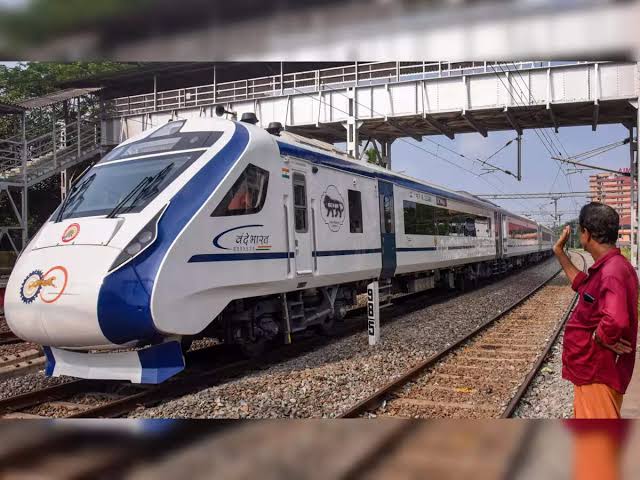
India’s Vande Bharat Express trains are setting new benchmarks in speed, safety, and public satisfaction—clocking over 105% occupancy in 2025-26.
A Modern Rail Revolution
The Vande Bharat Express trains, India’s pride in semi-high-speed rail travel, continue to make headlines. As of June 2025, their passenger occupancy has crossed a remarkable 105.03% in FY26, according to Railway Minister Ashwini Vaishnaw’s statement in the Lok Sabha.
This comes after an already impressive 102.01% occupancy in FY 2024–25. The numbers reflect India’s growing preference for faster, safer, and more comfortable train journeys.
 How Many Vande Bharat Trains Are Running?
Currently, a total of 144 Vande Bharat Express trains operate across India. These include:
- 22 train services serving stations in Maharashtra
- 8 train services covering various stations in Madhya Pradesh
Each of these trains is designed to minimize travel time while maximizing convenience and comfort for passengers.
Occupancy Data That Tells a Story
The Railways Ministry reported that the average occupancy rate of these trains has crossed 105% in just the first quarter of FY26. That means trains are not just full—they are often overbooked, especially during weekends and holidays.
This trend clearly showcases a strong public demand for efficient and premium rail services across the country.
Why Are Vande Bharat Trains So Popular?
Several features make Vande Bharat trains stand out:
- KAVACH technology for collision prevention
- Operating speed of up to 160 kmph with design speed of 180 kmph
- UV-C based air disinfection system in air conditioning
- Automatic plug doors and wider gangways
- Crash-hardened memory units for safety monitoring
- Jerk-free semi-permanent couplers for smooth rides
These technical advancements ensure a smooth and safe journey—especially for daily commuters and business travelers.
Accessibility and Comfort
The trains offer two classes: Chair Car (CC) and Executive Chair Car (EC). Both come with plush seating, large windows, charging ports, and modern lavatories.
Special features for Divyangjan include dedicated lavatories in the driving coaches and wheelchair spaces, making the trains inclusive and accessible.
Variants and Routes
Vande Bharat trains operate in three different coach variants:
- 8-coach formation
- 16-coach formation
- 20-coach formation (introduced on high-traffic routes)
These trains connect important cities and tier-2 hubs, reducing travel time by up to 30% compared to conventional express trains.
Railway Minister’s Statement
In his reply to the Lok Sabha on July 30, 2025, Railway Minister Ashwini Vaishnaw said, “The public’s response has been phenomenal. We aim to expand Vande Bharat routes even further, improving regional connectivity and modernizing India’s rail infrastructure.”
This policy aligns with the central government’s push for high-speed, indigenous, and energy-efficient transport options.
What Lies Ahead?
More routes are being identified for new Vande Bharat services. The goal is to connect all state capitals and major industrial hubs with modern, punctual rail transport.
The success of these trains indicates a larger shift in India’s transport aspirations. It’s no longer just about reaching your destination—it’s about how well you travel.
Conclusion: A Success Model for Indian Railways
Vande Bharat Express trains have not only won public trust but also set new standards for railway performance. With occupancy consistently above 100%, Indian Railways is clearly on track towards a smarter and faster future.
With advanced safety, passenger comfort, and high-speed operation, these trains represent a transformative chapter in Indian infrastructure development.