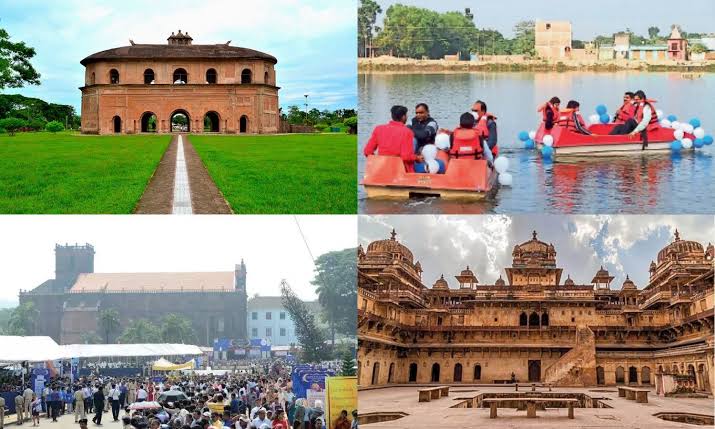
In a bold move to transform India’s tourism landscape, the Ministry of Tourism has sanctioned ₹3,295.76 crore for the development of 40 iconic tourist centres across 22 states. This is part of the Special Assistance to States for Capital Investment (SASCI) scheme, designed to elevate heritage, cultural, and eco-tourism to global standards.
Tourism as a Driver of Economic Growth
Tourism isn’t just about sightseeing. It fuels jobs, promotes cultural pride, and brings international visitors to our doorsteps. Recognizing this, the Government of India has taken decisive steps to invest heavily in infrastructure that supports both domestic and foreign travellers.
Through the SASCI scheme, 87 proposals were received. Of these, 40 were approved for 100% central funding. The projects span a wide range—from eco-parks and spiritual retreats to film cities and international convention centres.
Wide Reach, Local Impact
The initiative covers diverse regions—from the Himalayan ranges to the coastal south. For example:
- Bihar’s Karamchat Eco-Tourism Hub is set to host 33,055 tourists/day.
- Karnataka’s Savadatti Yallammagudda expects over 7 crore annual visitors by 2030.
- Uttar Pradesh’s Bateshwar cluster is projected to manage over 2.15 lakh tourists per day.
- Telangana’s Ramappa region aims to nearly double its daily footfall in 10 years.
These numbers reflect not just capacity, but ambition. The goal is to create sustainable, high-impact tourism destinations that rival international standards.
 Projects that Celebrate Diversity
Each approved project is unique. Here’s a glimpse of what’s underway:
- Pasighat, Arunachal Pradesh – An eco-retreat at Siang River aims to attract nature lovers.
- Dhordo, Gujarat – A new tented city will enhance the Rann of Kutch experience.
- Sindhudurg, Maharashtra – The creation of an Underwater Museum from ex-INS Guldar will boost marine tourism.
- Orchha, Madhya Pradesh – A medieval town will shine as a cultural heritage site.
From modern amenities to nature preservation, these sites blend tradition with innovation.
Sustainable Development Is Key
Every project under the SASCI scheme includes a detailed carrying capacity assessment. This ensures the environment and local resources aren’t overwhelmed by tourism traffic. The Ministry advised states to include physical and ecological limits in their Detailed Project Reports (DPRs).
This step ensures that future generations can enjoy these destinations without degrading their natural and cultural value.
Public-Private Partnership: Encouraged, Not Enforced
Although the Ministry of Tourism doesn’t directly implement Public-Private Partnership (PPP) projects under current schemes like Swadesh Darshan, states have been encouraged to explore private investment. States were asked to submit potential PPP plans alongside their project proposals.
These projects will be managed and monitored by the state governments themselves. This model keeps accountability local and project execution more agile.
Harnessing Culture, Nature, and Innovation
Many of the selected destinations are hidden gems. For example, the Somasilla Retreat in Telangana includes river cruise nodes, wellness centers, and tribal experience zones. Meanwhile, Ashtamudi Lake in Kerala will become a biodiversity hub offering eco-recreation.
The approach isn’t just to attract tourists. It’s to transform regions into hubs of livelihood, sustainability, and global visibility.
Funding Status and Progress
Of the sanctioned ₹3,295.76 crore, over ₹2,175 crore has already been released. Some states, like Goa and Assam, have received more than their project cost estimates, showing strong confidence in their execution capabilities.
Each state will monitor progress, manage implementation, and ensure timely delivery with support from central authorities. The union government’s role is strategic—offering guidelines, templates, and financial backing while allowing states to lead.
India’s Tourism Future Is Iconic
The vision is clear. India wants to compete with the world’s top travel destinations, not just in visitor numbers but in quality of experience. This initiative is more than infrastructure—it’s a national narrative of pride, heritage, and ambition.
As these sites come to life over the coming years, tourists—both Indian and foreign—will have a richer, more seamless experience rooted in India’s diverse heritage.
Conclusion
From majestic forts and serene lakes to cultural corridors and adventure hubs, the SASCI scheme is reshaping how India tells its tourism story. With 100% central funding, state leadership, and strategic planning, these iconic tourist centres will uplift local economies and offer world-class experiences.
India is investing not just in destinations, but in dreams.