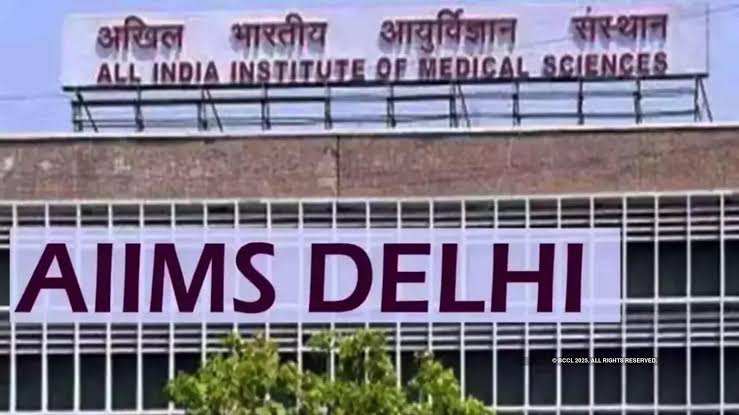
New Delhi: India’s premier public health institutions, the All India Institutes of Medical Sciences (AIIMS), are grappling with an alarming faculty shortage. Even AIIMS Delhi, the country’s top government-run hospital, is affected.
The crisis goes beyond numbers. It’s about how the future of medical education and public healthcare in India is at stake.
Vacancies Cripple AIIMS Across India
Government data reveals a worrying trend. None of the 20 AIIMS institutions have filled even 80% of their sanctioned faculty posts. In some, vacancies soar as high as 73%.
For instance, AIIMS Madurai, operational since 2022, has filled only 27% of its sanctioned 183 faculty positions. Similarly, AIIMS Rajkot, functional since 2020, has only 76 out of 183 posts filled—just over 40%.
Even AIIMS Delhi is facing a shortfall. Over 462 faculty positions remain vacant—more than 35% of the 1,306 sanctioned posts.
 Doctors Choosing Private Over Public
Why are India’s top doctors leaving government institutions?
Experts say it’s simple: private hospitals offer better pay, more flexibility, and faster career growth. “Healing and teaching have lost their charm in a commercialized, profit-driven world,” says Dr. Antony K.R., a public health expert.
From 2021 to mid-2024, over 422 doctors resigned from AIIMS branches. Notably, AIIMS Delhi lost 25 senior doctors during this time. Some of the best minds, including neurologist Dr. M.V. Padma Srivastava and head and neck surgeon Dr. S.V.S. Deo, left to join corporate hospitals.
Reserved Posts Lie Vacant
The crisis is even more severe in reserved categories. At AIIMS Delhi alone, out of 730 total vacancies for faculty and resident doctors, 250 are for SC, 115 for ST, and 350 for OBC candidates.
Despite government efforts like forming standing selection committees and introducing a visiting faculty scheme, the numbers haven’t improved.
Government Solutions Aren’t Enough
In response to the crisis, the government introduced several measures:
- Allowing retired professors (up to age 70) to return on contract
- Inviting visiting faculty from India and abroad
- Creating standing selection committees for faster hiring
But these steps have fallen short. Many AIIMS campuses still lack basic teaching staff. New medical colleges are being built, but there are no trained faculty to run them.
Experts Call for a Rethink
Dr. Antony believes it’s time to halt expansion. “Stop starting new AIIMS and focus on strengthening existing ones,” he says.
He suggests a few strong remedies:
- Competitive salaries to match private hospitals
- Career growth opportunities in public health institutions
- Restrict foreign assignments for faculty on government payroll
He also recommends a need-based postgraduate admission policy. It should include a service bond of 15–20 years and an assured posting at AIIMS or other top institutes.
India’s Public Health Future at Risk
AIIMS hospitals are more than educational institutions. They serve over 15,000 patients daily in Delhi alone. Many travel from distant states for treatment they can’t afford elsewhere.
Yet, without adequate teaching staff, the quality of care and medical education is bound to decline. When teachers leave, the next generation of doctors suffers. And so does the public.
India’s government must act fast. A strong public healthcare system cannot exist without dedicated, well-supported faculty. If the current trends continue, the country risks turning its most prestigious medical institutions into empty buildings with no one to teach or heal.
Conclusion: A Wake-Up Call
The AIIMS faculty crisis isn’t just a staffing problem—it’s a policy failure. A system meant to serve the poorest and train the best minds is bleeding talent.
It’s time to fix what’s broken. Better pay, real growth opportunities, and smart human resource planning can turn the tide. India cannot afford to lose more doctors to the private sector—not when lives depend on them.