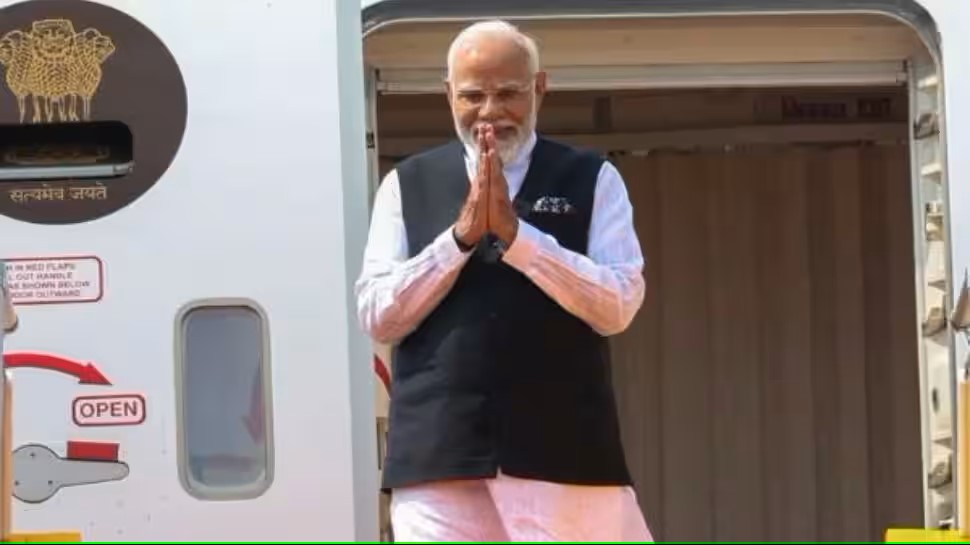
Public-Private Partnerships Power Rural Skill Development in India
India’s rural youth are gaining new opportunities.
Through the Skill India Mission (SIM), the Ministry of Skill Development and Entrepreneurship (MSDE) is training millions in future-ready skills.
The mission is not working alone. It is building strong Public-Private Partnerships (PPPs) to close skill gaps, expand reach, and match global standards.
Skill India Mission: Reaching Every Corner
Launched to make India’s workforce industry-ready, SIM covers the country’s towns and villages.
Training is delivered under key schemes such as:
-
Pradhan Mantri Kaushal Vikas Yojana (PMKVY)
-
Jan Shikshan Sansthan (JSS)
-
National Apprenticeship Promotion Scheme (NAPS)
-
Craftsman Training Scheme (CTS) through Industrial Training Institutes (ITIs)
These programmes focus on skill, re-skill, and up-skill training for all sections of society.
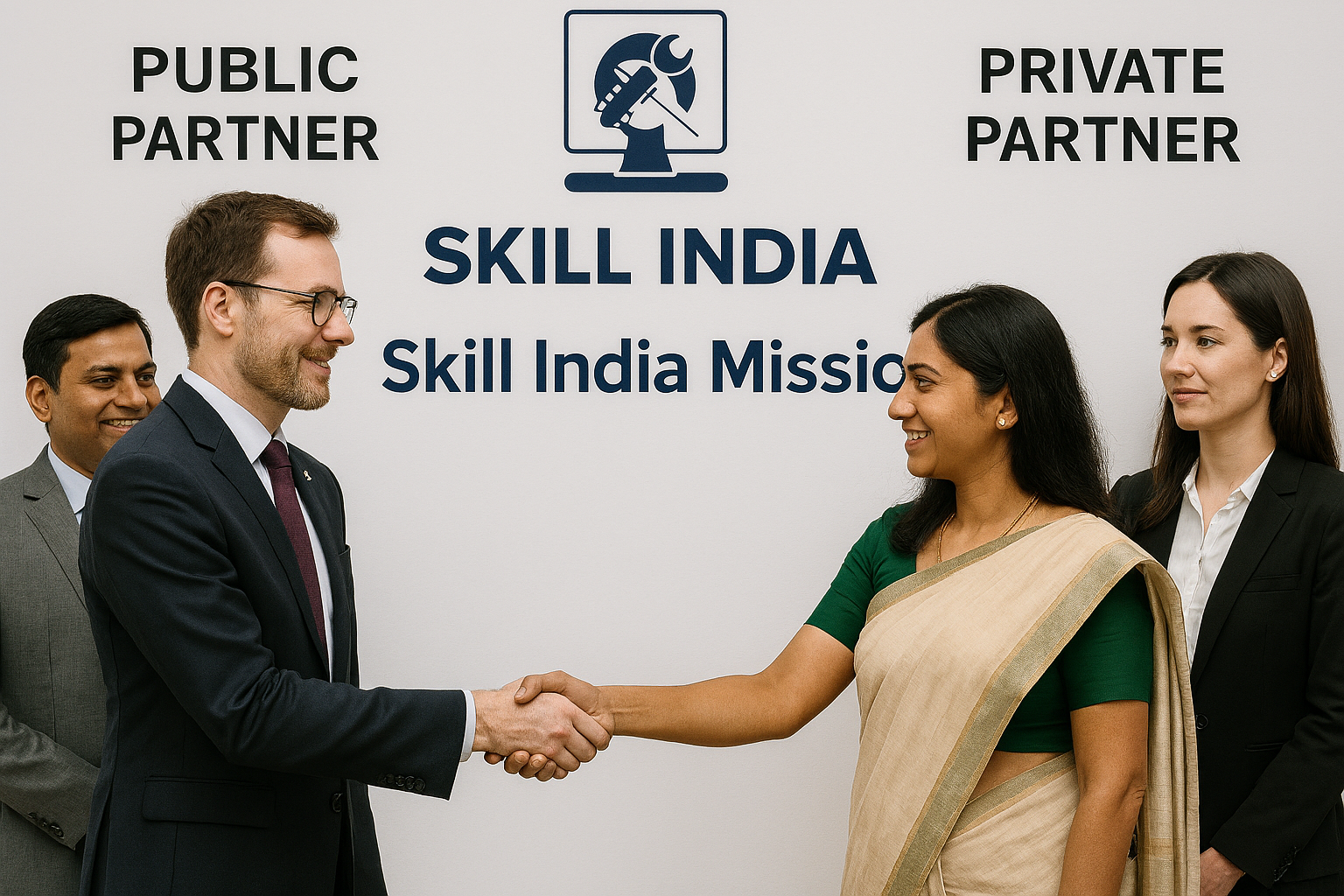 Private Sector Joins Hands
MSDE works with private players to enhance both quality and reach.
Under PMKVY 4.0, multiple Memorandums of Understanding (MoUs) have been signed with companies to deliver targeted training.
Similarly, under the Crafts Instructor Training Scheme (CITS), the Directorate General of Training (DGT) has partnered with industry leaders.
The aim is to ensure that trainers themselves stay updated with the latest tools and techniques.
Corporate Partnerships Driving Innovation
Leading global companies are part of this mission.
IBM India, Microsoft, Cisco, Adobe India, Amazon Web Services (AWS), and Future Right Skills Network (FRSN) have joined hands through CSR initiatives.
These partnerships bring technical and professional skill training in emerging fields like:
-
Artificial Intelligence (AI)
-
Cloud Computing
-
Cybersecurity
-
Digital Design
More than 25 lakh youth have already benefited from such collaborations.
NCVET: Setting Standards for Quality
The National Council for Vocational Education and Training (NCVET) ensures quality and consistency.
It recognises entities as Awarding Bodies (ABs) and Assessment Agencies (AAs).
So far, 61 private Awarding Bodies and 68 private Assessment Agencies have been approved.
This helps maintain a robust and credible skilling ecosystem across India.
International Partnerships for Global Readiness
Skill development is no longer limited to domestic needs.
The Government of India has signed agreements with twelve countries for cooperation in vocational training.
Some key initiatives include:
-
AI Careers for Women – an MSDE and Microsoft programme empowering women in AI careers.
-
Skill India International Centres – 30 centres planned to prepare workers for overseas opportunities.
-
Flexi MoU Scheme and Dual System of Training (DST) – practical, industry-based training for ITI students.
-
SOAR – Skilling for AI Readiness – a Microsoft, HCL Tech, and Nasscom-led programme.
-
Indian Institute of Skills (IIS) in Ahmedabad and Mumbai – offering Industry 4.0 aligned training in PPP mode.
Role of CSR in Skill Development
Public and private sector undertakings (PSUs) contribute to the National Skill Development Fund (NSDF).
The fund, managed by the National Skill Development Corporation (NSDC), supports skill projects nationwide.
This CSR-backed funding ensures that skilling projects remain sustainable and can scale up quickly.
Addressing Regional Skill Gaps
Sector Skill Councils and District Skill Committees work with local industries.
They identify regional skill shortages and design programmes to address them.
For example, in agriculture-driven states, training might focus on food processing and agri-tech.
In manufacturing hubs, the emphasis could be on machine operations and industrial maintenance.
Why PPP in Skilling Matters
Public-Private Partnerships combine the government’s reach with the private sector’s innovation.
They create a win-win situation — industry gets skilled workers, and youth gain better employment prospects.
As Minister of State Shri Jayant Chaudhary stated in Parliament, these collaborations are key to making India’s workforce future-ready and globally competitive.
Key Highlights at a Glance
-
Over 25 lakh youth trained through private collaborations.
-
Twelve international MoUs signed for skill development.
-
30 Skill India International Centres being set up.
-
61 Awarding Bodies and 68 Assessment Agencies approved by NCVET.
-
Strong CSR support from PSUs and private companies.
The Road Ahead
With continuous investment in skills and strong PPP frameworks, rural India can emerge as a hub for talent.
The challenge now is to expand reach, integrate new-age technologies, and ensure every trainee finds meaningful work.
Skill India’s partnerships prove that when public and private sectors join forces, the possibilities are endless.