Deadly Clashes in Sweida
In July, Sweida witnessed fierce clashes between Druze fighters, Sunni Bedouin tribes, and government troops. The violence killed hundreds, prompting the deployment of Syrian forces to restore control. Israel also carried out airstrikes, claiming it was preventing mass killings of Druze civilians by government forces.
Sweida is a predominantly Druze region but also home to Sunni communities, with longstanding tensions over land and resources. The Druze community, an offshoot of Islam with followers in Syria, Lebanon, and Israel, has resisted government deployments, accusing Damascus of extremism and interference in their self-rule.
 Elections Suspended in Three Provinces
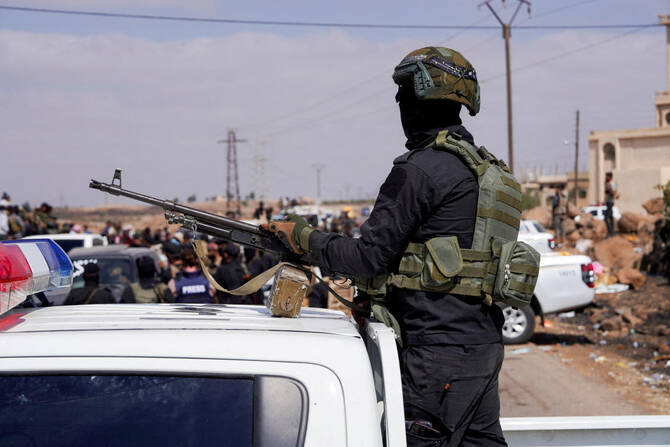
The Higher Committee for People’s Assembly Elections announced on Saturday that voting in Sweida, Hasaka, and Raqqa would be postponed until “a safe environment” could be guaranteed. State media reported that seats allocated to the three provinces would remain vacant until polls can be safely held.
“The elections are a sovereign matter that can only be conducted in areas fully under government control,” an electoral commission spokesperson said, adding that instability in northern provinces under Kurdish influence made voting impractical.
Criticism from Kurdish Authorities
The decision was met with sharp criticism from Kurdish-led administrations. The Democratic Autonomous Administration of North and East Syria issued a statement rejecting the security justification. “These elections are not democratic and do not express the will of the Syrians in any way. They represent nothing but a continuation of marginalisation and exclusion,” it said.
Hasaka and Raqqa remain largely under the control of the Kurdish-led Syrian Democratic Forces (SDF), which has opposed Damascus’ push to centralize power. Analysts believe the exclusion of these provinces reflects both security concerns and political disputes over autonomy.
Government Defends Decision
President Ahmed al-Sharaa’s administration defended the move, insisting that elections cannot be held in contested areas. The head of the electoral commission earlier announced that polls for the 210-member People’s Assembly would take place between September 15 and 20. With three provinces excluded, observers say the vote risks losing credibility.
Sharaa has previously said that Syria would need “four to five years” before it could hold a presidential election, citing security and administrative challenges. Critics argue that delaying local participation weakens democratic representation and fuels discontent among minority groups.
Impact on Syria’s Political Future
The delay raises concerns about further alienation of minorities and opposition groups. Sweida’s Druze factions already view the Islamist-led government as hostile to their interests, while Kurdish authorities accuse Damascus of undermining self-rule. Political analysts warn that excluding provinces risks deepening divides and prolonging instability.
Despite the postponement, the government plans to move forward with elections in other provinces under its control. Whether these polls will bring greater stability or widen the political gulf remains uncertain.