Modi’s First Trip to Japan
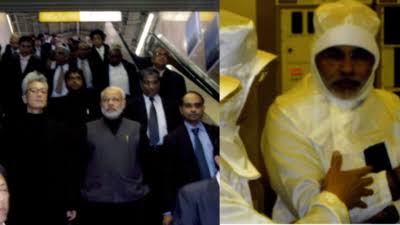
In April 2007, Modi led a 40-member delegation of bureaucrats and industry leaders on a six-day visit to Japan. His primary mission was to pitch Gujarat as India’s gateway for global investment, highlighting the state’s potential in industry, infrastructure, and innovation.
During the trip, he engaged with corporate giants such as Mitsubishi, Mitsui, Sumitomo, Suzuki, Toshiba, and Nippon Steel. The delegation signed Memorandums of Understanding (MoUs) between the Gujarat Industries Department and the Japan External Trade Organization (JETRO), laying the groundwork for future business partnerships.
 The Bullet Train Moment
The most iconic moment came when Modi stepped into the cockpit of a Japanese Bullet Train. The experience sparked discussions on whether such high-speed connectivity could one day transform India. Just a decade later, this vision materialised into the Mumbai–Ahmedabad High-Speed Rail project, a flagship initiative of India-Japan cooperation.
Observers see this moment as symbolic — a seed planted in 2007 that grew into one of the largest Indo-Japan infrastructure collaborations.
Diplomatic and Cultural Outreach
Beyond business, Modi also focused on cultural diplomacy. He met then Japanese Prime Minister Shinzo Abe and presented him with a CD showcasing Gujarat’s Buddhist heritage along with a handwoven tribal shawl. In return, Abe assured support for Gujarat’s role in the Delhi–Mumbai Industrial Corridor (DMIC), a critical infrastructure project.
During the trip, Modi also visited Hiroshima’s Peace Memorial Park, reflecting on the city’s history and resilience. In Kobe, he joined a cultural programme at The India Club, which has been a hub for the Indian diaspora in Japan since 1904. These gestures helped foster both economic and cultural connections.
The 2012 Return
Five years later, in July 2012, Modi returned to Japan, this time at the invitation of the Japanese government. Accorded Cabinet-rank reception, he attended 44 events across multiple cities, reinforcing Gujarat’s investor-friendly image. He met key Japanese ministers, governors, and business leaders, further strengthening economic diplomacy.
His meetings with Osamu Suzuki, Chairman of Suzuki Motors, marked a turning point. Modi showcased Gujarat as an automotive hub, directly contributing to Maruti Suzuki’s later expansion in the state. He also studied Japan’s ports, metro, and maritime systems, drawing lessons for Gujarat’s infrastructure projects.
Legacy of Early Engagement
These visits laid the foundation for today’s robust India-Japan partnership. From infrastructure projects like the Bullet Train to defence cooperation and cultural exchanges, the seeds planted in Modi’s early engagements continue to bear fruit.
As India and Japan meet again in 2025 to discuss trade, technology, and strategic cooperation, the resurfaced images from 2007 serve as a reminder of how far the relationship has progressed. For more on India’s global partnerships, visit the Ministry of External Affairs.