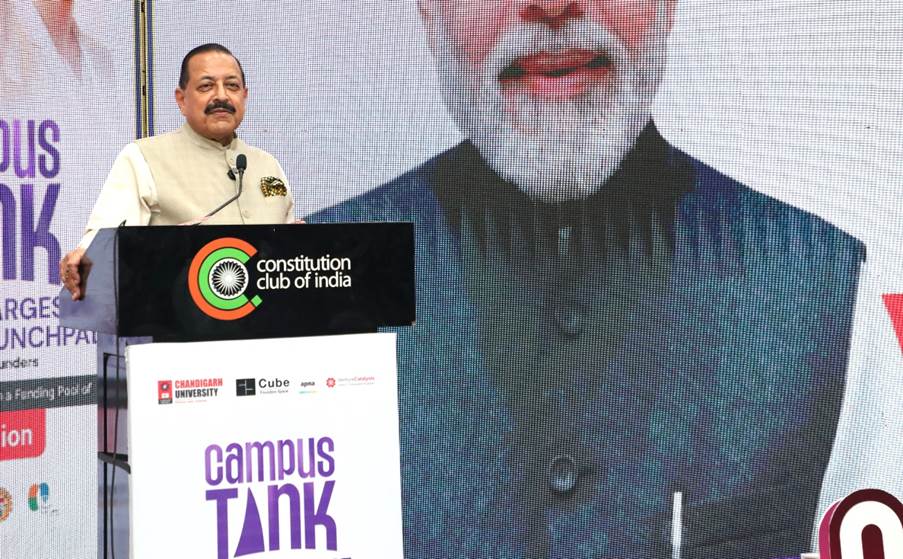
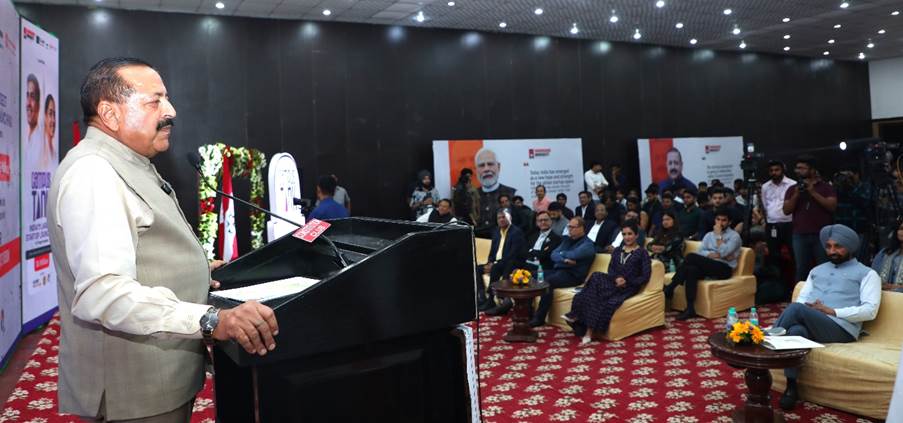
“This initiative prioritises industry collaboration, ensuring StartUps receive early and meaningful engagement,” Dr. Singh noted. He described Campus Tank as a platform for young entrepreneurs, investors, and industry leaders to work together, transforming ideas into sustainable businesses.
 Beyond Metro Hubs
Highlighting the changing landscape of India’s start-up ecosystem, Dr. Singh observed that innovation is no longer restricted to metros or traditional tech hubs. Smaller towns and diverse sectors are increasingly contributing to new ventures, reflecting India’s aspiration to harness innovation for inclusive growth.
He pointed out that North India has lagged behind other regions in the start-up movement, and initiatives like Campus Tank will help bridge this gap by positioning universities as launchpads for entrepreneurship. “The focus is now on turning prototypes into real-world enterprises, and industry must remain at the centre of this ecosystem,” the Minister said.
Women Leading Innovation
Dr. Singh also highlighted India’s rising global innovation standing, noting that the country moved from rank 81 to 39 in the Global Innovation Index in less than a decade. Nearly 60 percent of registered start-ups in India are women-led, with women scientists playing key roles in missions like Chandrayaan-3 and Aditya L1. This shift underscores the inclusive character of India’s scientific and start-up ecosystem.
He added that India’s recent surge in patent filings is primarily driven by domestic innovators, reversing previous trends and showcasing the country’s growing self-reliance in research and development.
Driving a StartUp Linked Economy
The Campus Tank, according to Dr. Singh, is a model to integrate innovation, enterprise, and industry, supporting StartUps to flourish in competitive markets. The platform aims to create sustainable businesses through mentorship, investment, and industry exposure, strengthening India’s path towards becoming a developed nation by 2047.
“A start-up linked economy is not just about ideas; it is about industry-backed execution and long-term sustainability,” he said, urging universities and industry leaders to collaborate closely to ensure that innovation translates into tangible economic growth.