 Key Milestones and Upcoming Missions
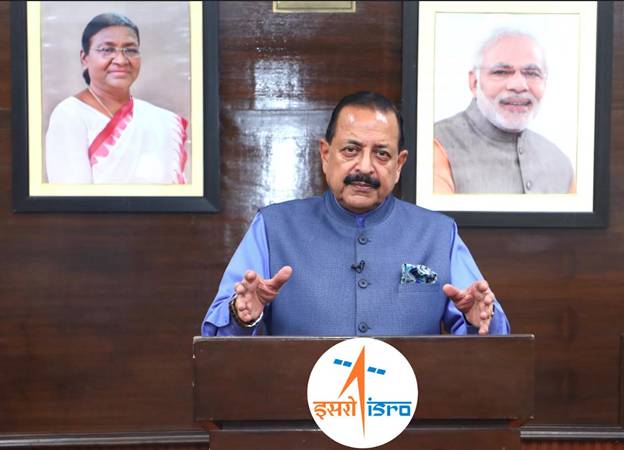
The Minister highlighted India’s recent successes, including Chandrayaan-3, which positioned India among leading spacefaring nations as the first country to land near the lunar south pole. He also cited Group Captain Shubhanshu Shukla, the first Indian Air Force officer to travel to the International Space Station, and outlined upcoming exploration missions to Mars, Venus, and asteroids under the Gaganyaan human spaceflight programme.
Startups and Private Sector Driving Innovation
Dr. Singh stressed the role of reforms initiated under Prime Minister Narendra Modi, which have opened India’s space sector to private participation, academia, and startups. Currently, over 300 startups are active in areas such as launch vehicles, satellites, and ground systems, fostering innovation, generating jobs, and providing opportunities for young professionals.
“Space must empower every sector and serve the common citizen,” Dr. Singh said, highlighting applications in agriculture, health, education, urban development, and governance.
Global Collaboration and Partnerships
International cooperation remains a cornerstone of India’s space strategy. Dr. Singh pointed to partnerships like the NASA–ISRO Synthetic Aperture Radar (NISAR) mission and the upcoming Chandrayaan-5 lunar mission with Japan as examples of how space can foster global engagement. Such collaborations, he noted, enhance technological exchange and strengthen diplomatic ties.
Skill Development and Academic Outreach
Recognizing the importance of human capital, Dr. Singh emphasized ISRO’s outreach programmes, Centres of Excellence, and industry–academia collaborations that nurture talent in satellite design, propulsion, AI applications, and space law. Skill development, he said, is key to sustaining India’s position as a global space leader.
Conference Highlights and Stakeholder Engagement
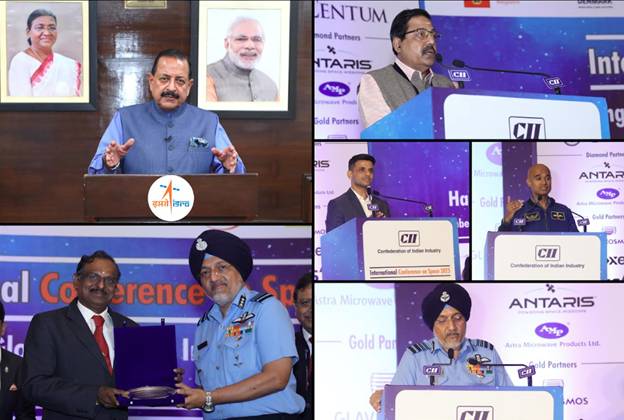
The conference, organized by the Confederation of Indian Industry (CII), attracted over 500 delegates, including government representatives, academics, industry leaders, and startups. Dr. Singh lauded CII for creating a platform that facilitates dialogue on innovation, policy, and sectoral growth.
He also welcomed the formation of CII’s National Committee on Space, aimed at integrating established enterprises and new-age startups to strengthen India’s space ecosystem.
India’s Space Vision for the 21st Century
Reflecting on Prime Minister Modi’s vision, Dr. Singh reiterated that the 21st century belongs to India, with space emerging as a frontier for global leadership. He emphasized that space technologies would not only transform agriculture, health, and education but also enhance governance and public service delivery.
Concluding his address, he urged stakeholders to dream, innovate, and collaborate, envisioning space as a shared horizon of sustainability, equity, and global progress.