 Floods and Landslides Wreak Havoc
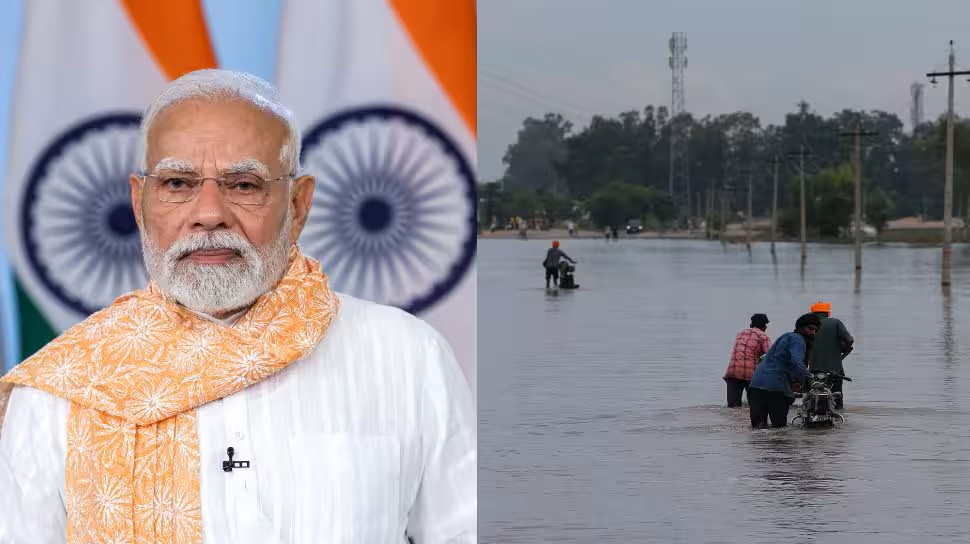
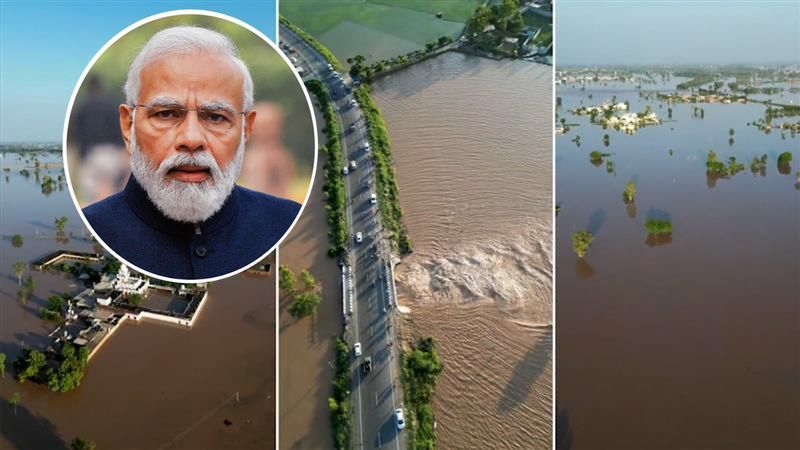
Over the past few weeks, incessant rains in northern India have triggered severe floods and landslides, disrupting normal life and displacing thousands of residents. Several districts in Himachal Pradesh and Punjab remain cut off due to damaged roads and collapsed bridges, complicating rescue and relief efforts.
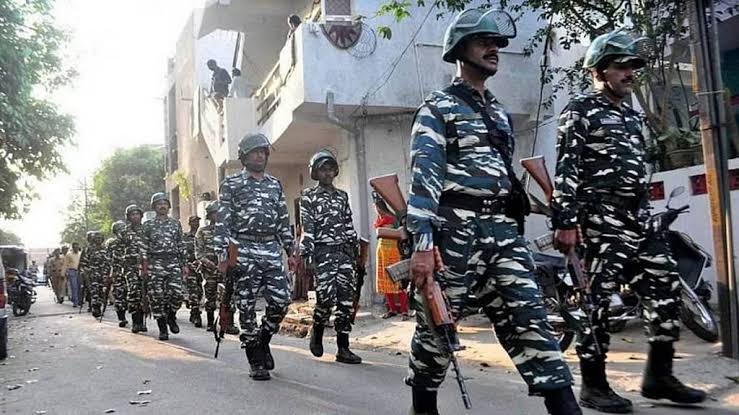
The National Disaster Response Force (NDRF), State Disaster Response Force (SDRF), and armed forces are carrying out rescue operations in the worst-hit areas. Relief camps have been set up for displaced families, while medical teams are working to prevent outbreaks of water-borne diseases.
Government’s Relief and Rehabilitation Efforts
PM Modi’s visit aims to assess on-ground requirements and coordinate the Centre’s support with state governments. The Union Government has already released emergency funds under the State Disaster Response Fund (SDRF) to Himachal Pradesh and Punjab. Additional assistance under the National Disaster Response Fund (NDRF) is expected after damage assessment reports are submitted.
Union Home Ministry officials have been monitoring the situation closely. According to government data, preliminary losses include extensive damage to homes, farmland, power supply, and transport networks. Restoring road connectivity and electricity remains a top priority.
Focus on Rehabilitation
The Prime Minister is likely to meet local officials, affected families, and rescue teams during his visit. His review will cover rehabilitation measures, including rebuilding essential infrastructure, restoring livelihoods, and ensuring long-term resilience against such natural disasters.
Experts have underlined the need for stronger flood management systems, better drainage planning, and climate-resilient infrastructure in these hill states. The central and state governments are expected to work together on long-term solutions beyond immediate relief.
Public Response and Solidarity
The Prime Minister’s visit has drawn widespread attention, with citizens and community organisations extending support to those affected. Several non-governmental organisations (NGOs) have also stepped in to provide food, clothing, and medicines in remote areas.