 Context: US Tariffs and H-1B Fee Hike
The Prime Minister’s comments followed a series of trade and immigration measures announced by Washington. The US has imposed fresh tariffs on Indian imports, sparking concern among exporters, while also introducing a hefty USD 100,000 fee for H-1B visa applications—a program heavily used by Indian professionals in technology and engineering sectors.
These developments are seen as potential hurdles for India’s economy, which depends significantly on IT services and skilled migration. Modi’s remarks were widely interpreted as an indirect response to these policy shifts.
Push for Self-Reliance Across Sectors
Reiterating his government’s long-standing call for Atmanirbhar Bharat, Modi emphasized the need for India to strengthen its capabilities in critical industries. “From semiconductors to shipbuilding, from defense to digital technology—India must build its own strength,” he said.
The government has already launched multiple initiatives, including the Make in India campaign and the Production Linked Incentive (PLI) schemes, to promote domestic manufacturing and reduce reliance on imports. Modi linked these programs to the larger vision of securing India’s future in a competitive global order.
Global Positioning and National Confidence
The Prime Minister noted that India today enjoys strong diplomatic relations with most countries and faces no direct adversary. However, he cautioned that over-dependence on foreign supply chains and technology remains a vulnerability that could be exploited.
“Our self-respect and sovereignty demand that we stand on our own feet. The world respects a nation that is capable of meeting its needs independently,” Modi told the crowd, adding that reducing dependency would also shield India from external economic shocks.
Reactions and Economic Implications
Economists and policy analysts believe Modi’s comments reflect growing anxiety over external pressures on India’s trade and labor market. The new H-1B visa rules, in particular, could impact thousands of Indian professionals seeking work opportunities in the US.
At the same time, business leaders see an opportunity in Modi’s call. “The global environment is uncertain, but this is a chance for India to accelerate domestic manufacturing and innovation,” said a senior industry executive.
Observers also note that self-reliance does not mean isolationism. Instead, India aims to position itself as a reliable partner in global supply chains while reducing vulnerabilities in core sectors.
Looking Ahead
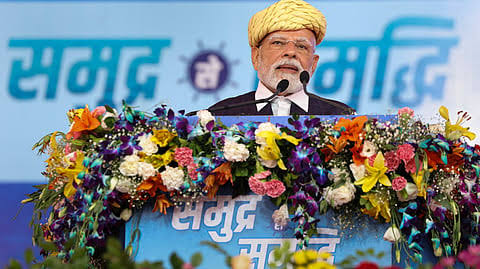
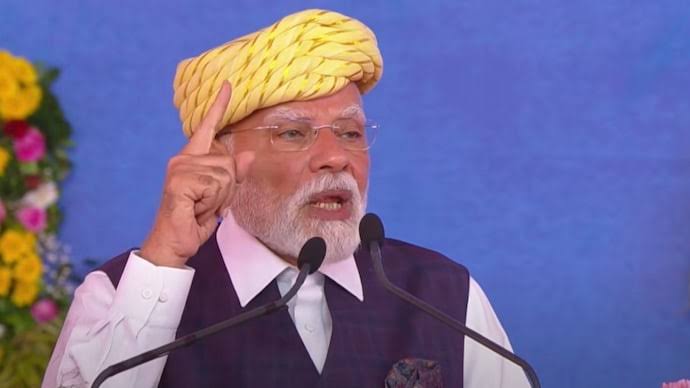
Modi’s speech in Bhavnagar underscores the government’s strategic direction at a time of shifting geopolitics and economic challenges. By framing dependence as India’s “biggest enemy,” he has drawn attention to the urgent need for resilience and innovation.
With rising global trade tensions and restrictive immigration policies abroad, India’s pursuit of self-reliance could shape its growth trajectory for years to come. The challenge now lies in balancing domestic strength with global engagement.