NEP as a Paradigm Shift
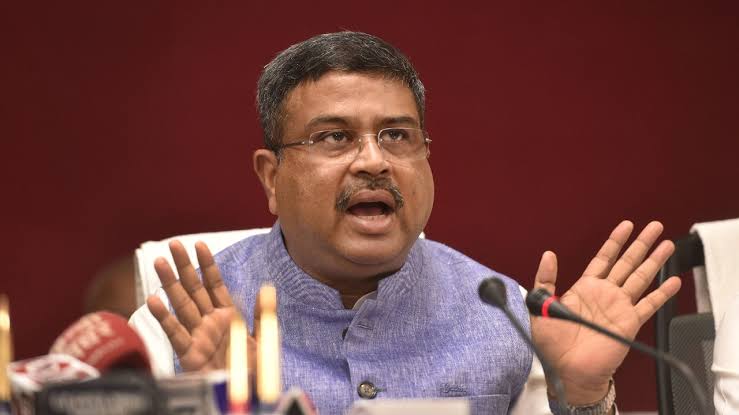
Pradhan described the NEP as a “philosophical document” that is both rooted in Indian civilizational values and forward-looking. He underlined its focus on mother-tongue-based education, skill-building, and multidisciplinary learning. According to him, these reforms will make education more accessible and engaging while reducing the psychological stress students face in higher institutions.
He cited cases from IITs where students struggled with linguistic challenges, noting that NEP’s emphasis on regional languages in technical education could help bridge these gaps. “Education shouldn’t instil fear in students,” he remarked.
Dropout Concerns and Multimode Strategy
The Minister highlighted the need to curb student dropouts, especially in secondary education. While enrolment at the entry level is nearly 100%, the rate declines significantly by Class 12. He proposed a multimode approach, including curriculum flexibility, subject choice, and a more engaging classroom experience, to ensure students remain motivated until the end of their schooling.
“If we want to be a developed economy by 2047, every student entering Class 1 must seamlessly reach Class 12,” Pradhan said, stressing equal opportunities for all.
Reservation and Social Balance
On the issue of reservations, Pradhan reaffirmed it as a constitutional responsibility aimed at uplifting marginalized communities. He also recognized the concerns of students from the general category, saying that no section of society should feel excluded. He credited Prime Minister Modi for extending reservation benefits to economically weaker sections among the upper castes, calling it an example of social evolution.
 Faith in Indian Institutions Amid Global Challenges
Addressing concerns about the recent U.S. hike in H-1B visa fees, Pradhan said India’s institutions remain robust and capable of producing globally competitive talent. He noted that only a fraction of Indian students go abroad, while the majority rely on India’s educational ecosystem. “We must have faith in our academics and institutions,” he said, pointing to ISRO’s Chandrayaan success as proof of domestic capabilities.
Political Insights and Odisha Politics
Pradhan also touched upon political issues, reiterating his party BJP’s democratic nature when asked about the selection of its next president. In Odisha, he expressed confidence in the BJP’s long-term growth, highlighting the party’s steady rise in vote share. He praised his cordial ties with former Odisha Chief Minister Naveen Patnaik while asserting BJP’s stronghold in the state.
Role of Governors in Higher Education
Pradhan defended the traditional role of Governors as institutional heads of universities, calling it a “pre-Independence practice” that remains relevant today. He criticized attempts by some states to dilute this role by appointing political leaders as Chancellors, warning that it could compromise academic standards and autonomy.