Protests Turn Violent
The protests, initially called as a peaceful shutdown, spiraled into violence earlier this week. Demonstrators, many of them young students and local leaders, took to the streets pressing for full statehood and constitutional safeguards for Ladakh’s tribal communities. The agitation quickly escalated, leading to police action and widespread clashes.
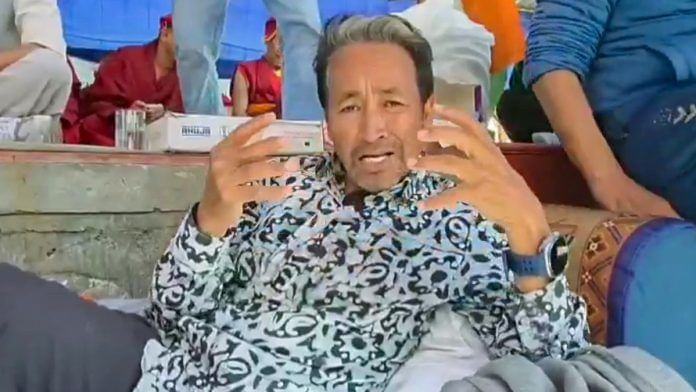 Wangchuk Accused of Inciting Unrest
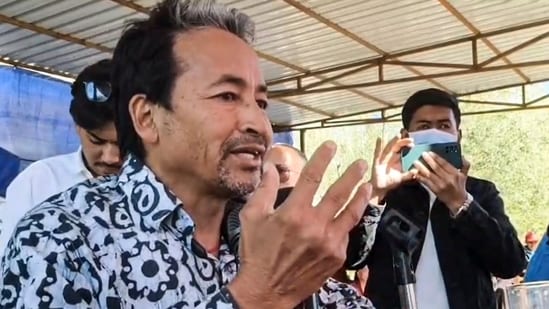
Government officials accused Wangchuk of making “provocative statements” that allegedly incited protesters. Authorities claim that certain politically motivated groups, unhappy with ongoing negotiations between the Centre and Ladakhi representatives, used his remarks to fuel tensions. Sources confirmed that after his arrest, Wangchuk was moved to Leh airport, with reports suggesting he could be flown to Delhi.
Symbol of Ladakh’s Struggle
Wangchuk, internationally recognized for his work on sustainable technologies and education in the Himalayan belt, has become a central figure in Ladakh’s political discourse. Earlier this year, he went on a hunger strike demanding constitutional safeguards for Ladakh. His arrest has drawn sharp reactions from civil society groups and activists who see him as a peaceful campaigner for local rights.
Centre’s Dilemma
The Union government has been holding multiple rounds of talks with Ladakhi leaders to address demands for statehood, representation in Parliament, and protection of land and jobs for local communities. Officials maintain that granting statehood is a complex issue, but activists argue that Ladakh’s unique cultural and environmental vulnerabilities require urgent constitutional protection.
Growing National Attention
The arrest has intensified national attention on Ladakh’s struggle. Opposition parties have criticized the government’s move, calling it an attempt to silence democratic dissent. Several rights groups have urged the government to release Wangchuk immediately and resume talks with local representatives in good faith.
Background of the Statehood Demand
Since the abrogation of Article 370 in 2019, Ladakh was carved out as a separate Union Territory without a legislature. While many locals welcomed the move initially, concerns over land rights, cultural identity, and political representation have steadily grown. The demand for statehood and inclusion under the Sixth Schedule has since gained momentum across the region.
What Lies Ahead
The coming weeks will be crucial for Ladakh’s political future. If protests continue, they could further strain relations between local communities and the Centre. Observers believe that Wangchuk’s arrest may ignite fresh demonstrations, putting pressure on the government to find a long-term solution.