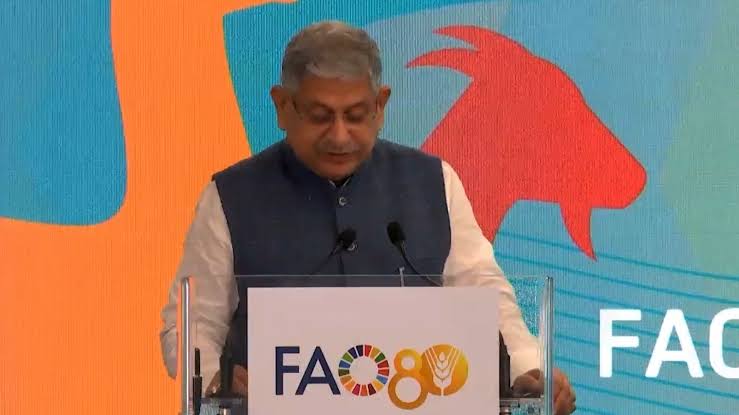
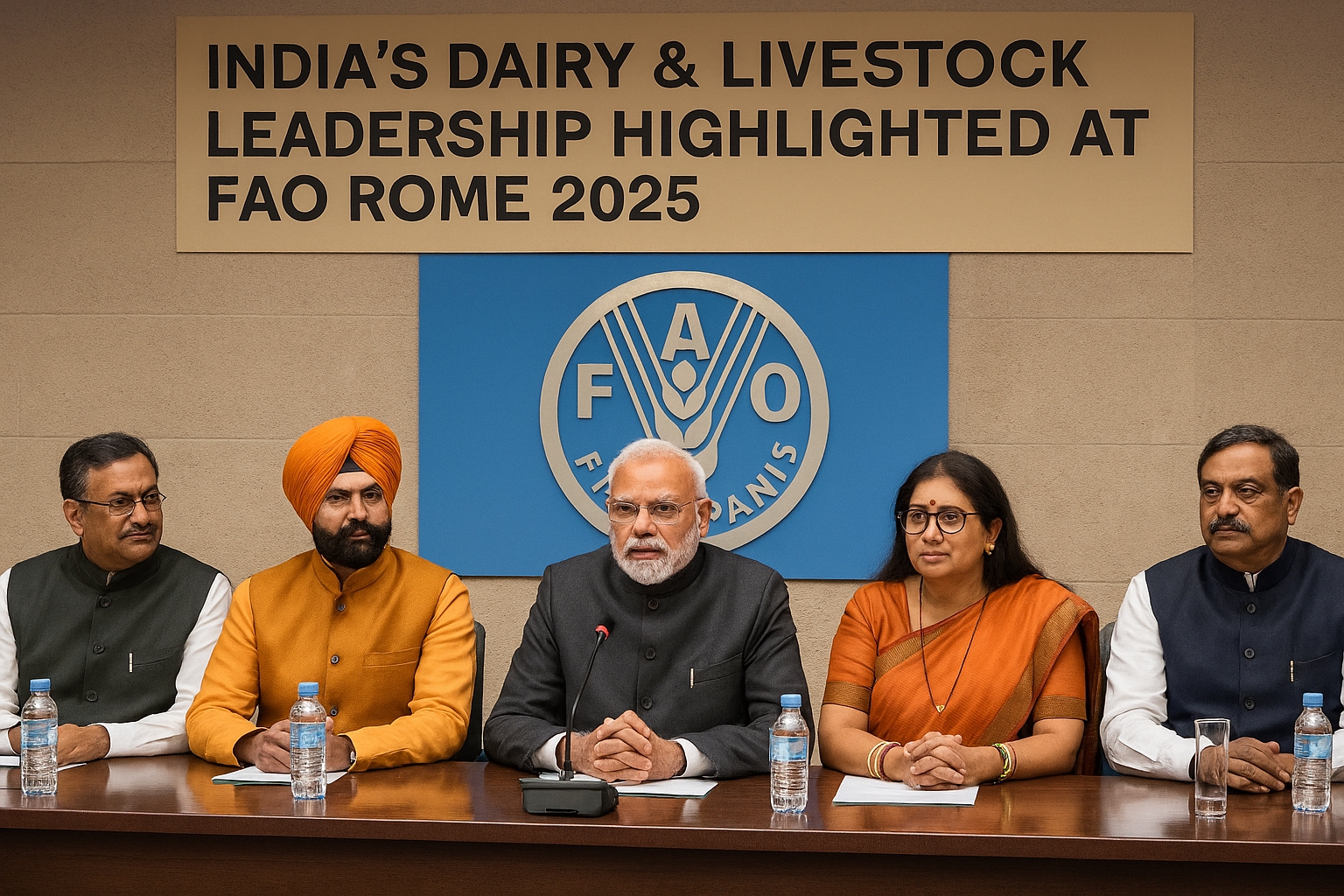
 According to Shri Singh, India’s welfare measures since COVID-19 have lifted 269 million people out of extreme poverty, lowering the poverty rate from 27.1% to 5.3%, as per the 2025 World Bank Report. He emphasized the livestock sector’s vital role in providing sustainable livelihoods to nearly two-thirds of rural households, including millions of small and marginal farmers, many of whom are women.
India has achieved a remarkable CAGR of 12.77% in the livestock sector, contributing 31% to agricultural Gross Value Added (GVA) and 5.5% to the national economy. The country produces 239 million tonnes of milk annually, making it the world’s largest milk producer, and ranks as the second-largest producer of eggs and a leading exporter of buffalo meat.
Shri Singh credited India’s progress to people-centric policies, global cooperation, and the resilience of smallholder farmers. He reaffirmed India’s 80-year partnership with FAO and commitment to sharing scalable innovations with the Global South. Emphasizing flexibility, he stressed that the Global Plan of Action for Sustainable Livestock Transformation should allow for national priorities and capacities rather than impose prescriptive models.
Key Initiatives Driving India’s Livestock Sector
- Rashtriya Gokul Mission: Conserving indigenous cattle breeds and improving genetic diversity, benefiting over 92 million animals and 56 million farmers.
- Livestock Vaccination: Administering over 1.2 billion doses annually, making India a global hub for vaccine production and exports.
- National Digital Livestock Mission – Bharat Pashudhan: Digital IDs for 353 million animals and 94 million livestock owners, enabling traceability and disease management.
- Animal Husbandry Infrastructure Development Fund: USD 3.5 billion support for dairy, breeding, feed, and meat processing investments.
- MAITRIs & A-HELP Programs: Empowering rural communities and women to deliver breeding and animal health services in remote areas.
- One Health & AMR Initiatives: Promoting human-animal-environment health integration, antimicrobial resistance control, and pandemic preparedness with a USD 25 million G20 grant.
- Women-Led Development: Over 70% of India’s dairy workforce are women, highlighting their leadership in the White Revolution.
- Global Advocacy: Co-sponsoring the International Day of Milk resolution with Ireland, endorsed by the 44th FAO Conference.
Shri Singh called for predictable financing, technology transfer, and capacity building to support sustainable livestock development, particularly in developing countries. His address underscored India’s vision for a more inclusive, resilient, and globally cooperative livestock sector.