 Viral Clip Sparks Frenzy Online
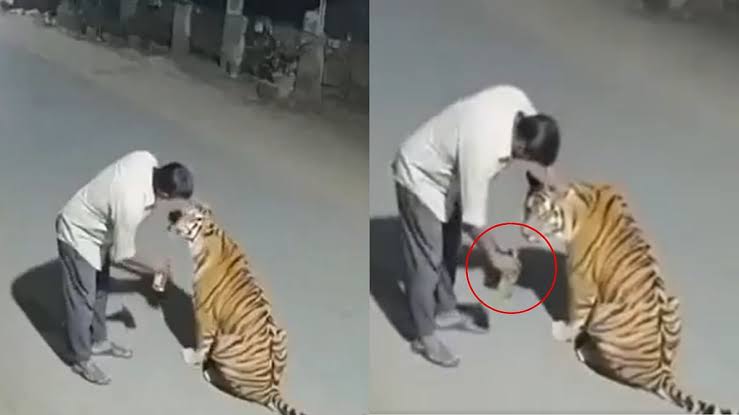
The viral footage, shared by several users on X (formerly Twitter), appeared realistic enough to convince thousands of viewers that it was genuine CCTV footage from Pench National Park. The post even claimed that Patel was “under police protection” after the incident, further fueling speculation.
In the video, a man can be seen sitting near a tiger under a streetlight, apparently offering it a drink. Social media users responded with shock, disbelief, and humor some demanding the recipe for the “homemade liquor,” while others joked about how lifelike AI content has become.
Fact-Check: The Video is AI-Generated
Multiple fact-checkers and wildlife officials have now confirmed that the video was not shot in Pench or any part of Madhya Pradesh. The clip is a digitally created AI video, designed to mimic real-life camera footage. No official reports from the Madhya Pradesh Forest Department or credible news agencies support the claim of such an incident.
Experts who reviewed the clip pointed out inconsistencies in the animal’s movement and lighting common signs of AI generation. “Tigers do not behave in such a manner near human settlements,” said a senior forest officer. “This video clearly lacks natural wildlife behavior.”
Officials Warn Against Spreading Misinformation
IFS officers and wildlife experts have urged the public to refrain from sharing unverified videos involving wild animals. Such misinformation, they warned, can create unnecessary panic among locals and damage ongoing conservation efforts.
“AI tools today can create near-photorealistic scenes,” said one wildlife conservationist. “Before forwarding sensational clips, users should always verify their authenticity through credible sources or reverse image searches.”
Rise of AI-Generated Fake Animal Videos
This incident adds to a growing trend of AI-generated wildlife videos circulating on the internet. Earlier this month, a similar fake video showing a leopard at Mumbai’s Phoenix Mall caused panic before being debunked as artificial. Experts say such viral fabrications are increasingly used for “engagement farming” — creating viral posts purely for social media attention.
Authorities are now discussing ways to regulate and watermark AI-generated content to prevent mass misinformation. Some tech experts suggest using AI detection tools that can flag synthetic visuals before they spread widely.
Public Reactions: Between Humor and Concern
While many users took the viral “tiger-drinking” video humorously, others expressed concern about the rapid rise of misleading AI content. Comments such as “AI can make anything believable now” and “This fooled me for a second” flooded the post. Others sarcastically asked for “Raju’s liquor recipe” or the “AI tool” used to create the clip.
Despite the jokes, experts highlight a serious issue as synthetic media becomes more advanced, the line between fact and fiction continues to blur, posing challenges for both digital literacy and wildlife protection.
For now, officials confirm there is no record of any such tiger encounter in Pench or any nearby forest area. The viral video remains a cautionary example of how AI can manipulate perception when misinformation goes unchecked.