IICA Hosts Key Session on Digital Governance & Cybersecurity
A Focus on India’s Global Digital Leadership
In his keynote address, Sh. Vinay Thakur highlighted the unprecedented scale and success of India’s Digital Public Infrastructure (DPI), widely regarded as one of the most significant digital governance ecosystems in the world. He emphasized how initiatives such as Aadhaar, UPI, DigiLocker, BharatNet, Co-WIN, UMANG, MeghRaj Cloud, and BISAG-N’s GIS platforms have transformed the delivery of public services.
These platforms, he noted, exemplify the vision of Prime Minister Narendra Modi’s Digital India mission—an effort aimed at creating a digitally empowered society and a knowledge-driven economy. According to Thakur, technology today acts as a tool of social inclusion, transparency, and economic acceleration, enabling citizens across urban and rural landscapes to access public services with unprecedented ease.
 Digital Transformation and Skill Readiness
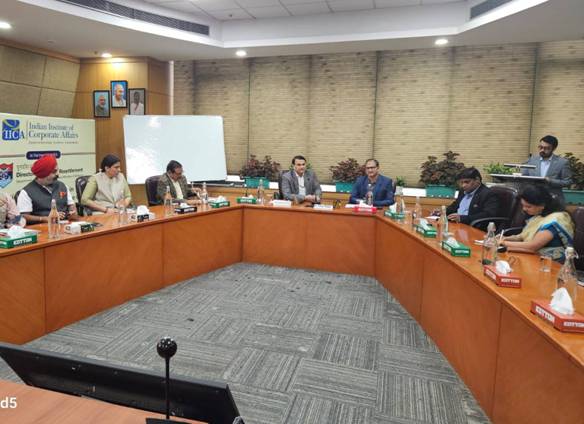
Earlier in the session, IICA Director General and CEO Shri Gyaneshwar Kumar Singh welcomed the gathering and underscored the growing importance of digital knowledge as a catalyst for India’s socio-economic growth. He stressed that future-ready digital skills, secure platforms, and reliable technology architectures are essential to sustaining India’s momentum in digital transformation.
The session delved deeply into complex themes such as solution architecture, cloud deployment, digital sovereignty, and emerging digital technologies shaping India’s corporate and governance landscape.
Cybersecurity: The Need of the Hour
Sh. Thakur delivered a strong message on the urgent need to bolster cybersecurity frameworks as India’s digital footprint expands. He outlined the increasing frequency of cyber threats, the evolution of AI-enabled cyberattacks, and the critical role of the Digital Personal Data Protection (DPDP) Act in safeguarding data integrity.
He also highlighted the importance of post-quantum cryptography (PQC), noting that quantum computing poses unprecedented challenges to existing security systems. India’s shift toward indigenous cybersecurity solutions, he said, will play a critical role in ensuring digital sovereignty and building resilient national infrastructure.
Engaging Dialogue with Future Leaders
The programme saw active participation from IICA faculty and students, who engaged in an extensive Q&A session with the speaker. Discussions covered various aspects of data protection, emerging digital ecosystems, cloud security, and responsible data governance. Participants expressed appreciation for the opportunity to interact with an expert widely respected for his contributions to digital transformation in government and public institutions.
The session ended with a vote of thanks acknowledging Sh. Thakur’s visionary perspective and the relevance of such dialogues in shaping the understanding of future governance and corporate leaders.