
What Modi unveiled
The Infinity Campus is a purpose-built 200,000-square-foot facility for design, integration and testing of launch vehicles, with a stated capacity to produce one orbital rocket per month a milestone for India’s private space ecosystem. The Prime Minister hailed the development as evidence of the private sector’s growing role in India’s space ambitions.
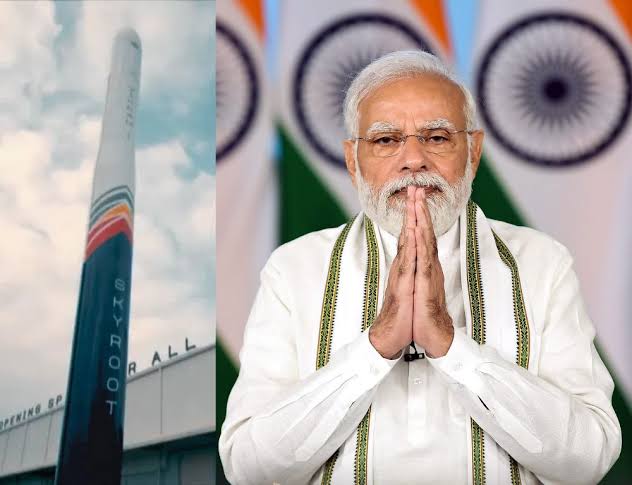 About Vikram-I
Vikram-I is designed to carry roughly 300 kg of payload to Low Earth Orbit (LEO). Built with a primarily carbon-fibre structure, the vehicle is aimed at rapid, cost-competitive small-sat launches and is billed as being capable of placing multiple satellites into orbit in a single mission. Skyroot has also highlighted fast-assembly claims suggesting the launcher can be assembled and readied for launch within 24 hours from a suitable site.
Why this matters
India’s commercial space sector has been rapidly liberalised since 2023, opening the doors for startups across launch, satellite manufacturing and data services. A private orbital rocket that can reliably place small satellites into orbit expands onshore launch options, reduces dependence on foreign launch services, and aims to capture a share of a projected multi-billion-dollar small-sat market.
Skyroot: roots and roadmap
Founded by former ISRO engineers and IIT alumni, Skyroot rose to national attention after its 2022 sub-orbital success with Vikram-S and subsequent technology demonstrations. The company says Vikram-I leverages advanced manufacturing such as 3D-printed engines and composite structures to shorten lead times and lower costs. Skyroot’s roadmap includes scaling launches and pursuing customers both in India and abroad.
Policy and partnerships
The event also underscored the impact of recent policy reforms and closer industry-government collaboration aimed at fostering private participation in national space capabilities. Skyroot has raised substantial private funding and signed memoranda with international partners to broaden low-Earth orbit access.
Looking ahead
Skyroot aims to move from prototypes and demonstrations toward a routine commercial cadence. Industry analysts say the combination of domestic manufacturing capacity, private investment and regulatory support could position India as a competitive small-sat launch hub, provided test flights validate reliability and cost claims.