 Why the 2027 Total Solar Eclipse Is Extraordinary
The exceptional length of the 2027 eclipse is the result of a rare alignment of orbital factors. At the time of the eclipse, the Moon will be near perigee its closest point to Earth making it appear larger in the sky. Simultaneously, Earth will be near aphelion, its farthest point from the Sun, causing the Sun to appear slightly smaller. This perfect combination allows the Moon to cover the Sun more completely and for a longer duration.
Scientists note that no other eclipse visible from land in the 21st century will match this duration. The last comparable event occurred in 2009 over the Pacific Ocean, and the next one of similar length is not expected until well after the year 2100.
Where the Eclipse Will Be Visible
The path of totality will stretch from southern Spain, pass across North Africa including Egypt and Sudan and then move through the Arabian Peninsula, covering regions of Saudi Arabia, Yemen, and Oman. Towns and cities lying directly under this narrow path can expect the full six-minute-plus totality, while regions outside the path will witness only a partial eclipse.
One of the most anticipated viewing locations is Luxor, Egypt, where total darkness will last close to the maximum duration. Tourism departments across several countries are already planning large-scale skywatching events, anticipating a surge in eclipse-related travel similar to previous major celestial phenomena.
What Skywatchers Can Expect During Totality
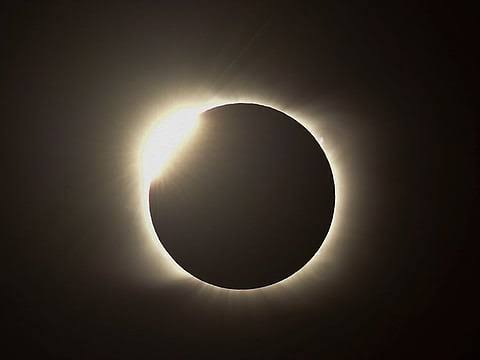
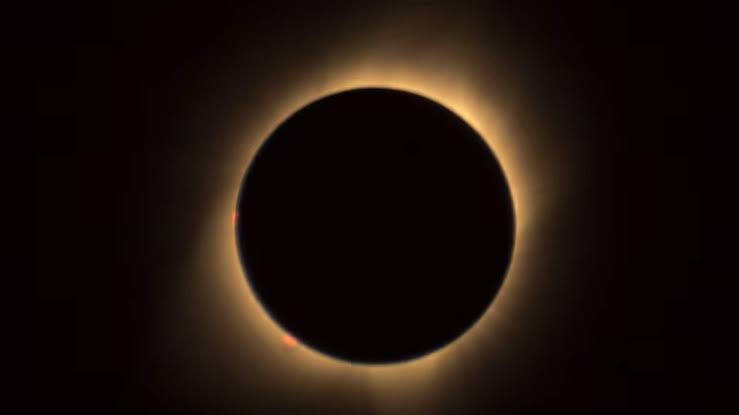
Observers inside the path of totality will witness dramatic changes within moments. As the Moon slowly eclipses the Sun, daylight dims and shadows sharpen. Animals may become confused, and temperatures could drop noticeably, creating an eerie environment. When the eclipse reaches totality, the Sun’s corona normally hidden by the Sun’s brightness appears as a glowing halo.
For scientists, this offers a rare window to study solar activity, coronal structures, and space weather impacts. The 2027 eclipse is expected to draw significant attention from global research institutions, with planned collaborations between observatories across continents.
How to Safely Watch the Eclipse
Experts consistently warn that watching any stage of the eclipse without proper eye protection can cause permanent retinal damage. Only certified solar-viewing glasses or professional-grade solar filters should be used. Regular sunglasses are not safe.
Government agencies such as ISRO and global astronomy organisations are expected to issue public safety advisories as the date nears.
A Global Moment of Wonder
The 2027 solar eclipse is expected to become a major cultural, scientific, and tourism milestone. From Europe’s historic cities to the deserts of North Africa and the shores of the Arabian Peninsula, millions will gather to witness the rare moment when day briefly turns into night.
For astronomers, it is a scientific treasure. For travellers, a breathtaking spectacle. And for the world, a shared reminder of nature’s grand celestial rhythms unchanged for millennia yet always awe-inspiring.