 Understanding the Sun’s Changing Magnetic Landscape
The Sun undergoes periodic surges and declines in magnetic activity, commonly described as the solar cycle. Sunspots, solar flares, and coronal mass ejections all stem from the magnetic behavior occurring beneath and above the Sun’s surface. To understand these variations, the IIA team analyzed light from the Ca-K line—an indicator of magnetic activity in the chromosphere.
Rather than focusing on individual sunspots, the researchers applied a technique that slices the Sun into horizontal latitude bands and studies the combined light from each strip. This method, developed earlier by IIA scientist Jagdev Singh, allows the team to detect large-scale magnetic patterns that may otherwise remain unnoticed when observing isolated features.
Key Findings: Where Solar Activity Peaks
The study reveals that most magnetic activity concentrates between 40 degrees north and south. The strongest signals appear consistently around 15 to 20 degrees in both hemispheres—exactly the latitudes where sunspots typically emerge during solar maxima. This alignment confirms that Ca-K spectral features are reliable indicators of magnetic phenomena occurring on the Sun’s surface.
The team also found pronounced differences between the two hemispheres. While both followed expected solar cycle trends, the southern hemisphere exhibited steeper increases in magnetic activity at higher latitudes. These asymmetries offer essential clues about the internal processes that drive the solar dynamo.
Space Weather Implications
Understanding magnetic behavior on the Sun is vital for forecasting disturbances that affect Earth. Solar storms can disrupt satellite communication, interfere with navigation systems, damage electrical grids, and threaten astronaut safety. The new latitude-based mapping enhances the ability of scientists to predict where and when such activity is likely to intensify.
As the Sun transitions from the peak of Solar Cycle 24 into Solar Cycle 25, researchers are already observing the shifting locations of magnetic activity. The new dataset from Kodaikanal, combined with NASA’s Solar Dynamics Observatory (SDO) images, strengthens the predictive accuracy of long-term space weather models.
A Historic Observatory Continues to Lead Solar Research
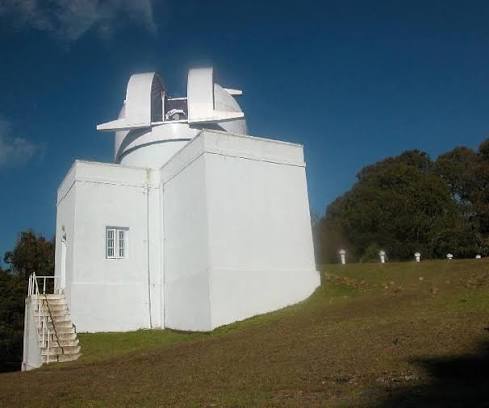
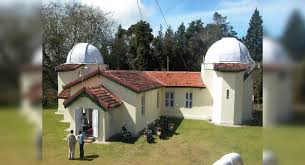
The Kodaikanal Solar Observatory, which recently marked 125 years of continuous solar monitoring, plays a pivotal role in international solar research. Its archive of Ca-K images is one of the world’s longest-running observational datasets, making it an invaluable resource for scientists examining how the Sun evolves over decades.
The new findings, published in the Monthly Notices of the Royal Astronomical Society, reinforce India’s contributions to global solar studies. Researchers from IIA, IIT BHU, Amrita Vishwa Vidyapeetham, and NASA collaborated on the project, combining ground-based and satellite data to deliver comprehensive insights.