 Goal: Achieve 350 Lakh Tonnes of Pulses by 2030
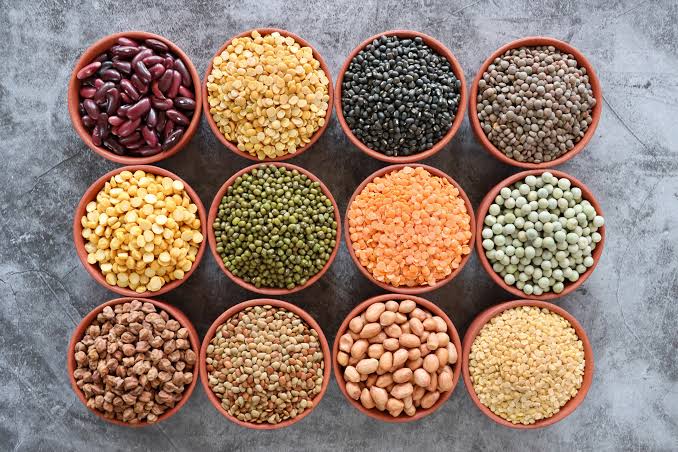
The mission aims to enhance the production of major pulses, particularly Tur, Urad, and Masoor, which account for a large share of India’s consumption and import basket. The government targets a total domestic output of 350 lakh tonnes by 2030-31, making India self-sufficient and less vulnerable to global price fluctuations.
According to the Ministry of Agriculture and Farmers Welfare, the mission focuses on expanding cultivation into underutilised areas, encouraging sustainable crop rotations, and strengthening soil health. The government also aims to increase both horizontal and vertical land productivity to optimise pulses output.
Climate-Resilient Seeds and Modern Technologies
One of the mission’s core features is the promotion of high-yielding, climate-resilient seed varieties. These improved seeds are expected to help farmers cope with erratic weather patterns and rising temperatures. The initiative will also expand post-harvest management systems, including enhanced storage solutions to reduce losses and improve availability.
The mission further supports the adoption of modern technologies in pulses cultivation, helping farmers improve efficiency and reduce input costs. Demonstrations, field trainings, and exposure visits will be organised through the Agricultural Technology Management Agency (ATMA) under the Sub-Mission on Agricultural Extension.
Strong Procurement Support Through NAFED and NCCF
To stabilise farmers’ income and ensure remunerative prices, the government has committed to assured procurement of Tur, Urad, and Masoor for the next four years. Procurement will be carried out by the National Agricultural Cooperative Marketing Federation of India (NAFED) and the National Cooperative Consumers’ Federation (NCCF) under the Price Support Scheme (PSS) component of PM-AASHA.
Reducing Import Dependence
India currently relies heavily on imports to meet its annual pulses demand, particularly in years with adverse weather conditions. The mission seeks to not only close the demand-supply gap but also build a stable domestic pulses ecosystem resilient to international price volatility.
With targeted expansion, better inputs, and stronger institutional mechanisms, the government estimates that India can eliminate most of its pulses import bill by the end of the mission period.
Extension Support and Farmer Capacity Building
Enhancing farmer awareness and capacity is central to the mission’s strategy. Through the Sub-Mission on Agricultural Extension, farmers will receive hands-on support to adopt improved practices. ATMA units across districts will coordinate training programmes, field demonstrations, and technology dissemination activities.
Official Statement
Minister of State for Agriculture and Farmers Welfare, Shri Ramnath Thakur, informed the Rajya Sabha that the Mission for Aatmanirbharta in Pulses will transform the domestic pulses sector by improving production, supporting procurement, and empowering farmers through modern practices and training.