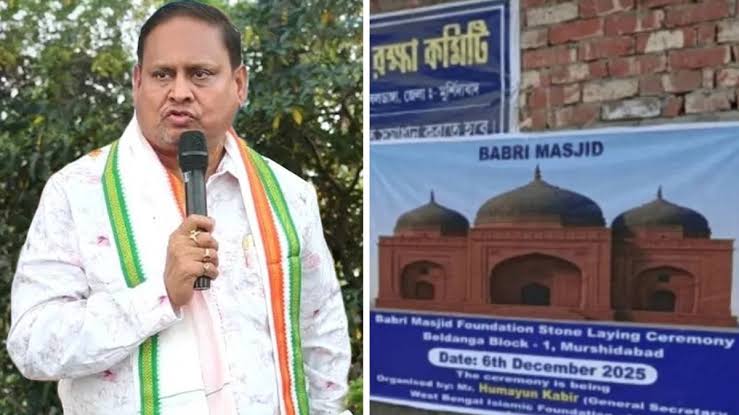
 Mass mobilisation and elaborate logistics
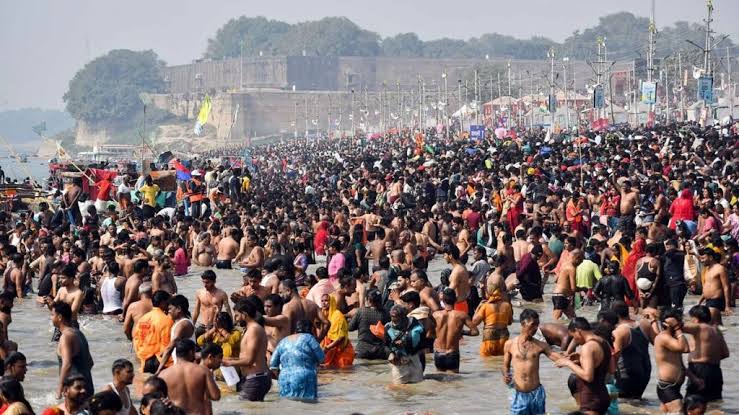
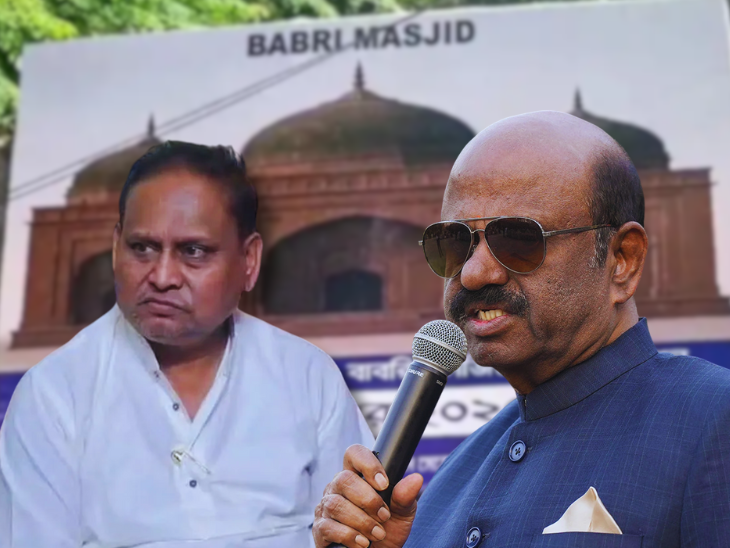
Organisers claimed a massive turnout and extensive preparations. Kabir told reporters that “lakhs of people” would attend, and volunteers had spent days preparing the grounds. Heavy arrangements included a 150-ft by 80-ft dais for invited guests, 3,000 volunteers to manage crowd movement, and multiple catering teams hired to serve thousands of visitors.
Local sources reported that organisers planned to distribute about 40,000 packed meals for visitors and another 20,000 for local residents. The event budget, organisers said, was estimated between Rs 60–70 lakh covering the dais, food, transport and volunteer mobilisation.
Security planning and traffic measures
Police implemented a visible security cordon across Rejinagar and adjacent Beldanga to ensure an orderly event and maintain NH-12 traffic flow. Senior officers said diversion routes were prepared and additional forces were stationed to keep the highway operational.
Authorities flagged crowd-management and public-safety concerns as primary priorities. A local police official told reporters temporary traffic restrictions and staggered entry points were being enforced to reduce bottlenecks and ensure emergency access.
Political tensions and legal pointers
Kabir emphasised that the event would be peaceful and defended the move as a constitutionally protected right to a place of worship. He referenced the Calcutta High Court and indicated organisers would follow court orders in case of legal objections. The invocation of judicial oversight was aimed at countering opposition claims that the ceremony intentionally provoked communal sentiments.
Opposition figures and critics meanwhile described the event as politically charged, warning that large public gatherings tied to communal symbols can heighten local tensions. Local administrators reportedly held contingency plans to defuse any flashpoints.
Religious leaders and cross-border claims
Organisers said religious dignitaries from several states were invited and claimed international participation, with reports that two qazis from Saudi Arabia were expected to attend. Such claims added to the event’s profile but also raised logistical questions over visas and travel routes.
Speakers at the site urged calm and discipline. Volunteers used loudspeaker announcements to coordinate arrivals and departures, and organisers publicly sought to present the event as inclusive and non-confrontational, promising ancillary facilities such as a hospital and an educational institution linked to the site.
Community response and local sentiment
While some local residents participated in the preparations transporting bricks and helping with site work others expressed unease about the scale and the political overtones. Small-business owners along NH-12 were apprehensive about traffic disruptions and possible curfews affecting commerce.
Community leaders called for restraint, urging all parties to prioritise peace and local safety. District officials said they had instructed subordinate agencies to enforce public-order protocols and ensure that civic services were not impeded.
Aftermath and outlook
The ceremony concluded as scheduled with organisers indicating plans to clear the ground by late afternoon, as per police directives. Authorities reiterated that any legal or public-order issues arising from the event would be handled through established channels.
Observers say the episode underscores the delicate balance between religious assertion, political mobilisation and administrative responsibility in sensitive districts. As Murshidabad returns to normal, stakeholders will be watching whether the event leaves enduring social or political ripples in the region.